
UK Economy Hits Two-Year High in Q3 as AI Boom Offsets Construction Slump
The UK economy expanded by 0.7% in the third quarter of 2026, matching forecasts and marking the fastest growth in over two years. This performance was driven primarily by a 0.9% surge in the services sector, specifically within information and communication activities linked to artificial intelligence and cloud computing. While the Office for National Statistics (ONS) noted that AI-related businesses reported the highest turnover increases, the construction sector contracted by 0.7%, with new private housing work falling by 4.7%. Chancellor John Healey highlighted the nation's resilience against global conflicts, while the Bank of England faces pressure to raise interest rates again in December due to persistent inflation.
Key points
- The UK's gross domestic product (GDP) grew by 0.7% in the third quarter (July–September 2026), matching economist expectations and representing the fastest quarterly expansion since Q1 2024.
- The services sector led the growth, expanding by 0.9%, with the information and communication subsector rising by 2.1%. The ONS attributed this to strong performance in computer programming and consultancy, largely driven by AI and cloud computing investments.
- The construction sector contracted by 0.7%, with new private housing work falling by 4.7%, while the production sector grew marginally by 0.1%.
- September monthly GDP grew by 0.2%, beating expectations of zero growth, while August was revised down to zero growth from a previous 0.1% estimate.
- Annual inflation reached 3.5% in September, driven by higher fuel and electricity prices. The Bank of England raised interest rates to 4% in November, and markets are pricing in a 73% chance of another hike in December.
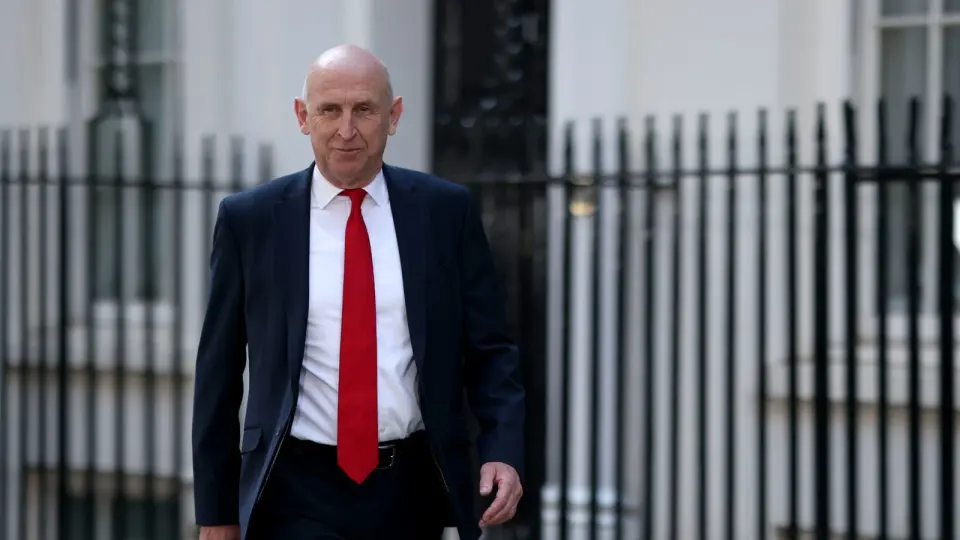
- Chancellor John Healey described the results as evidence of 'stand-out resilience' despite the US-Iran conflict, while Prime Minister Andy Burnham called the figures 'hope for the future'.
Background
This growth follows a period of economic uncertainty caused by the US-Iran conflict, which has driven up energy costs and inflation. The Bank of England recently raised interest rates for the first time in three years to 4% to combat rising prices. Previous forecasts from the Office for Budget Responsibility predicted slower growth, but recent data has exceeded those expectations. The archive articles provided are unrelated to this economic story and involve sports events, so no background context is derived from them.
How outlets are covering it
All sources agree on the 0.7% growth figure and the dominance of the services sector. However, they differ in emphasis: CNBC and The Guardian highlight the role of AI as a primary driver, with The Guardian noting that the UK is now the second-fastest-growing G7 economy behind the US. The BBC focuses on the contrast between strong services growth and the severe contraction in construction, particularly private housing. While Chancellor Healey and PM Burnham emphasize resilience and confidence, analysts like Simon Pittaway of the Resolution Foundation and Ruth Gregory of Capital Economics warn that growth may not be sustained due to rising inflation and interest rates. The ONS provides the raw data, noting that while AI boosts turnover, it is difficult to quantify the exact impact due to data collection methods.
Why it matters
The strong Q3 performance suggests the UK economy is more resilient than expected despite global conflicts and high energy costs. However, the reliance on AI-driven services may not be sustainable if inflation and interest rates continue to rise. A potential December rate hike could dampen consumer spending and business investment, potentially slowing growth in the final quarter of 2026 and into 2027. The construction sector's weakness also signals ongoing challenges in the housing market, which could affect long-term economic stability.
What to watch
The Bank of England is expected to decide on a potential interest rate hike in December, with markets pricing in a 73% chance of an increase. Analysts will watch for signs of slowing growth in the fourth quarter as higher energy and fuel prices impact household spending. The OBR's growth forecast for 2026, which was 1.2%, now appears outdated as actual growth exceeds expectations. Future GDP revisions may adjust the current figures, as early estimates are subject to revision over time.
- UK economy expands 0.7% in third quarter as AI provides 'extra engine of growth' CNBC
- AI helps UK economy grow at fastest pace for more than two years The Guardian
- Britain’s growth spurt continues The Economist
- GDP first quarterly estimate, UK: July to September 2026 Office for National Statistics
- UK economy grows at fastest rate in more than two years, boosted by AI investment BBC
Want the full story? Read the original reporting
Read on CNBC