
Antarctic Sea Ice Hits Third-Lowest Peak as New Study Confirms Inevitable Ice Sheet Loss
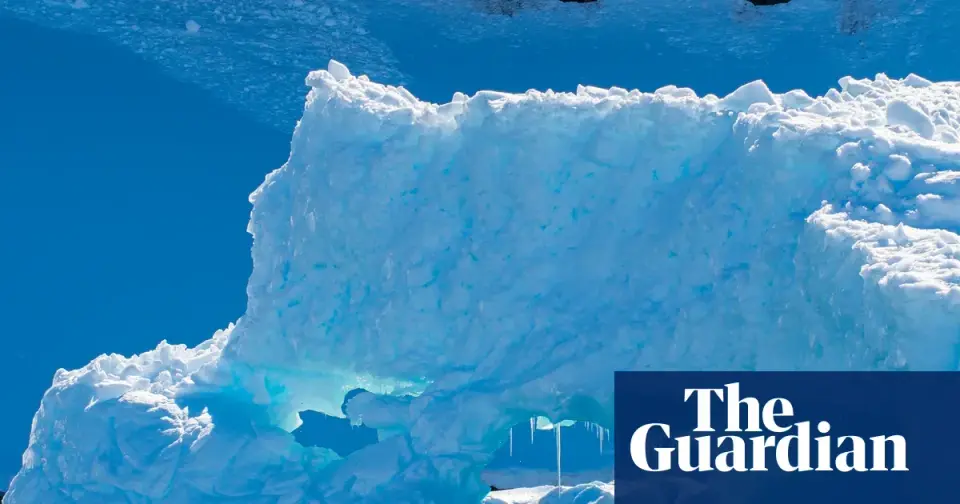
Antarctica’s winter sea ice reached its third-lowest recorded maximum on September 14, 2026, falling nearly 1 million square kilometers below the long-term average. This marks the fourth consecutive year of record-low winter peaks, signaling a systemic shift rather than a temporary anomaly. Simultaneously, a new study in Nature Geoscience confirms that the Antarctic Ice Sheet is committed to mass loss this century, even under aggressive emissions cuts. While sea ice loss does not directly raise sea levels, it weakens ice shelves, potentially accelerating glacier flow and contributing up to 25.4 cm of sea-level rise by 2100 under high-emission scenarios.
Key points
- Antarctic winter sea ice peaked at 17.59 million square kilometers on September 14, 2026, the third-lowest level since satellite records began in 1979.
- The peak was approximately 1 million square kilometers below the long-term average, an area roughly twice the size of Spain.
- The last four winters have recorded the lowest sea ice maximums on record, indicating a fundamental change in the system.
- A new study in Nature Geoscience finds a 92% probability that the Antarctic Ice Sheet will lose more mass than it gains this century, even if global warming is limited to 1.5 degrees Celsius.
- Under very high-emission scenarios, Antarctica could contribute up to 25.4 cm to global sea-level rise by 2100, threatening over 10 million coastal residents.
- El Niño-related wind patterns and warmer ocean temperatures are cited as drivers, but scientists note that thermodynamics will dominate regardless of atmospheric variability.
Background
Recent archive coverage highlights that Greenland and Antarctica have lost 12.5 trillion tons of ice since 1979, raising global sea levels by about one inch. While a temporary 695 billion-tonne ice gain in East Antarctica was recorded between 2021 and 2023 due to tropical ocean warming, this does not reverse long-term loss trends. The current sea ice decline adds to concerns about the stability of ice shelves that act as brakes for glaciers.
How outlets are covering it
The Guardian emphasizes the immediate, observable decline in sea ice extent, quoting Dr. Ariaan Purich that this is a 'now problem' rather than a future one. The Conversation and Rutgers University focus on the long-term inevitability of ice sheet loss, highlighting that extra snowfall will not offset melting. The Nature study provides the statistical backbone, using machine learning to analyze ice-sheet models and confirm that physical assumptions, not just emissions, drive uncertainty. While The Guardian notes El Niño's role in recent ice loss, Dr. Phil Reid from Australia’s Bureau of Meteorology argues that even without El Niño, the system would likely be in a similar position due to underlying thermodynamic changes. All sources agree that coastal communities face significant risks, but they differ in emphasis: The Guardian highlights the acute seasonal anomaly, while The Conversation and Rutgers stress the permanent, locked-in nature of ice sheet loss and the importance of immediate emissions cuts to limit the severity of the outcome.
Why it matters
The decline in sea ice exposes the Southern Ocean to more heat absorption, potentially accelerating warming. More critically, the loss of sea ice and the weakening of ice shelves may destabilize the Antarctic Ice Sheet, which holds enough water to raise global sea levels by 58 meters. With a 92% probability of net mass loss this century, coastal infrastructure decisions made today will face increased flooding risks. The study underscores that while the outcome is likely, the magnitude of sea-level rise remains dependent on current emissions choices, making immediate action crucial for limiting the worst-case scenarios.
What to watch
Scientists will monitor the summer melt season, which Dr. Will Hobbs warns could also set a record low. Researchers will continue to refine models by focusing on three key uncertainties: ice-shelf melt parameterizations, sliding laws, and regional ocean warming. Coastal communities will use the new probabilistic projections to update infrastructure plans, while international efforts will focus on reducing greenhouse gas emissions to limit the cascade of ice loss. Further studies are needed to account for missing processes like ice cracking and subglacial water changes, which could alter the pace of ice sheet retreat.
- Antarctic winter sea ice falls to third-lowest level on record as scientists warn of ‘now problem’ The Guardian
- Antarctica’s ice loss is locked in, and extra snowfall won’t save it – that’s bad news for low-lying coastal areas elsewhere The Conversation
- Committed Antarctic Ice Sheet mass loss by the end of the twenty-first century Nature
- U. researchers publish paper expecting Antarctica to continue losing ice through 2100 dailytargum.com
- How Cutting Emissions May Limit Antarctic Ice Loss and Protect Coastlines Rutgers University
Want the full story? Read the original reporting
Read on The Guardian