
Berlin Summit Rejects 'Yalta 2.0' as Europe Demands Seat at Ukraine Peace Table
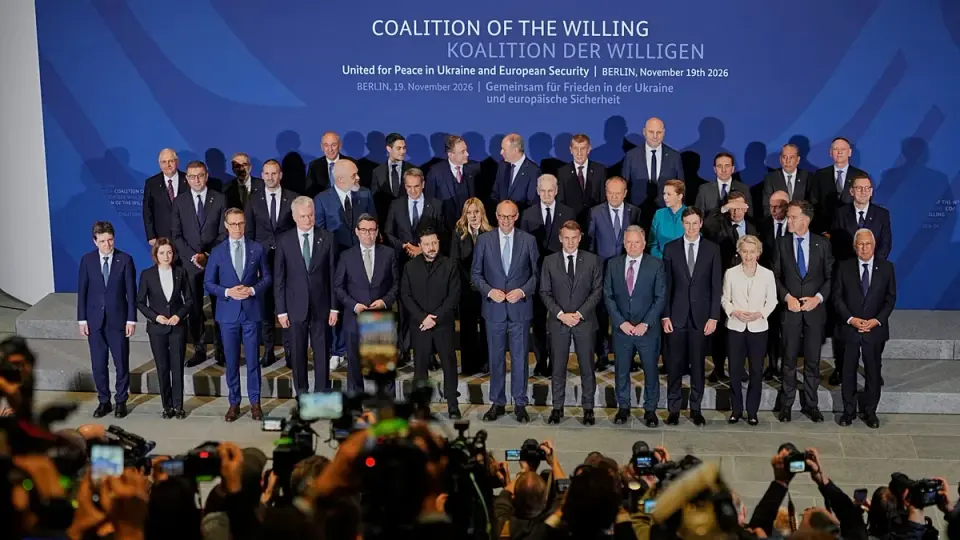
European leaders in Berlin rejected the recent US-Russia-China summit in Shenzhen as a 'Yalta 2.0' attempt to divide Europe. They affirmed continued military support for Ukraine and insisted that any peace deal must include European and Ukrainian participation, despite Moscow's reluctance to engage multilaterally.
Key points
- German Chancellor Friedrich Merz hosted the Coalition of the Willing in Berlin, explicitly rejecting the Shenzhen trilateral meeting between Trump, Putin, and Xi as a modern Yalta Conference that would parcel out Europe.
- The Shenzhen 'Declaration Toward Peace' issued by the US, Russia, and China did not mention Ukraine, prompting European leaders to assert that Europe is not a subject to be discussed without its own representatives.
- US special envoys Steve Witkoff and Jared Kushner confirmed that Trump phoned in from his plane to address the Berlin meeting, though media reports suggest he expressed skepticism regarding European military support for Ukraine.
- Europe has appointed a joint team of seven representatives from France, the UK, Germany, Poland, Italy, the EU, and NATO to engage in face-to-face negotiations with Russia, a step previously avoided.
- Discussions on security guarantees for Ukraine are underway, including a potential Article 5-style collective defense clause and a Europe-led peacekeeping force, though Putin has stated he would not allow the latter.
Background
This development follows earlier warnings in October that a tripartite summit between Putin, Trump, and Xi could sideline Europe and Ukraine, echoing historical precedents like the 1938 Munich Agreement. Recent diplomatic efforts, including Nordic leaders' calls with Putin and Zelensky's willingness to meet the Russian president in a neutral venue, highlight the ongoing struggle to define the post-war security architecture without excluding key stakeholders.
Why it matters
The Berlin summit marks a pivotal shift in the Ukraine conflict, as European nations move from passive observers to active negotiators. By rejecting the exclusionary format of the Shenzhen meeting and committing to continued military aid, Europe aims to ensure that any peace agreement is durable and respects the sovereignty of the continent, potentially reshaping the transatlantic alliance and NATO's role in European security.
What to watch
The next critical step is the face-to-face negotiation between the European joint team and Russia. The outcome will depend on whether Moscow accepts a multilateral format or insists on bilateral talks in Moscow. Additionally, the feasibility of Article 5-like security guarantees for Ukraine will be tested, requiring alignment between US interests and European commitments.
Want the full story? Read the original reporting
Read on Euronews.com