
Ethiopia Accelerates Su-35 Delivery, Eyes S-400 Air Defenses Amid Regional Conflict
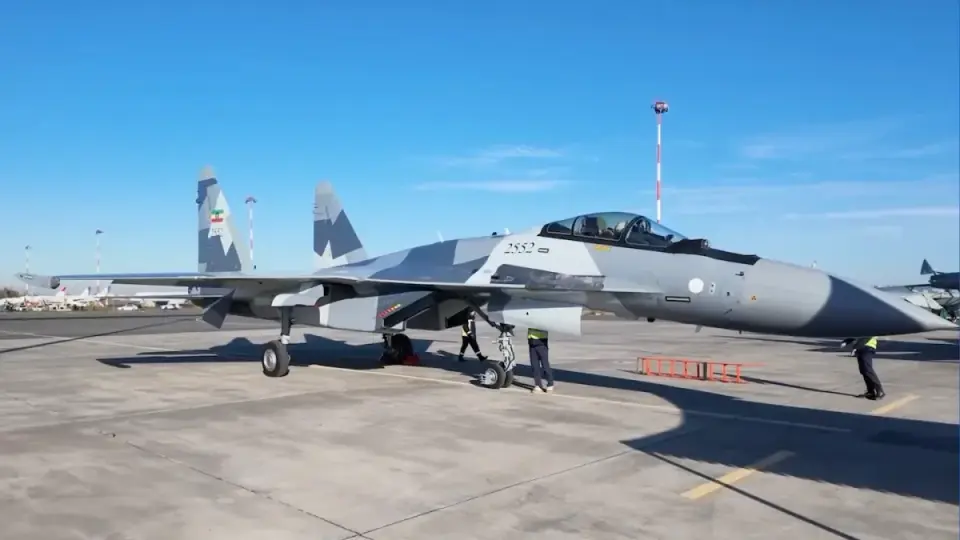
Ethiopian Prime Minister Abiy Ahmed announced the receipt of 12 Russian Su-35 fighter jets, delivered a year ahead of schedule, alongside a deal for four S-400 air defense batteries. The acquisition, announced at the Russia-Africa Summit in Moscow, aims to bolster Ethiopia’s military capabilities amid renewed conflicts in Tigray and Amhara. While the jets enhance air power, concerns remain regarding long-term maintenance support and the potential impact of Western sanctions on the deal.
Key points
- Ethiopia has received 12 Su-35 multirole fighters, arriving one year earlier than the original agreement with Russia stipulated.
- The deal includes four batteries of the S-400 surface-to-air missile system, though no delivery timeline has been disclosed.
- Prime Minister Abiy Ahmed thanked Russian President Vladimir Putin for facilitating the accelerated delivery during the Russia-Africa Summit in Moscow.
- The acquisition is framed as a measure to deter aggression and protect national sovereignty amidst ongoing internal conflicts and regional tensions.
- Financial terms, basing locations, and the total scope of the agreement remain undisclosed by Ethiopian officials.
Background
Ethiopia already operates a fleet of Russian-designed Su-27 and Su-30K fighters, providing some familiarity with the Flanker family. The new Su-35s represent a significant upgrade in maneuverability and sensor capabilities. This move follows a 2021 military cooperation agreement between Addis Ababa and Moscow. The acquisition occurs against a backdrop of renewed fighting in the Tigray region, where government forces recently retook the capital Mekelle, and ongoing conflicts in Amhara. The broader context includes Russia’s efforts to maintain defense exports to Africa despite Western sanctions related to its war in Ukraine.
How outlets are covering it
The War Zone emphasizes the technical superiority of the Su-35 and the logistical challenges Ethiopia faces regarding spare parts and maintenance, noting that Russia’s own defense industry is strained by the war in Ukraine. Al Jazeera highlights the immediate security context, linking the acquisition to the renewed conflict in Tigray and the Fano rebellion in Amhara, as well as the broader geopolitical shift in the Horn of Africa. Business Insider Africa focuses on the diplomatic dimension, noting that the deal reinforces Russia’s position as a key arms supplier in Africa, while also mentioning potential U.S. sanctions under the Countering America’s Adversaries Through Sanctions Act (CAATSA). All sources agree on the core facts of the delivery but differ in emphasis: TWZ on technical sustainability, Al Jazeera on internal conflict, and Business Insider on geopolitical implications.
Why it matters
The acquisition significantly alters the military balance in the Horn of Africa, a region marked by unresolved border disputes and internal conflicts. The Su-35s and S-400 systems could deter external aggression but may also escalate tensions with neighboring countries like Eritrea and Sudan. For Russia, the deal represents a crucial export success amid sanctions, while for Ethiopia, it raises questions about long-term operational readiness and dependence on Moscow for maintenance and spare parts.
What to watch
Ethiopia must now integrate the new jets into its air force, requiring specialized pilot training and maintenance infrastructure. The delivery of the S-400 batteries is pending, with no confirmed timeline. The U.S. may assess whether to invoke CAATSA sanctions against Ethiopia, as it did with China and Egypt in similar cases. The long-term sustainability of the deal depends on Russia’s ability to provide in-service support despite its own resource constraints.
- Ethiopia Gets 12 Russian Su-35 Fighters, Eyes S-400 Air Defenses TWZ
- Ethiopia says it received Russian Su-35 jets, S-400 air defence systems to follow Reuters
- Ethiopia receives 12 Russian Su-35 jets, plans S-400 acquisition Al Jazeera
- Ethiopia takes delivery of 12 Su-35 Russian fighter jets ahead of schedule as regional tensions rise Business Insider Africa
- Why Ethiopia Is Now Flying Russian Fighter Jets The National Interest
Want the full story? Read the original reporting
Read on TWZ