
Europe Braces for Russian Hybrid Escalation as NATO Readiness Faces Critical Test
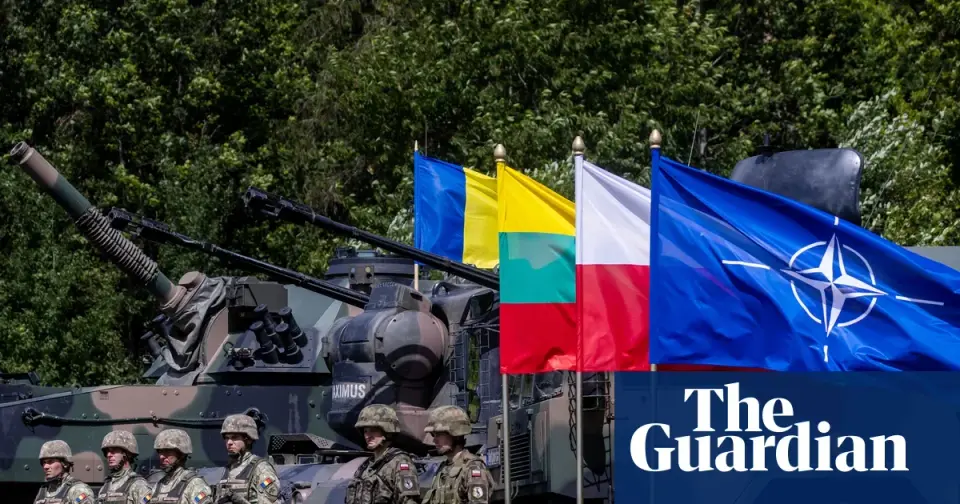
European intelligence officials warn that Russia is preparing to test NATO’s resolve through a campaign of sabotage and potential limited military incursions, rather than a full-scale invasion. While the Kremlin continues its war in Ukraine, it is simultaneously escalating 'shadow war' tactics across Europe, including arson, drone attacks, and disinformation, to disrupt support for Kyiv. Leaders in Poland, France, and the Baltics are urging unity and increased resilience, though concerns remain over the uncertainty of US commitment under President Trump and the potential for miscalculation in a fragmented alliance.
Key points
- European intelligence chiefs from Czechia, Latvia, and Sweden have warned that a Russian test of NATO could occur within months, not years, though the nature of the threat remains ambiguous.
- A pattern of hybrid attacks has emerged across Europe, including arson at defense facilities in Italy, Bulgaria, and Estonia, a drone incident at Germany’s Leipzig airport, and disinformation campaigns targeting political discourse.
- Polish Prime Minister Donald Tusk warned that Russia might launch drone or missile attacks on NATO territory, while French President Emmanuel Macron convened an emergency meeting with party leaders to discuss the threat.
- The Institute for the Study of War (ISW) detailed a notional scenario involving a limited Russian incursion into Narva, Estonia, using drones and special forces to create a crisis without triggering a full-scale war, aiming to fracture NATO unity.
- The UK has advised citizens to stockpile food and water, and Germany is preparing hospitals for potential attacks, reflecting a shift toward civil preparedness in response to the heightened threat environment.
- US President Donald Trump’s uncertain commitment to NATO’s mutual defense clause and his recent announcement of a permanent US Army base in Poland have added complexity to the deterrence equation, with Moscow potentially exploiting these divisions.
Background
This escalation follows a series of earlier warnings in 2026, including concerns that Trump’s skepticism toward NATO could embolden Russia to test the alliance. In August, Poland emphasized its deterrence posture and defense spending, while in September, a wave of sabotage at European defense sites prompted NATO to alert its members to the growing threat. These events underscore a broader trend of Russia leveraging hybrid tactics to undermine Western support for Ukraine.
How outlets are covering it
The Guardian and CNN emphasize the urgency of the threat, with European intelligence officials expressing stark warnings and leaders like Tusk and Macron taking concrete steps to address the situation. CNN highlights the strategic vulnerability of the Suwałki Gap and the uncertainty of US commitment under Trump, while the Guardian focuses on the 'hybrid war' and the challenge of defining the line between peace and war. The ISW provides a detailed, notional scenario of a limited Russian incursion, focusing on the potential for miscalculation and the need for NATO to demonstrate resilience. All sources agree on the seriousness of the threat but differ in their emphasis: the Guardian and CNN focus on the immediate political and diplomatic responses, while the ISW delves into the tactical and strategic implications of a potential limited conflict.
Why it matters
The escalating hybrid warfare and potential for limited military incursions by Russia pose a direct threat to NATO’s unity and the security of European states. The uncertainty surrounding US commitment and the potential for miscalculation in a fragmented alliance could lead to a broader conflict, making it crucial for NATO members to demonstrate resilience and unity. The situation also highlights the need for Europe to take greater responsibility for its own defense and to prepare for the possibility of war, as the traditional deterrence model faces unprecedented challenges.
What to watch
NATO is expected to continue strengthening its deterrence posture and resilience, with a focus on civil preparedness and defense spending. European leaders will likely seek to present a united front at the UN General Assembly, while also addressing the uncertainty of US commitment. The ISW scenario suggests that NATO must be prepared to respond to limited incursions without triggering a full-scale war, and that deterrence depends on demonstrating to Russia that its aggression will fail. The coming months will be critical in determining whether the alliance can maintain unity and effectively counter Russia’s hybrid and potential military threats.
- Tuesday briefing: Europe thinks Russia is preparing to test Nato’s limits The Guardian
- Senior NATO commander warns Putin is becoming more cavalier and open to risk as Ukraine war drags on AP News
- Beyond Ukraine: Why Europe is preparing for a wider conflict CNN
- What a Limited Russian Incursion Into Estonia Might Look Like: A Narva Scenario Institute for the Study of War
- Russia’s grey-zone attacks on Europe are growing more brazen The Economist
Want the full story? Read the original reporting
Read on The Guardian