
Iran’s IRGC pivots to domestic security as internal threats escalate
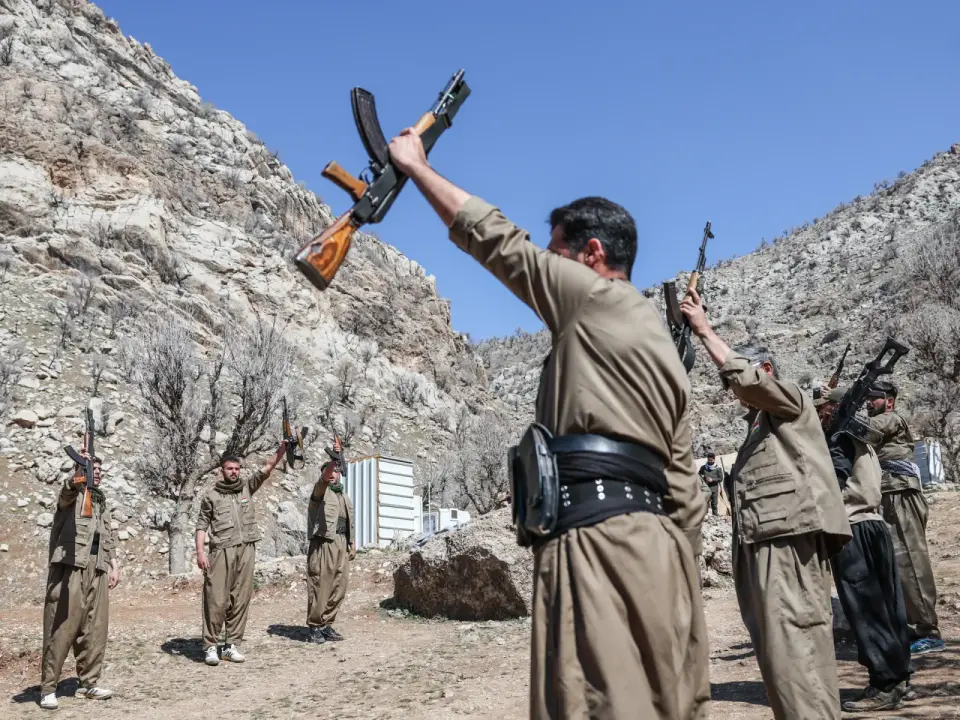
Iran’s Islamic Revolutionary Guard Corps (IRGC) is increasingly diverting resources from external operations to suppress domestic unrest, armed border groups, and economic instability. Recent leadership changes, including the return of hardliner Hossein Taeb to lead the Basij paramilitary force, signal a shift toward internal repression. Authorities are cracking down on protests, executing dissidents, and monitoring social media to prevent uprisings amid a collapsing economy and ongoing war with the US and Israel.
Key points
- Hossein Taeb, a hardliner sanctioned by the US for human rights abuses, was reappointed as commander of the Basij paramilitary force in August 2026, alongside other security leadership changes.
- The Basij is expanding surveillance of social media and deploying forces to markets, hospitals, and universities to preempt protests, using food aid to recruit volunteers amid severe economic hardship.
- Iranian authorities have executed at least 56 people on national security charges since March 19, 2026, including 27 linked to January protests, with over 100 others awaiting execution.
- Armed groups in Kurdish and Baloch border regions, including the newly formed People’s Fighters Front, are increasing attacks on security forces, forcing IRGC reinforcements to the borders.
- The Iranian rial has lost 60% of its value, food inflation has reached 128%, and unemployment stands at 9.2%, fueling fears of widespread civilian unrest.
Background
This development follows a period of intense regional conflict, including the US-Israel war on Iran that began in late February 2026. Earlier tensions, such as threats to Gulf states and Israel over infrastructure attacks, and evacuations of high-profile figures like Netanyahu’s son, underscore the broader instability. The current focus on domestic security marks a shift from Iran’s traditional strategy of projecting power abroad through proxies to prioritizing internal regime survival.
How outlets are covering it
Al Jazeera emphasizes the lack of organized pro-monarchy armed groups inside Iran, noting that recent arrests are largely tied to economic grievances rather than a coordinated coup. The Jerusalem Post argues that the IRGC’s inward focus reflects a strategic reversal, as the regime must now defend its own territory rather than relying on external 'strategic depth.' Al-Hurra highlights the Basij’s reorganization under Taeb as a move to purge reformist elements and intensify repression, citing opposition sources. UA.NEWS summarizes the Jerusalem Post’s analysis, focusing on the resource drain from internal security challenges. Analysts like Alex Vatanka and Trita Parsi caution that while separatist groups may not pose an existential threat alone, external support for them could escalate the conflict if the US deploys ground troops.
Why it matters
The shift toward domestic security indicates a potential weakening of Iran’s regional influence, as resources are diverted from external operations to internal repression. This could alter the dynamics of the ongoing US-Iran war and affect stability in neighboring countries, particularly Iraq and the Gulf states. The crackdown on dissent and economic collapse may also impact global energy markets and humanitarian conditions in the region.
What to watch
Watch for further IRGC deployments to border regions and potential escalations in Kurdish and Baloch areas. Monitor the impact of economic sanctions and the naval blockade on Iran’s economy and public unrest. Track any US or Israeli responses to internal Iranian developments, particularly if the US considers deploying ground troops or supporting armed groups. Observe the outcome of the mid-term elections in the US, which may influence Trump’s approach to Iran.
- The domestic armed threat facing Iran Al Jazeera
- Tehran’s Biggest Enemy May Be Inside Iran The Times of Israel
- Iran’s strategic depth is becoming a domestic burden The Jerusalem Post
- Iran’s Basij Tightens Grip as Domestic Pressures Grow الحرة
- Jerusalem Post author says internal pressure on IRGC is growing in Iran UA.NEWS
Want the full story? Read the original reporting
Read on Al Jazeera