
IRGC Chief Visits Underground Missile Site as Iran Defies US Destruction Claims
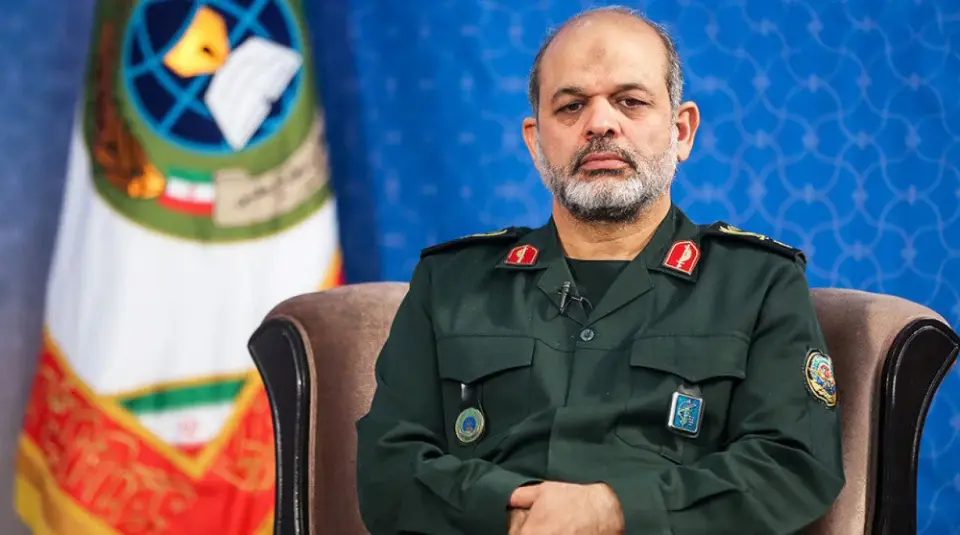
IRGC Commander Ahmad Vahidi toured a subterranean missile facility for the first time, inspecting a new dual-launcher system. The visit coincides with Iranian claims of expanded missile capabilities despite US assertions that its industrial base is largely destroyed. Simultaneously, tensions in the region escalated with reported strikes on oil tankers in the Strait of Hormuz and an Israeli airstrike in Gaza.
Key points
- IRGC Chief Commander Ahmad Vahidi and Aerospace Force Chief Majid Mousavi toured an underground missile city, described by state media as Vahidi’s first visit to the site.
- The facility features a new launcher capable of firing two liquid-fueled missiles, which Iranian officials claim offers greater efficiency and trajectory adjustability compared to previous solid-fuel systems.
- Iranian officials stated that the US has not destroyed Iran’s missile program, contradicting Washington’s claims that 80% of Iran’s industrial base has been eliminated.
- Three oil tankers were attacked in or near the Strait of Hormuz, with Iran’s navy claiming one hit a naval mine, while the UK Maritime Trade Operations Center reported projectile strikes.
- An Israeli airstrike in Gaza’s Tel al-Hawa district killed three men in a food truck, which the Israeli military claimed was transporting supplies to Islamic Jihad militants.
Background
This development follows the November 10 unveiling of the same underground facility, which sparked domestic criticism over military spending amid high inflation and energy shortages. Earlier satellite data indicated Iran was rapidly reconstructing missile infrastructure underground after US and Israeli airstrikes. Tehran has also recently lifted its self-imposed 2,000-kilometer range limit on ballistic missiles, asserting production capacity of approximately 50 missiles monthly despite Western intelligence estimates.
How outlets are covering it
Iranian state media, including Mehr News Agency and Tasnim, emphasized the resilience of the IRGC’s aerospace force, with Vahidi threatening 'humiliation and defeat' for enemies. AP News highlighted the technical advancement of the new liquid-fueled dual-launcher and noted that the site’s location remains undisclosed. The Times of Israel focused on the political messaging, quoting Vahidi’s threats of 'degradation' for adversaries. While Iranian officials deny the destruction of their missile program, Western officials maintain that the industrial base has been significantly damaged. The AP report also noted that the unveiling coincided with diplomatic contacts between Iran and Qatar, suggesting a parallel track of negotiation amidst military posturing.
Why it matters
The public display of advanced missile technology by the IRGC signals Tehran’s intent to maintain a deterrent capability despite sustained US and Israeli airstrikes. The simultaneous attacks on shipping in the Strait of Hormuz and the Israeli strike in Gaza indicate that regional tensions remain high, with Iran leveraging its military assets to pressure the US economically and diplomatically. The discrepancy between Iranian claims of robust production and Western assessments of destruction remains a critical variable in the ongoing conflict.
What to watch
Iranian Deputy Foreign Minister Kazem Gharibabadi indicated that Tehran remains in contact with Qatari mediators to explore diplomatic opportunities. The US and Israel are expected to continue monitoring Iran’s missile production and potential strikes on shipping. The Israeli military is likely to maintain operations in Gaza, while Iran may further escalate its campaign in the Strait of Hormuz to pressure global energy markets.
- IRGC chief cmdr. visits underground missile city for 1st time Mehr News Agency
- Iran strikes 3 tankers as it shows off missile launchers, and other Mideast news AP News
- Iran posts video of new underground ‘missile city’ NewsNation
- IRGC chief conducts first tour of underground ‘missile city,’ Iranian state media says The Times of Israel
- IRGC has new surprises for enemy on battlefield : Mousavi Mehr News Agency
Want the full story? Read the original reporting
Read on Mehr News Agency