
US-South Korea drills cut short as Trump pushes for Kim summit
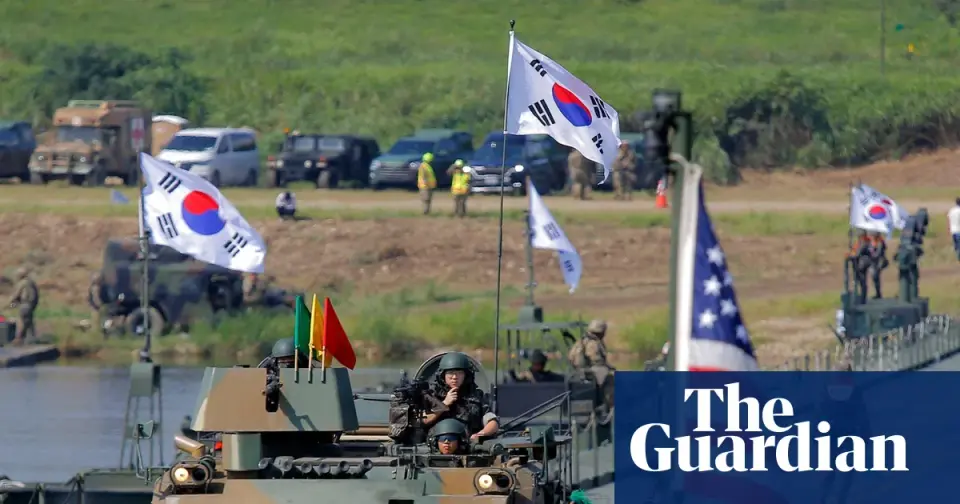
The US and South Korea have abruptly shortened the annual Ulchi Freedom Shield military exercises by six days, ending them early at Washington's request. This move coincides with President Donald Trump's push to arrange a summit with North Korean leader Kim Jong-un, potentially during the November APEC summit in China. While South Korea was caught off guard by the directive, the US aims to signal openness to Pyongyang, though security experts warn the alliance remains intact despite the reduced training scope.
Key points
- The Ulchi Freedom Shield exercise, starting Monday, will end Friday, six days early, per South Korea's Joint Chiefs of Staff.
- Joint field training exercises are also being partially reduced, though details are still being finalized between the two militaries.
- Trump ordered the Pentagon to scale back drills on Sunday, citing his relationship with Kim Jong-un and the cost of the exercises.
- The Wall Street Journal reports Trump is pushing for a meeting with Kim as early as autumn, possibly during the November APEC summit in Shenzhen, China.
- South Korean Foreign Minister Cho Hyun stated Seoul was not informed in advance of Trump's directive.
- Previous cuts to joint exercises in 1992, 1994, and 2018 were decided before the drills began, unlike this mid-exercise reduction.
Background
This development follows a series of recent tensions between the US and South Korea, including disputes over Iran policy and defense spending. In August 2026, President Lee Jae Myung called for greater military independence after Trump initially ordered a substantial cut to joint drills. Trump had previously criticized Seoul for not supporting US efforts regarding Iran and highlighted his 'very good relationship' with Kim Jong-un. The US maintains a significant military presence in South Korea, including Camp Humphreys, the largest US base outside the US, and approximately 28,000 troops stationed on the peninsula.
How outlets are covering it
The Guardian and CNN emphasize the abruptness of the decision, noting that South Korea was caught off guard and that the reduction is unprecedented in timing, occurring after the exercises had already begun. CNBC highlights the broader implications for the 70-year alliance, suggesting that reduced US involvement may push South Korea toward greater defense autonomy and new partnerships with neighbors like Japan and Australia. Politico focuses on the security implications, arguing that while the drills are cut, the underlying deterrence remains strong due to the US troop presence and integrated command structures. However, lawmakers like Sen. Jack Reed criticize the move as appeasement of a totalitarian regime, warning that it signals to China and Russia that the US may abandon its allies. Trump's motivation appears transactional, linked to South Korea's slow-walking of a $350 billion investment pledge, according to Politico.
Why it matters
The early termination of the Ulchi Freedom Shield exercises signals a significant shift in US-South Korea relations, prioritizing diplomatic overtures to North Korea over traditional alliance commitments. This move could embolden North Korea and unsettle regional security dynamics, while also prompting South Korea to accelerate its military independence. The potential for a Trump-Kim summit, possibly in November, adds uncertainty to the geopolitical landscape, with implications for US influence in Asia and the broader balance of power involving China and Russia.
What to watch
The US and South Korea are finalizing details on the reduced field training exercises. Trump is actively pushing for a meeting with Kim Jong-un, potentially during the November APEC summit in Shenzhen, China. South Korea is expected to continue coordinating with Washington while strengthening its own military capabilities. Congress is likely to extend restrictions on reducing US troop levels in the 2027 National Defense Authorization Act. The outcome of the US-North Korea talks and the long-term impact on the US-South Korea alliance will be closely monitored by regional and global stakeholders.
- US-led drills to end six days early, South Korea says, amid Trump push for Kim Jong-un talks The Guardian
- Military drills between US and South Korea cut short at Washington’s request CNN
- Seoul, Washington to halve joint drills as Trump reportedly seeks summit with North Korea's Kim CNBC
- Trump’s threats to Seoul may be worse than their bite Politico
- Facing Quagmire in Iran, Trump Turns to a Familiar Face: North Korea’s Kim Jong-un The New York Times
Want the full story? Read the original reporting
Read on The Guardian