
Mecca Pact Leaders Convene in Tehran to Avert US-Iran War Amid Houthi Strikes
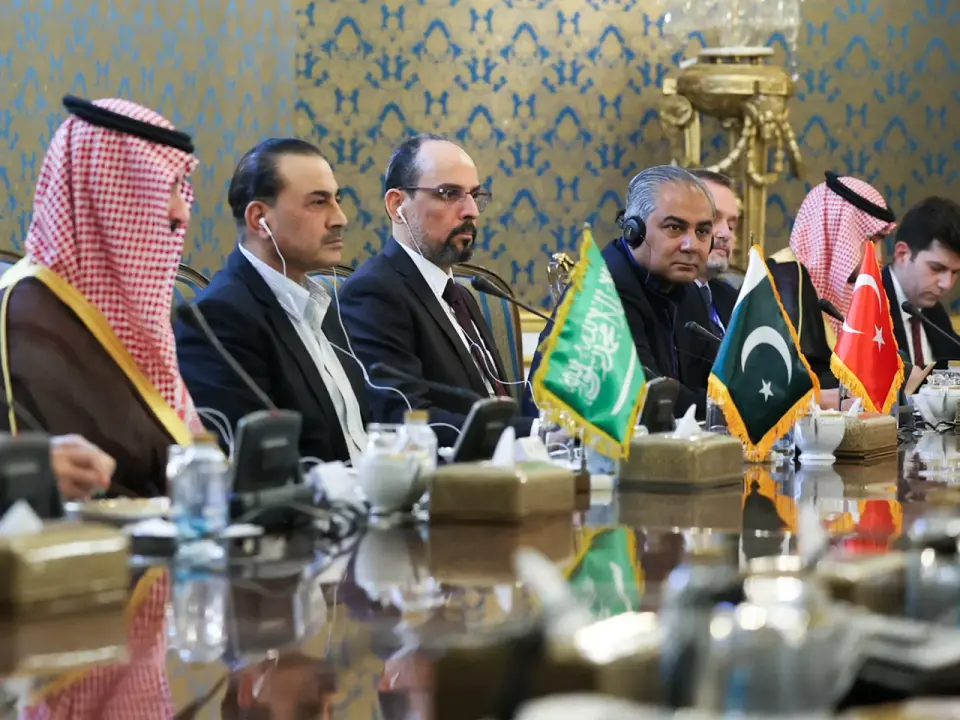
Senior officials from Saudi Arabia, Pakistan, and Turkey met with Iranian leaders in Tehran to de-escalate tensions with the US and address Houthi attacks. While the talks aim to prevent renewed war, analysts doubt they will resolve core disputes over Iran's nuclear program and the Strait of Hormuz.
Key points
- Saudi Defense Minister Khalid bin Salman, Pakistani Army Chief Asim Munir, and Turkish Intelligence Chief Ibrahim Kalin met with Iranian President Masoud Pezeshkian and Security Chief Mohsen Rezaei in Tehran.
- The visit by the Mecca Joint Defence Agreement signatories is the first high-level joint meeting since the Saudi-Houthi conflict escalated, coinciding with Qatari mediation efforts.
- Houthi rebels launched new missile and drone attacks on Saudi infrastructure, including Riyadh's airport and oil facilities, prompting a US State Department order for non-essential staff to leave Saudi Arabia.
- Oil prices dipped slightly on Monday as the diplomatic talks reduced immediate fears of a broader regional war, though Brent crude remains elevated due to geopolitical risk premiums.
- Iran has refused to surrender enriched uranium or accept US demands for international inspections, while the US considers strikes on Iranian civilian infrastructure to force a diplomatic breakthrough.
Background
This diplomatic push follows a June memorandum of understanding that collapsed after renewed attacks. Previous tensions include a US naval blockade halting Iranian oil exports and a February US-Israeli attack that prompted Iranian strikes on Gulf states. Saudi Arabia has also faced dwindling air-defense stocks, leading to requests for Western support.
How outlets are covering it
Al Jazeera and The New York Times emphasize the symbolic significance of the Mecca Pact's visit, viewing it as an attempt to sideline the US from regional security. However, analysts cited by Al Jazeera, such as Umer Karim, argue the talks lack leverage to change Iran's strategic calculus. CNBC focuses on the market impact, noting that while oil prices fell slightly, a $20 per barrel risk premium remains due to uncertainty. AP News highlights the stalled nature of negotiations, noting that the US and Iran remain at odds over the sequencing of concessions, with Iran rejecting US demands for 'complete surrender.'
Why it matters
The outcome of these talks could determine whether the Middle East faces a renewed all-out war or a fragile ceasefire. Success in de-escalating the Houthi-Saudi conflict is critical for stabilizing global energy supplies and preventing a wider regional conflict involving US and Israeli strikes on Iran.
What to watch
Observers will watch for any concessions from Iran regarding the Strait of Hormuz or nuclear inspections. The US and Israel are reportedly planning potential strikes ahead of upcoming elections, while Iran has warned it will target data centers and internet cables if attacked. Oil markets will remain volatile, with traders monitoring for further Houthi strikes on Saudi refining infrastructure.
- Mecca defence alliance members in Tehran to defuse Iran-US, Yemen tensions Al Jazeera
- Iran war live: UN chief calls for ‘maximum restraint’ as rhetoric ramps up Al Jazeera
- Oil prices fall as Saudi defense minister travels to Iran for talks to de-escalate conflict CNBC
- Flurry of Diplomacy in Iran Amid Reports of U.S. and Israeli Plans to Renew War The New York Times
- Delegations meet in Iran with Mideast region on edge over potential for renewed fighting AP News
Want the full story? Read the original reporting
Read on Al Jazeera