
Moscow Restaurant Blast Highlights Security Gaps in Putin's 'Normalcy' Strategy
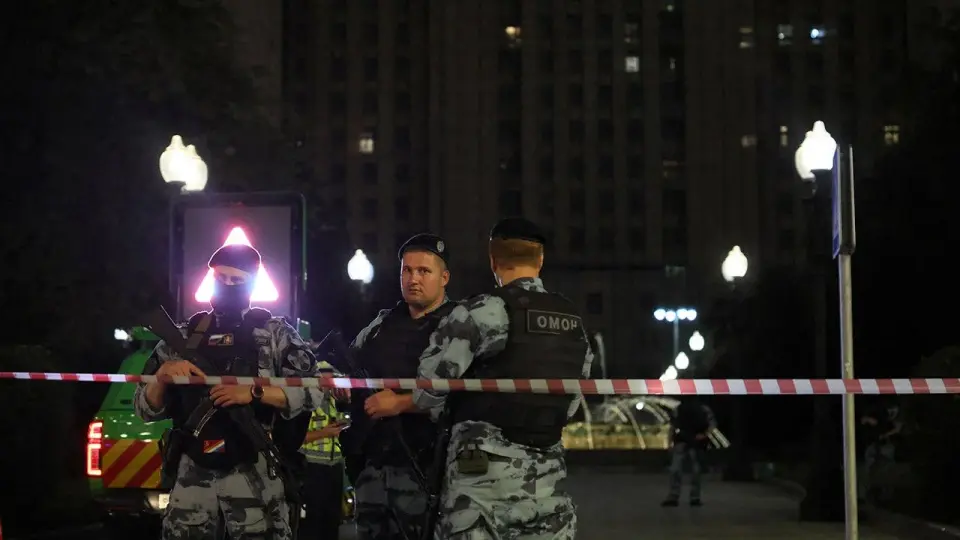
A deadly explosion at an upscale Moscow restaurant on Aug. 1, 2026, killed five people and injured 19, according to the Russian Embassy in Rome. Analysts suggest the attack exposed critical security flaws in the Kremlin's effort to project normalcy, potentially targeting senior military figures like Col. Gen. Alexander Chaiko. While no group has claimed responsibility, the method mirrors previous Ukrainian covert operations against high-value targets inside Russia.
Key points
- An improvised explosive device detonated near the entrance of the Balzi Rossi restaurant in central Moscow on Aug. 1, 2026, killing five and injuring 19, per the Russian Embassy in Rome.
- Russian media claimed the blast targeted Col. Gen. Alexander Chaiko, recently appointed chief of Russia’s aerospace forces, though this could not be independently verified.
- The National Anti-Terrorism Committee stated an unidentified woman carried the device but was stopped by security before detonation, with investigators suggesting she may not have known it was a bomb.
- Moscow Mayor Sergei Sobyanin condemned the incident as a 'brutal terrorist attack,' vowing punishment for those responsible.
- The Russian Embassy in Rome accused Kyiv of carrying out the attack, labeling it evidence of a 'Ukrainian terrorist contagion' spreading.
Background
This incident follows a pattern of asymmetric warfare tactics employed by Ukraine against Russian high-value targets since the 2022 invasion. Previous covert assassinations inside Russia included those of Lt. Gen. Igor Kirillov, Lt. Gen. Yaroslav Moskalik, and pro-Kremlin blogger Vladlen Tatarsky. The current event aligns with broader geopolitical tensions where Western support for Ukraine’s deep-strike capabilities has intensified, despite concerns that such actions may energize Moscow’s hawks rather than force a ceasefire.
Why it matters
The attack underscores the vulnerability of Russian elite security protocols amidst Putin’s push for a facade of stability. It highlights how Ukraine leverages Russia’s porous borders and vast territory to execute covert operations, challenging Moscow’s conventional military superiority and potentially influencing future diplomatic and military strategies in the conflict.
What to watch
Investigations into the bombing are ongoing, with Russian authorities focusing on the unidentified courier and remote detonation methods. Ukraine has not publicly commented on the incident, and no group has claimed responsibility. The event may prompt stricter security measures for Russian military figures but could also escalate tensions if Moscow attributes the attack to Kyiv.
Want the full story? Read the original reporting
Read on Fox News