
North Korea Halts Missile and Ammunition Deliveries to Russia Over Diplomatic Spat
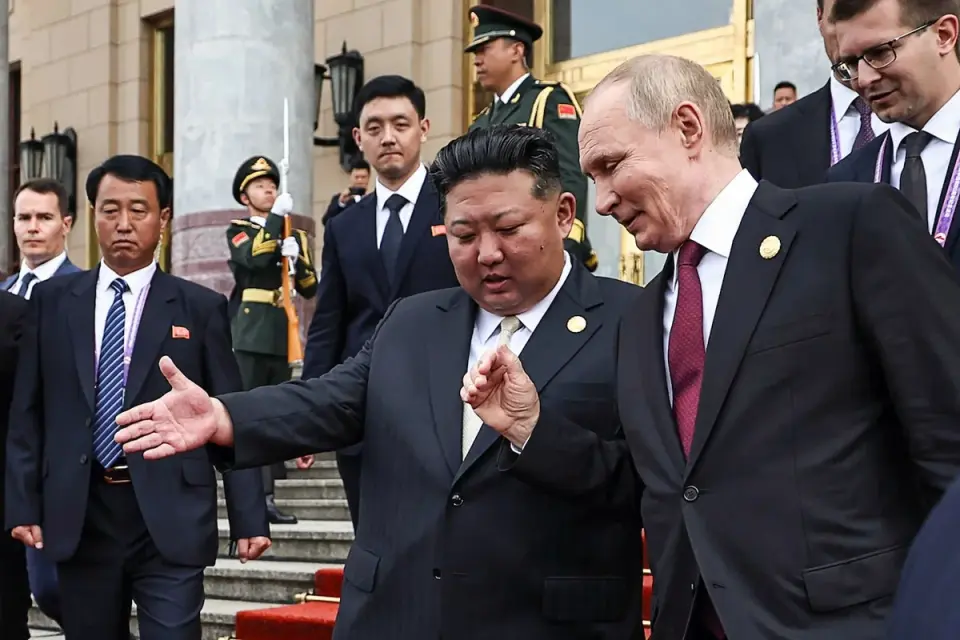
Ukrainian intelligence reports that North Korea has suspended military aid to Russia, including KN-23 ballistic missiles and artillery ammunition, following a diplomatic dispute. The freeze stems from Russian Deputy Foreign Minister Andrey Rudenko’s October suggestion that Moscow could mediate between North and South Korea, a move Pyongyang viewed as inconsistent with their alliance. Kim Jong Un personally ordered the suspension, which also includes banning Russian military aircraft from North Korean airspace and pausing plans to expand the North Korean troop contingent in Russia from 8,500 to 50,000. While the partnership faces operational difficulties and heavy casualties, HUR describes the move as a slowdown rather than a complete breakdown.
Key points
- Ukraine’s Main Directorate of Intelligence (HUR) reports that North Korea has halted deliveries of KN-23 ballistic missiles and artillery ammunition to Russia.
- The suspension was ordered personally by North Korean leader Kim Jong Un after Russian Deputy Foreign Minister Andrey Rudenko stated in October that Moscow would facilitate de-escalation between Seoul and Pyongyang.
- North Korean Foreign Minister Choe Son-ui criticized the Russian remarks as inconsistent with alliance commitments and demanded clarification, leading to the freeze.
- The restrictions also include a ban on Russian military transport aircraft using North Korean airspace and a pause on expanding the North Korean troop contingent in Russia from 8,500 to 50,000 personnel.
- HUR notes that military cooperation faces ongoing issues, including poor interoperability, language barriers, and inadequate logistical support, alongside heavy casualties among North Korean troops in the Kursk region.
Background
The suspension occurs against a backdrop of deepening military ties between Moscow and Pyongyang since 2022, formalized by a mutual defense pact in June 2024. North Korea has supplied Russia with artillery shells, ballistic missiles, and troops, with HUR estimating that Pyongyang provides 25% to 40% of the ammunition used by Russian forces. In November 2025, Ukrainian intelligence reported that North Korea had already halved its artillery deliveries due to depleted stockpiles. Recently, on November 16, Ukrainian President Volodymyr Zelensky warned that Russia was receiving dozens of North Korean ballistic missiles monthly, urging international partners to increase weapon deliveries to Ukraine to maintain parity. The current freeze follows a diplomatic rift triggered by Moscow’s proposed mediation role in Korean Peninsula tensions, a move Pyongyang viewed as contrary to its 'two hostile states' doctrine.
How outlets are covering it
All four sources (Kyiv Post, Ukrainska Pravda, Kyiv Independent, and UNITED24 Media) agree on the core facts: the suspension of KN-23 missiles and artillery, the airspace ban, the troop expansion pause, and the diplomatic trigger involving Rudenko’s October remarks. However, they differ in emphasis and detail. The Kyiv Post and Ukrainska Pravda provide specific casualty figures (7,058 total, 2,251 killed) and note that HUR views this as a 'slowdown' rather than a complete breakdown. The Kyiv Independent highlights the broader context of North Korea’s role in Russia’s war machine and includes a statement from a South Korean official condemning the cooperation as a violation of UN resolutions. UNITED24 Media adds context about North Korea’s ongoing missile development, including cluster warheads, and references Zelensky’s recent warnings about missile parity. The Kyiv Independent also notes that HUR did not specify how it obtained the information and could not independently verify it, adding a layer of caution to the intelligence claims.
Why it matters
The suspension signals a potential shift in the Russia-North Korea military partnership, which has been critical for Russia’s war effort in Ukraine. If the freeze persists, it could reduce Russia’s access to artillery and ballistic missiles, potentially impacting its ability to sustain offensive operations. The diplomatic rift also highlights the fragility of the alliance, as Pyongyang prioritizes its own strategic interests over Moscow’s diplomatic maneuvers. For Ukraine, the pause may offer temporary relief from North Korean-supplied weapons, but the underlying military cooperation remains a long-term threat. The incident also underscores the complex dynamics of international alliances, where diplomatic missteps can have significant military consequences.
What to watch
The extent and duration of the suspension remain unclear, according to HUR. Russia may seek to resolve the diplomatic dispute to restore military aid, while North Korea may use the pause to leverage better terms or technology transfers. The situation could evolve if Moscow clarifies its policy toward South Korea or if North Korea reassesses its alliance commitments. Additionally, the ongoing operational difficulties and heavy casualties among North Korean troops in the Kursk region may further strain the partnership. International observers, including South Korea and the UN, will likely monitor the situation for signs of a broader breakdown in the Russia-North Korea military relationship.
- North Korea Halts Arms Supplies to Russia Due to Diplomatic Dispute, Ukraine Says Kyiv Post
- Ukraine says North Korea temporarily halted missile shipments to ally Russia Reuters
- North Korea pauses deliveries of ballistic missiles and artillery ammunition to Russia Українська правда
- North Korea pauses military aid to Russia, Ukrainian intelligence says The Kyiv Independent
- Moscow Offers to Mediate Korean Tensions—Kim Jong Un Responds by Freezing KN-23 Ballistic Missile Deliveries UNITED24 Media
Want the full story? Read the original reporting
Read on Kyiv Post