
Oman evacuates crew after tanker attack in Strait of Hormuz
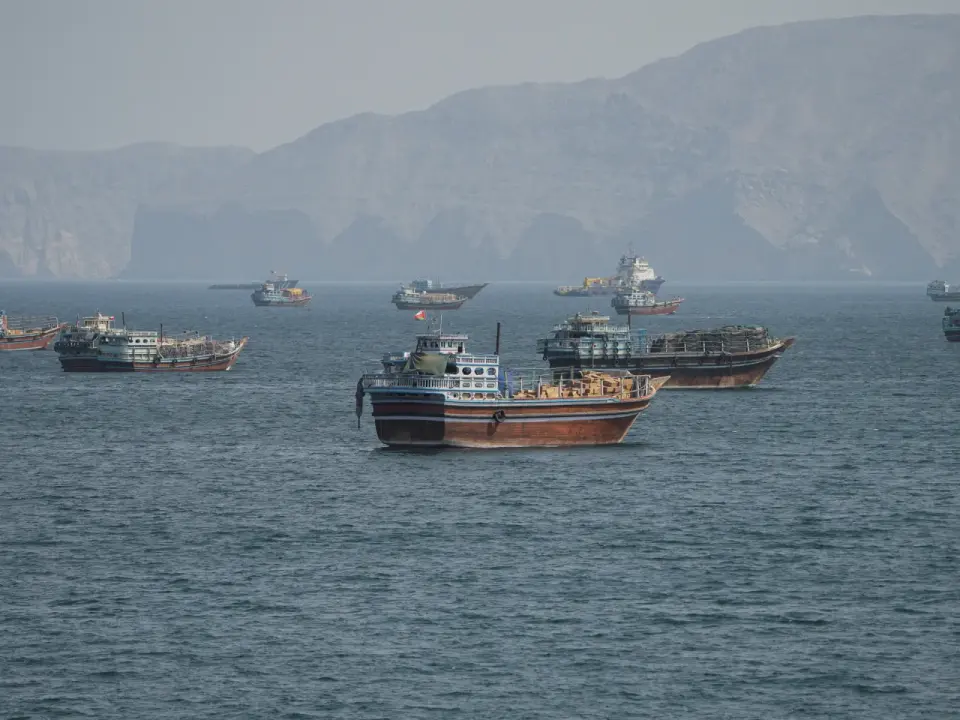
Oman’s air force evacuated 10 injured crew members from the Panamanian-flagged oil tanker On Peace after it was struck by a projectile 9 nautical miles off the Omani port of Limah on October 7. The attack, which ignited a fire on the vessel, left 12 of the 19 crew members injured, 11 of whom are Indian nationals. No group has claimed responsibility for the incident. This attack is part of a broader surge in maritime insecurity in the Strait of Hormuz, where Iran has effectively controlled the waterway since the US-Israel war on Iran began in late February. While Middle East crude exports have recently rebounded to pre-war levels, they remain dependent on significant US military protection and face rising costs and risks for shipping companies.
Key points
- The On Peace tanker was hit 9 nautical miles off Limah, Oman, on October 7, causing a fire and injuring 12 crew members.
- Oman’s air force evacuated 10 injured crew members to Khasab hospital in Musandam governorate for medical treatment.
- India’s Foreign Ministry confirmed that 11 of the 12 injured crew members are Indian nationals, out of 17 Indian sailors on the 19-person crew.
- No group has claimed responsibility for the attack on the On Peace.
- Middle East crude exports reached 18.3 million barrels per day on September 30, matching pre-war levels, but Brent crude prices remain high at $101.51 per barrel.
- Iran has frequently attacked commercial vessels not using its designated route and has sought to charge ships for passage through the Strait of Hormuz.
Background
The Strait of Hormuz has been a critical flashpoint since the US-Israel war on Iran began in late February 2026. Iran effectively closed the waterway and has frequently attacked commercial vessels not using its designated route, while also seeking to charge ships for passage. In August 2026, tensions spiked as Oman and Iran pursued a joint management plan with tolls, and a second commercial tanker was struck. In September 2026, the US and Iran escalated a months-long maritime confrontation, with US forces striking Iranian oil tankers and Iran firing ballistic missiles at US warships. These events have unsettled energy markets and pushed oil prices higher, with Brent crude topping $90 per barrel in early September.
How outlets are covering it
Al Jazeera emphasizes the immediate humanitarian response, highlighting Oman’s evacuation of the injured crew and India’s diplomatic concern over the safety of its seafarers. It notes that no group has claimed responsibility for the attack on the On Peace. CNBC, in contrast, focuses on the broader economic and strategic implications, arguing that the rebound in oil exports is fragile and unsustainable without a negotiated settlement or capitulation by Tehran. CNBC highlights the high costs of shipping, including freight and insurance rates, and the reliance on US military protection to maintain oil flows. It also notes that Iran continues to assert control over the strait, with the Revolutionary Guard recently ordering a tanker to turn around or face attack. While Al Jazeera reports on the specific incident and its immediate aftermath, CNBC provides a broader analysis of the sustainability of oil flows and the ongoing risks in the region.
Why it matters
The attack on the On Peace tanker underscores the continued volatility and insecurity in the Strait of Hormuz, a critical chokepoint for global oil supplies. The incident highlights the risks faced by seafarers, particularly Indian nationals, who are among the largest contributors to merchant shipping worldwide. The ongoing attacks and Iran’s control over the waterway threaten the stability of oil exports, which have recently rebounded to pre-war levels but remain dependent on significant US military protection. High oil prices and shipping costs reflect the ongoing risks and uncertainties in the region, with potential implications for global energy markets and economic stability. The incident also raises questions about the long-term sustainability of oil flows through the Strait of Hormuz without a diplomatic resolution to the conflict.
What to watch
The situation in the Strait of Hormuz is likely to remain volatile, with continued risks of attacks on commercial vessels. Iran’s assertion of control over the waterway and its attempts to charge ships for passage may lead to further incidents. The US military commitment to protect tankers transiting the strait will remain critical, but the high costs and risks may make the current system unsustainable. Diplomatic efforts to resolve the conflict and restore freedom of navigation in the Strait of Hormuz will be essential to stabilizing oil flows and reducing risks for seafarers. The next few weeks will likely see continued monitoring of shipping incidents and potential escalations in the maritime confrontation between the US and Iran.
- Oman evacuates injured crew from attacked tanker in Strait of Hormuz Al Jazeera
- Attacks on tankers in Hormuz hit highest of any week since start of Iran war, sources say Reuters
- Iran Ramps Up Ship Attacks in Hormuz as Oil, Gas Flows Rise Bloomberg.com
- Rebounding oil exports through Strait of Hormuz are vulnerable to stepped-up Iranian tanker attacks CNBC
- Oil Was Pouring Out of Hormuz Again. Then Attacks on Ships Resurged. WSJ
Want the full story? Read the original reporting
Read on Al Jazeera