
Open-Source Maps Expose US Base Vulnerabilities in Iran War
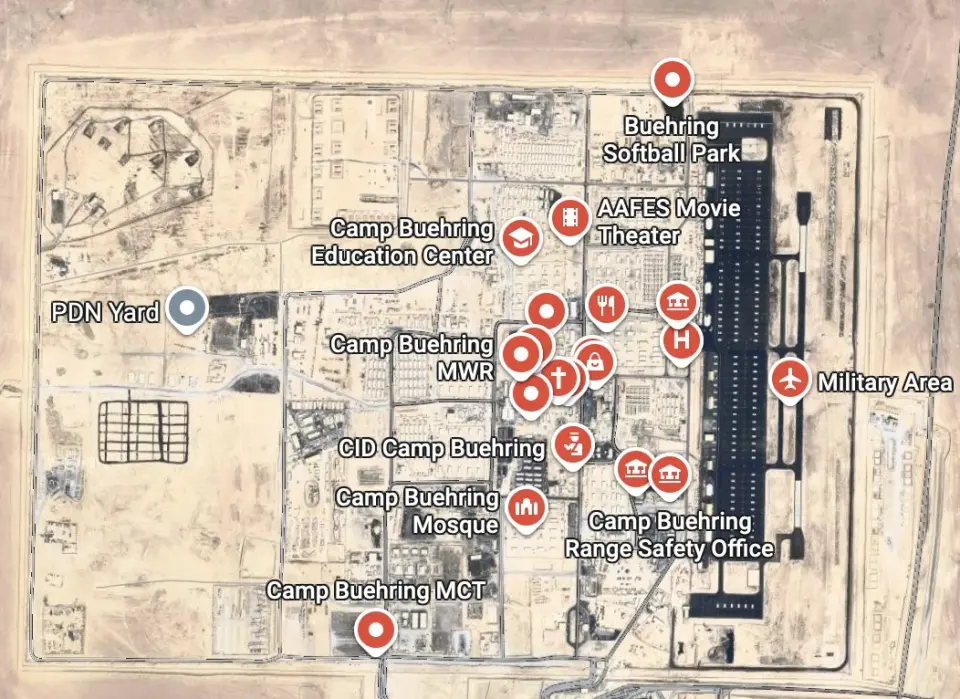
Bellingcat reports that publicly available mapping platforms like Google Maps and Bing provided detailed layouts of US military bases in the Middle East, potentially aiding Iranian targeting. While Iran used Russian intelligence, open-source data revealed facility locations, activity patterns, and infrastructure. The AP and WSJ confirm that Iran’s strikes, which began in February 2026, have damaged 26 bases, destroying early-warning radars and troop housing. The Pentagon estimates war costs at $47.1 billion, excluding base repairs, which could exceed $15 billion. Critics argue the conflict exposes flaws in US operational security and fixed infrastructure reliance.
Key points
- Bellingcat found that Google Maps and Bing contained detailed labels for US base facilities, including gyms, fuel points, and headquarters, which matched satellite images of Iranian strikes.
- Iran’s campaign, starting in February 2026, targeted early-warning radars first to degrade US air defenses before striking aircraft and living quarters.
- The AP analysis confirms over 115 strikes damaged 26 US bases, with the most severe damage in Kuwait and Jordan.
- A $500 million THAAD radar in Jordan was destroyed, and the US has only 13 such units globally, making replacement difficult.
- The Pentagon’s $47.1 billion war cost estimate excludes base reconstruction, which the WSJ estimates could cost over $4 billion.
- Experts note that US bases in the Middle East were previously considered secure rear areas, a miscalculation exposed by the conflict.
Background
The US-Iran conflict began on February 28, 2026, with an April ceasefire that did not end hostilities. Previous coverage noted that Iran’s strikes have become more precise, targeting specific infrastructure. The Pentagon’s cost estimates have risen, but base repair costs remain unaccounted for in official figures. The conflict has forced the US to relocate critical assets out of the Persian Gulf, raising questions about the future of fixed military infrastructure in the region.
How outlets are covering it
Bellingcat emphasizes the role of open-source intelligence, noting that public mapping data revealed base layouts and activity patterns, which could have informed Iranian targeting. The AP focuses on the strategic sequence of Iranian attacks, highlighting the destruction of early-warning systems before broader infrastructure damage. The WSJ quantifies the damage, estimating $5-15 billion in base losses, and notes Iran’s improved precision. Modern Diplomacy critiques the political and economic implications, arguing that the war contradicts the 'America First' promise and benefits defense contractors. While Bellingcat highlights the vulnerability of public data, the AP and WSJ focus on the physical and financial toll, and Modern Diplomacy questions the political justification for the conflict.
Why it matters
The conflict exposes critical vulnerabilities in US military infrastructure and operational security. The destruction of expensive, hard-to-replace systems like THAAD radars and the high cost of base repairs strain US defense budgets and munitions stocks. The reliance on fixed infrastructure in the Middle East is being reevaluated, with experts suggesting a shift toward more mobile and dispersed assets. The political implications are significant, as the war costs and lack of a clear end-state challenge the administration’s foreign policy promises and raise questions about the sustainability of US military commitments in the region.
What to watch
The US and Iran may resume hostilities after the November midterms, with Trump hinting at new strikes. The Pentagon faces pressure to fund base repairs and replenish munitions, but the $67 billion supplemental request has stalled in Congress. Defense contractors are positioned to benefit from increased procurement, but the long-term impact on US military readiness and regional stability remains uncertain. The conflict may force a reevaluation of US base strategies in the Middle East, with a potential shift away from fixed infrastructure.
- How Online Maps Lay Bare the US Military Bases Targeted by Iran Bellingcat
- Iran targeted US air defenses then hit aircraft and buildings on Mideast bases, AP analysis finds AP News
- The Methodology Behind the Journal’s Investigation of Damage to U.S. Bases WSJ
- Iran Destroys $500 Million THAAD Radar, Weakens US Detection Systems 조선일보
- The $47 Billion Bill for “America First” Modern Diplomacy
Want the full story? Read the original reporting
Read on Bellingcat