
Putin Decree Enables State Takeover of Vulnerable Russian Infrastructure
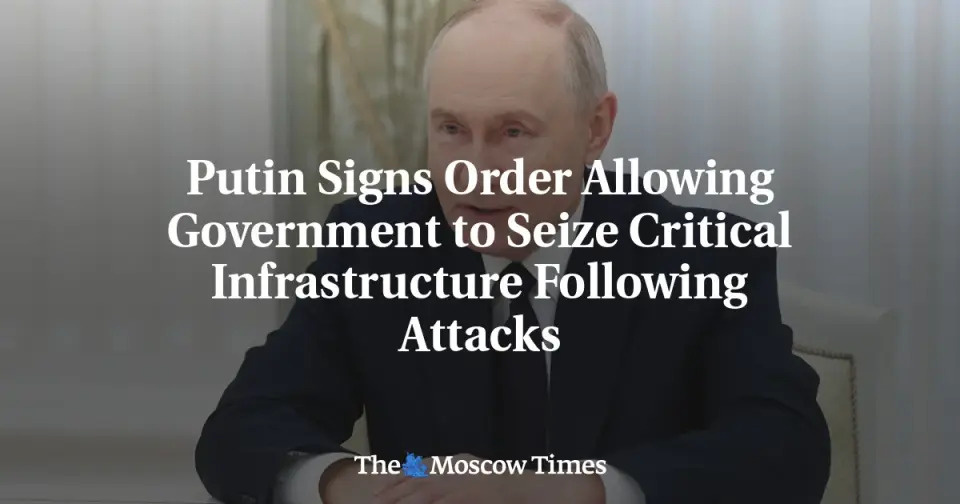
President Vladimir Putin has signed an executive order granting the Russian government the authority to seize control of critical infrastructure sites deemed inadequately protected against Ukrainian strikes. The decree allows the state to assume physical, financial, and legal control over facilities in sectors such as energy, logistics, and communications if operators fail to maintain security or repair damage promptly. This move follows a surge in Ukrainian drone attacks targeting Russian oil refineries and commercial warehouses, which have caused significant fuel shortages and economic strain. The new powers aim to ensure the continuity of essential services and national security by overriding private ownership when necessary.
Key points
- Putin’s new executive order allows the state to take temporary control of critical infrastructure if it is poorly protected or slow to repair damage.
- The decree covers sectors including fuel, energy, industrial, communications, transportation, and commercial logistics.
- Ukraine’s intensified drone campaign has damaged Russian oil refineries and warehouses, leading to fuel shortages and economic instability.
- The state can transfer ownership powers to the Federal Agency for State Property Management or another designated body.
- The move follows a week of increased Ukrainian attacks on Russian infrastructure, including strikes on Ozon and Wildberries facilities.
Background
This development follows earlier reports of Putin’s government taking steps to rebuild damaged commercial warehouses and address economic challenges caused by the war. The decree is part of a broader response to Ukraine’s long-range strike campaign, which has targeted Russian energy and logistics infrastructure, exacerbating fuel shortages and public discontent. The Kremlin has also been managing domestic unrest through paramilitary deployments and restrictions on public gatherings, reflecting the growing impact of the conflict on Russian society and economy.
How outlets are covering it
The Moscow Times emphasizes the broad scope of Putin’s decree, highlighting its application across multiple sectors and the state’s ability to assume control over assets. Al Jazeera focuses on the economic and societal difficulties caused by Ukraine’s drone campaign, noting the impact on fuel availability and public opinion. The Institute for the Study of War provides a detailed analysis of the economic fallout, including gasoline shortages and the Kremlin’s attempts to manage public unrest, while also noting the broader context of the war’s impact on Russia’s economy and society. All sources agree on the significance of the decree but differ in their emphasis on the economic, political, and social implications of the move.
Why it matters
The decree signals a shift in Russia’s approach to managing critical infrastructure in the face of sustained Ukrainian attacks. By allowing the state to take control of vulnerable facilities, Putin aims to ensure the continuity of essential services and mitigate the economic and social impacts of the war. This move also reflects the Kremlin’s growing concern about public unrest and the need to maintain stability amid ongoing fuel shortages and economic strain. The decree could have long-term implications for Russia’s economy and its relationship with private sector operators, as it expands the state’s role in managing critical infrastructure.
What to watch
The Russian government is expected to implement the decree by identifying and taking control of critical infrastructure sites deemed inadequately protected. This could lead to increased state involvement in sectors such as energy, logistics, and communications, potentially affecting private sector operations and investment. The Kremlin may also continue to manage public unrest through paramilitary deployments and restrictions on public gatherings, as it seeks to maintain stability amid ongoing fuel shortages and economic strain. The impact of the decree on Russia’s economy and its relationship with private sector operators will be closely monitored in the coming weeks.
- Putin Signs Order Allowing Government to Seize Critical Infrastructure Following Attacks The Moscow Times
- Russia to seize poorly protected infrastructure amid Ukraine drone attacks Al Jazeera
- Putin says Ukraine opened 'Pandora's box' with strikes on economic targets Reuters
- Russian Offensive Campaign Assessment, August 19, 2026 Institute for the Study of War
- Putin Allows Russia to Take Over Poorly Protected Facilities Bloomberg.com
Want the full story? Read the original reporting
Read on The Moscow Times