
Putin Signs Fourth 2026 Decree to Expand Russian Military to 2.44 Million
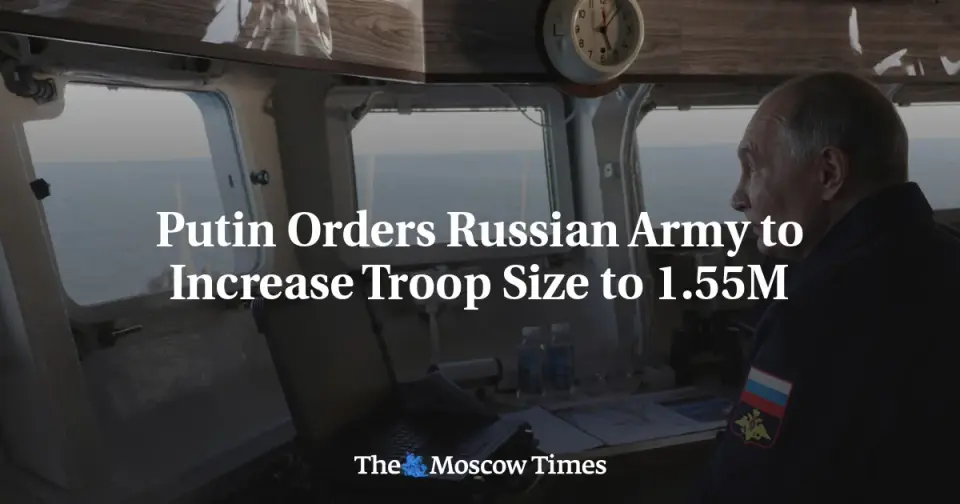
Vladimir Putin signed a decree on September 28, 2026, increasing the authorized strength of the Russian armed forces to 2,441,630 personnel, including 1,550,500 active-duty servicemen. This adds 15,500 troops and marks the fourth such expansion this year. The Kremlin did not provide a reason, but the move coincides with slowing battlefield advances and rising casualties. Ukrainian President Volodymyr Zelenskyy interpreted the decree as evidence of a new mobilization wave, citing intelligence that over 8,000 North Korean troops are currently in Russia, with another 10,000 being prepared for deployment. Zelenskyy also noted that Russia is providing technical support for Shahed-type drone production in North Korea in exchange for this military support. The expansion occurs amid stalled diplomatic talks and intense aerial exchanges, with Russia striking key Ukrainian infrastructure and Ukraine making limited gains in northern Donetsk.
Key points
- Putin signed a decree on September 28, 2026, increasing the authorized strength of the Russian armed forces to 2,441,630 personnel, including 1,550,500 active-duty servicemen.
- The decree adds 15,500 troops and marks the fourth expansion of the military’s authorized strength in 2026, following increases in March, June, and July.
- The Kremlin did not provide a reason for the expansion, but analysts link it to heavy casualties and slowing battlefield advances, with Russia suffering over 300,000 losses in 2026 according to Ukrainian estimates.
- Ukrainian President Volodymyr Zelenskyy interpreted the decree as evidence of a new mobilization wave, citing intelligence that over 8,000 North Korean troops are currently in Russia, with another 10,000 being prepared for deployment.
- Zelenskyy noted that Russia is providing technical support for Shahed-type drone production in North Korea in exchange for this military support, while the Kremlin denies any new mobilization.
- Diplomatic talks for a peace deal have stalled as the U.S. shifts focus to its conflict with Iran, with fundamental disagreements remaining over territory and NATO ambitions.
Background
This is the fourth expansion of the Russian military’s authorized strength in 2026, following increases in March, June, and July. The move comes amid slowing battlefield advances and rising casualties, with Russia suffering over 300,000 losses in 2026 according to Ukrainian estimates. The expansion also occurs amid rising tensions on NATO’s eastern flank, with several European leaders warning of potential hybrid or direct Russian attacks on their territories. Diplomatic talks for a peace deal have stalled as the U.S. shifts focus to its conflict with Iran, with fundamental disagreements remaining over territory and NATO ambitions.
How outlets are covering it
The Moscow Times and Al Jazeera emphasize the technical nature of the expansion, noting that the Kremlin did not provide a reason and that the move is unlikely to change conflict dynamics in the short term. CNBC and Al Jazeera highlight Zelenskyy’s interpretation of the decree as evidence of a new mobilization wave, citing intelligence on North Korean troops. Al Jazeera also notes that some experts argue the expansion is linked to longer-term strategic considerations, such as tensions with NATO and the buildup of Japanese and US military power in the Pacific, rather than immediate operational needs in Ukraine. All sources agree that the expansion occurs amid stalled diplomatic talks and intense aerial exchanges, with Russia striking key Ukrainian infrastructure and Ukraine making limited gains in northern Donetsk.
Why it matters
The expansion of the Russian military signals Moscow’s commitment to a protracted war, despite slowing battlefield advances and rising casualties. The move may indicate a shift in strategy, with Russia relying more on foreign troops and long-range strikes to offset manpower shortages. The stalled diplomatic talks and intense aerial exchanges suggest that a peace deal is unlikely in the near term, with both sides preparing for a difficult winter. The expansion also raises concerns about broader regional tensions, with NATO and other powers monitoring Russia’s military buildup and potential hybrid activities in Europe.
What to watch
Analysts expect Russia to continue expanding its military and relying on foreign troops, particularly from North Korea, to offset manpower shortages. Diplomatic talks may resume at the technical level, but fundamental disagreements over territory and NATO ambitions remain. Russia is likely to intensify its aerial campaign, striking key Ukrainian infrastructure to make the war unaffordable for its Western allies. Ukraine may continue to make limited gains in northern Donetsk, but the overall conflict is expected to remain a stalemate in the near term.
- Putin Orders Russian Army to Increase Troop Size to 1.55M The Moscow Times
- Putin orders army expansion as Zelenskyy warns Russia preparing to deploy 10,000 North Korean troops CNBC
- Ukraine's Zelenskiy says North Korea prepares to deploy another 10,000 troops to Russia reuters.com
- Why has Putin added 15,000 new soldiers to Russia’s army? Al Jazeera
- Desperate Putin Signs Major Order After Battlefield Humiliation The Daily Beast
Want the full story? Read the original reporting
Read on The Moscow Times