
Putin Vows Global Naval Retaliation Against EU Shadow Fleet Seizures
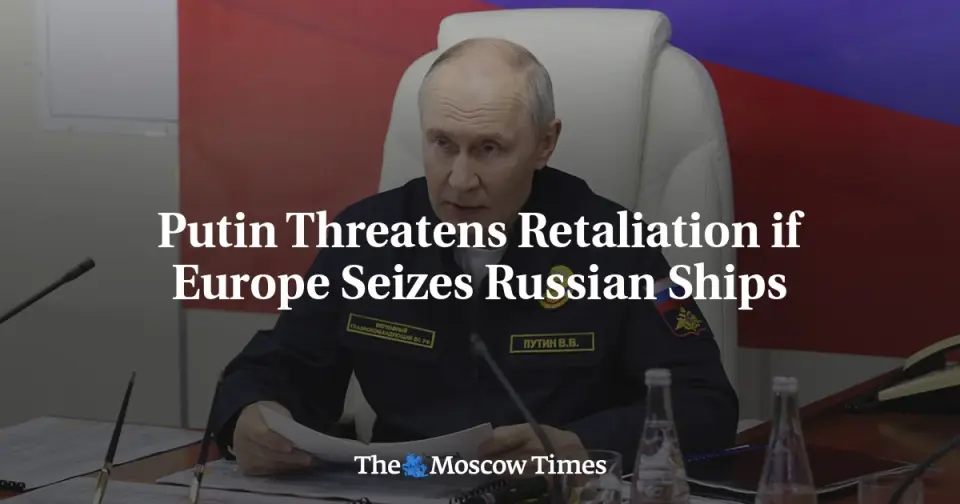
Vladimir Putin warned that Russia will seize European vessels in retaliation if the EU implements its new sanctions allowing the confiscation and sale of Russian oil and grain from 'shadow fleet' ships. Speaking aboard the cruiser Varyag, Putin labeled the EU measures 'piracy and robbery' and stated that Moscow’s response would not be limited to the waters where seizures occur. The threat follows the EU’s July adoption of a mechanism to sell cargo from detained Russian ships, a move that has already led to the detention of five tankers by Western nations since the start of the year.
Key points
- Putin declared that European plans to seize and sell Russian cargo violate international maritime law, describing them as acts of 'piracy and robbery.'
- The Russian president stated that Moscow’s retaliatory actions would take place 'wherever we consider it necessary and appropriate,' including in the Pacific Fleet’s area of responsibility.
- The Defense Ministry has received instructions to prepare a response, and Pacific Fleet Commander Viktor Liina reported that 1,001 vessels passed through Russia’s exclusive economic zone near the Kuril Islands between April and August.
- Of the vessels monitored, 379 sailed under flags of countries Moscow classifies as 'unfriendly,' including 273 dry bulk carriers and 71 tankers.
- The EU’s 21st sanctions package, adopted in July, explicitly allows member states to confiscate and sell Russian oil and grain carried by vessels attempting to evade sanctions.
Background
This escalation follows a broader pattern of maritime tensions and sanctions enforcement. In June, Ukrainian drone strikes targeted Russian refineries, highlighting vulnerabilities in Moscow’s energy infrastructure. Meanwhile, in August, Iran threatened retaliation against US ships in the Strait of Hormuz, illustrating how maritime security is becoming a primary theater for geopolitical disputes. The current standoff with Europe mirrors these dynamics, where naval power is used to enforce or circumvent economic restrictions.
How outlets are covering it
The Moscow Times and Al Jazeera both report Putin’s direct quotes regarding 'piracy and robbery' and the specific location of his address on the Varyag. Euronews emphasizes the term 'banditry' and highlights the timing relative to US-South Korean war games. While all sources agree on the core threat, The Moscow Times provides detailed statistics on vessel traffic in the Kuril Islands, whereas Al Jazeera and Euronews focus more on the broader geopolitical context, including NATO’s expansion in the Asia-Pacific and North Korean military cooperation with Russia. The ABC News source was unavailable, so no perspective could be extracted from it.
Why it matters
Putin’s threat signals a potential shift from diplomatic and economic sanctions to direct naval confrontation. By stating that retaliation could occur anywhere, including in the Pacific, Russia is signaling that it may target European commercial interests globally rather than just in the Baltic or Black Sea. This could disrupt global shipping routes and increase the risk of accidental military clashes between NATO and Russian forces in multiple theaters.
What to watch
The immediate next step is whether EU member states will proceed with the seizure and sale of cargo from Russian shadow fleet vessels as permitted by the new sanctions package. If they do, Russia may activate the prepared response instructions given to the Defense Ministry. Additionally, the upcoming joint US-South Korean war games in the Pacific will be closely monitored for any Russian naval provocations or intelligence gathering activities.
- Putin Threatens Retaliation if Europe Seizes Russian Ships The Moscow Times
- Putin threatens retaliation for Western seizures of Russian commercial vessels ABC News - Breaking News, Latest News and Videos
- Putin says Russia will start seizing European vessels if its ships targeted Reuters
- Putin warns of tit-for-tat seizures of European vessels Al Jazeera
- Putin threatens retaliatory seizures of European ships Euronews.com
Want the full story? Read the original reporting
Read on The Moscow Times