
Qatar Mediator Warns of Deep US-Iran Divides Despite Two-Week Diplomatic Window
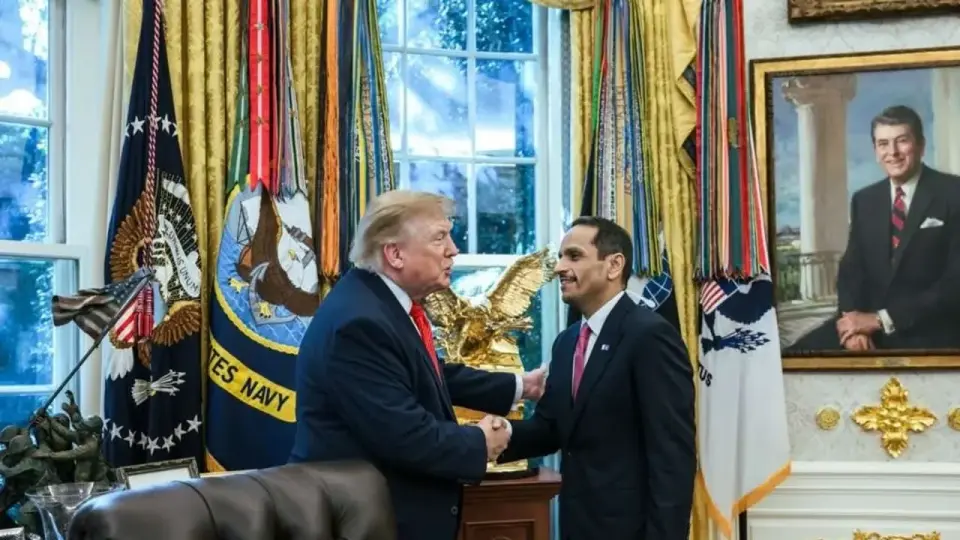
Qatari Prime Minister Sheikh Mohammed bin Abdulrahman Al Thani secured a two-week window for diplomatic efforts between Washington and Tehran, but significant disagreements remain over the sequencing of steps, including the lifting of the naval blockade and the nuclear issue. While President Trump expressed optimism about momentum, Secretary of State Marco Rubio dismissed Iranian demands as unrealistic, and military tensions persist with ongoing strikes and threats of further escalation.
Key points
- Qatar has emerged as the leading mediator, securing a two-week reprieve to pursue an understanding between the US and Iran before a potential US attack.
- Al Thani informed G7 foreign ministers in Paris that significant differences remain, particularly regarding the timeline for implementing any agreement and the sequencing of steps like lifting the naval blockade and unfreezing Iranian funds.
- Iran has proposed a two-day plan to reopen the Strait of Hormuz in exchange for the US lifting sanctions and ending the blockade, but the US has rejected these terms as 'outrageous' and 'unrealistic.'
- President Trump stated that Iran is 'militarily effectively over' but did not rule out further strikes, while Defense Secretary Pete Hegseth and Central Command commander Brad Cooper are pressing to resume attacks.
- The conflict has triggered a global energy shortage, with Iran continuing to attack tankers in the Gulf and Strait of Hormuz, and its Yemeni Houthi allies striking Saudi Arabia.
Background
The current diplomatic efforts follow an eight-month-old conflict that began on February 28, 2026, involving the US and Israel. Previous negotiations, including a short-lived truce in June, have failed to yield a lasting peace. Iran’s nuclear program, which has enriched uranium to 60 percent purity, remains a central point of contention, with the US having withdrawn from the 2015 nuclear deal. The ongoing conflict has also spilled over into Lebanon and reignited Yemen’s civil war, complicating regional stability.
How outlets are covering it
The Jerusalem Post highlights the diplomatic progress, noting that Trump declared momentum toward ending the war, while Al Jazeera emphasizes the stark differences in US positions, with Rubio dismissing Iranian demands as 'outrageous' and 'ridiculous.' NBC News points to the skepticism among senior US and Gulf officials regarding an imminent deal, with UAE official Anwar Gargash warning of a 'long period of uncertainty.' While Trump expresses optimism, military officials like Hegseth and CENTCOM commander Brad Cooper are pushing for resumed attacks, indicating internal US divisions.
Why it matters
The outcome of these negotiations will determine whether the region moves toward a lasting peace or a renewed, potentially devastating war. The Strait of Hormuz is a critical global oil chokepoint, and any disruption could trigger a global energy crisis. Additionally, the conflict has already caused significant regional instability, affecting countries like Lebanon and Yemen, and has led to a global energy shortage. A failure to reach a deal could result in further military escalation, with the US having identified 38 bridges and other infrastructure targets for potential strikes.
What to watch
The next two weeks are critical for diplomatic efforts, with Al Thani aiming to bridge the gap between Washington and Tehran. If no agreement is reached, the US may resume major military operations, as CENTCOM is reportedly preparing for such actions. Iran has warned of a 'devastating response' if the US escalates, and the ongoing attacks on tankers and infrastructure suggest that tensions remain high. The outcome of these negotiations will likely depend on whether the US can find a compromise that addresses its security concerns while meeting Iran’s core demands.
- Qatar PM warns of major US-Iran disagreements despite two-week reprieve from pos The Jerusalem Post
- Trump to meet Qatar's prime minister as Iran diplomacy faces hurdles Reuters
- Qatar PM to meet Trump: What’s the latest on US-Iran negotiations? Al Jazeera
- Qatar takes Iran mediation to Trump as regional peace efforts gather pace Iran International
- U.S. signals breakthrough in Iran talks are unlikely, rejects ‘outrageous’ demands NBC News
Want the full story? Read the original reporting
Read on The Jerusalem Post