
Russia offers EU membership to Ukraine in exchange for neutrality, but Europe rejects security talks without a ceasefire
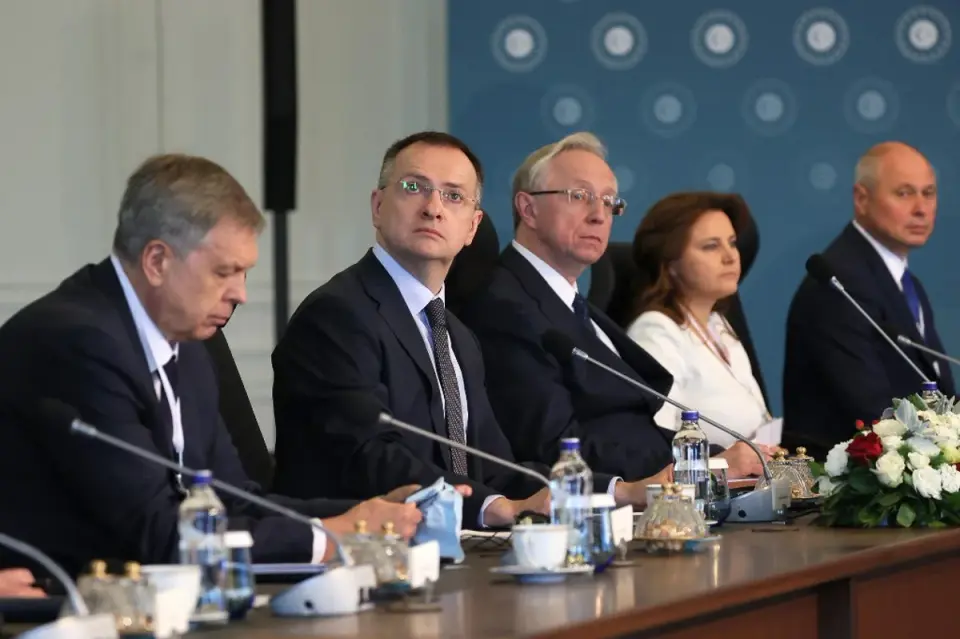
Russian negotiator Vladimir Medinsky stated in Abu Dhabi that Moscow accepts Ukraine joining the EU if Kyiv remains outside all military alliances. While the US delegation called the talks productive, European officials like Lithuania’s foreign minister rejected any security framework that grants Russia leverage over NATO deployments, insisting a ceasefire must precede such discussions.
Key points
- Medinsky told negotiators that Russia has no objection to Ukraine’s EU accession, provided Kyiv does not join NATO or any other military alliance.
- Medinsky claimed Western nations broke promises not to expand NATO after the Soviet Union’s collapse, stating Russia no longer trusts Western declarations on the matter.
- Russian Foreign Ministry official Alexei Drobinin proposed a new European security system involving non-aggression pacts with individual NATO states, similar to Moscow’s agreements with Iran and North Korea.
- Lithuanian Foreign Minister Kęstutis Budrys declared that any agreement allowing Russia to restrict NATO troop deployments in the region is fundamentally unacceptable for the Baltic state.
- US Secretary of State Marco Rubio described the November 10 trilateral talks as 'very productive,' though he noted significant work remains to be done.
Background
This latest exchange follows a pattern of Russian demands for Ukrainian neutrality. In February 2025, Kremlin spokesman Dmitry Peskov acknowledged Ukraine’s sovereign right to join the EU while maintaining a separate stance on military alliances. In June 2025, Moscow presented a memorandum in Istanbul demanding Ukrainian neutrality, limits on armed forces, and the withdrawal of troops from four occupied regions as conditions for a ceasefire. These demands echo the maximalist positions from the failed 2022 Istanbul negotiations.
How outlets are covering it
The Kyiv Post highlights Medinsky’s specific condition linking EU membership to the exclusion of all military alliances, framing it as a continuation of Moscow’s long-standing stance. Ukrainian Pravda, citing Reuters, emphasizes the broader structural proposals from Russian officials, such as bilateral non-aggression pacts with NATO members, which some European politicians oppose until a ceasefire is achieved. LRT focuses on the defensive reaction from the Baltic states, with Lithuania’s foreign minister arguing that Europe must be directly involved in any security architecture discussions and that such talks are premature without a peace agreement. While the US delegation views the negotiations as a productive step, European leaders remain skeptical of any framework that might grant Russia leverage over regional defense.
Why it matters
The outcome of these negotiations could determine the future security architecture of Europe and Ukraine’s path to EU integration. If Russia’s demand for neutrality is accepted, it would fundamentally alter the balance of power in the region and potentially weaken NATO’s eastern flank. Conversely, the rejection of these terms by European states signals a firm stance against ceding security decisions to Moscow, potentially prolonging the conflict or leading to a more complex diplomatic stalemate.
What to watch
US envoys Steve Witkoff and Jared Kushner are scheduled to meet with Vladimir Putin in Moscow following the Abu Dhabi talks. They are then expected to travel to Dublin to brief the Ukrainian delegation on the outcomes of their discussions. The next phase will likely involve further trilateral negotiations, with the focus shifting to whether a ceasefire can be agreed upon before broader security frameworks are discussed.
- Kremlin Revives Old Ultimatum: Ukraine Can Join EU Only if It Stays Out of Military Alliances Kyiv Post
- Russian diplomat says Moscow could conclude non-aggression pacts with NATO member states Reuters
- Russia proposes new security system involving non-aggression pacts with NATO countries – Reuters Українська правда
- Russia must have no say over NATO deployments, Lithuanian FM says amid Abu Dhabi talks LRT
- Moscow trying to ‘revive’ ultimatums on NATO’s Europe presence TVP World
Want the full story? Read the original reporting
Read on Kyiv Post