
Russia’s Fuel Crisis Deepens as Imports Fail to Offset Drone Damage
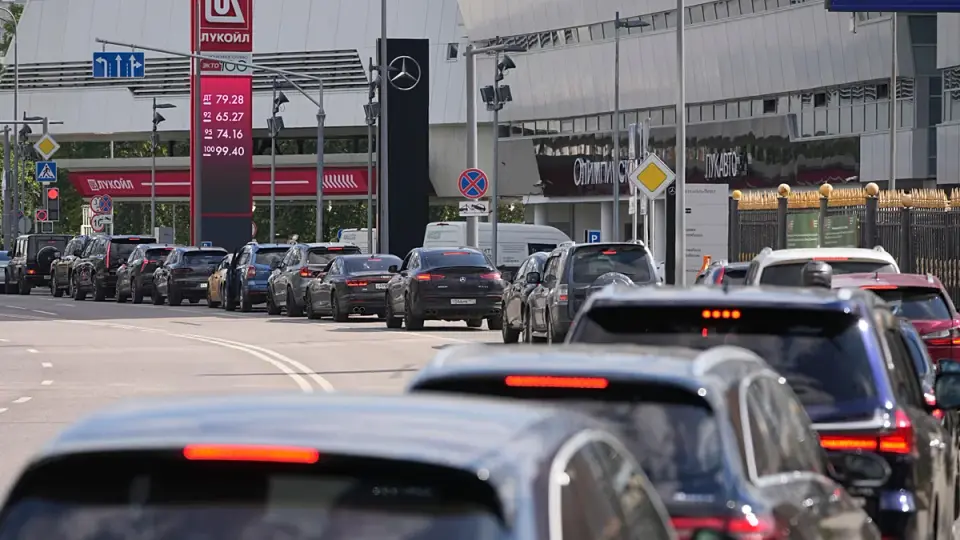
Russia faces a worsening fuel crisis as Ukrainian drone strikes on refineries outpace repair efforts, forcing the country to import gasoline despite being a major exporter. Availability has dropped to 28% of stations, with queues returning in Moscow and strict rationing measures reinstated across regions.
Key points
- Petrol availability fell to 28% of stations nationwide, down from 41% a week earlier, with queues reappearing in Moscow for the first time in this crisis phase.
- Ukrainian drone strikes have damaged 54% of Russia’s refining capacity, causing a daily production deficit of roughly 35% against summer demand.
- Russia has begun importing gasoline from India, Morocco, and Belarus, but logistical and pricing disputes have left significant volumes stuck at ports like Murmansk.
- Authorities have reintroduced Euro-2, Euro-3, and Euro-4 fuel grades, which were banned in the 2010s, to supplement supply, while the Federal Antimonopoly Service opened 41 cases against oil companies for price violations.
- Putin dismissed the crisis as 'non-critical,' but energy minister Sergei Tsivilyov acknowledged ongoing queues, and opposition figure Mikhail Khodorkovsky warned the oil industry is near a 'breaking point.'
Background
This escalation follows a series of earlier shortages in July and August 2026, where drone strikes on refineries like Omsk and facilities in Bashkortostan triggered regional rationing, remote work mandates in Siberia, and the deployment of teachers to manage gas station queues. The current crisis represents a second wave, with restrictions returning after a brief period of partial stabilization in late July.
How outlets are covering it
Euronews and The Moscow Times emphasize the return of strict rationing and the failure of previous stabilization efforts, noting that Gazprom Neft and Tatneft have reimposed volume caps. The Guardian highlights the symbolic reversal of Russia’s status as a fuel exporter, detailing specific import shipments from India and the acknowledgment by Deputy PM Alexander Novak. The Daily Beast focuses on the long-term structural damage, citing Mikhail Khodorkovsky’s warning that repairs are insufficient to keep facilities running. While Euronews cites a 28% availability rate, The Moscow Times notes that some regions have lifted caps, indicating uneven impact across the country. All sources agree that Ukrainian strikes are the primary driver, but they differ on the severity: Euronews and The Daily Beast portray a critical breakdown, while The Moscow Times suggests a mixed picture with some areas stabilizing.
Why it matters
The crisis exposes the vulnerability of Russia’s energy infrastructure to sustained drone attacks, undermining its war economy and domestic stability. The reliance on imports and lower-quality fuel grades signals a shift in global energy flows and potential long-term environmental and economic consequences for Russia.
What to watch
Supplies are expected to remain tight until peak summer demand subsides, with a further gap anticipated in September when Belarus’s Novopolotsk refinery undergoes maintenance. The Kremlin is likely to maintain export bans and tighten price controls, while Ukrainian strikes on oil infrastructure are expected to continue.
- Russia runs out of petrol at seven in 10 stations as fuel crisis worsens Euronews.com
- Ukraine war briefing: Russia running on imported gasoline, government confirms The Guardian
- Moscow's fuel stations limit sales amid shortages Reuters
- Moscow Gas Stations Reimpose Fuel Limits as ‘Second Wave’ of Shortages Hits Russia The Moscow Times
- Putin Nemesis Warns Drone Attacks Leave Russia at ‘Breaking Point’ The Daily Beast
Want the full story? Read the original reporting
Read on Euronews.com