
Lee Jae-myung calls for formal peace talks to replace 1953 armistice
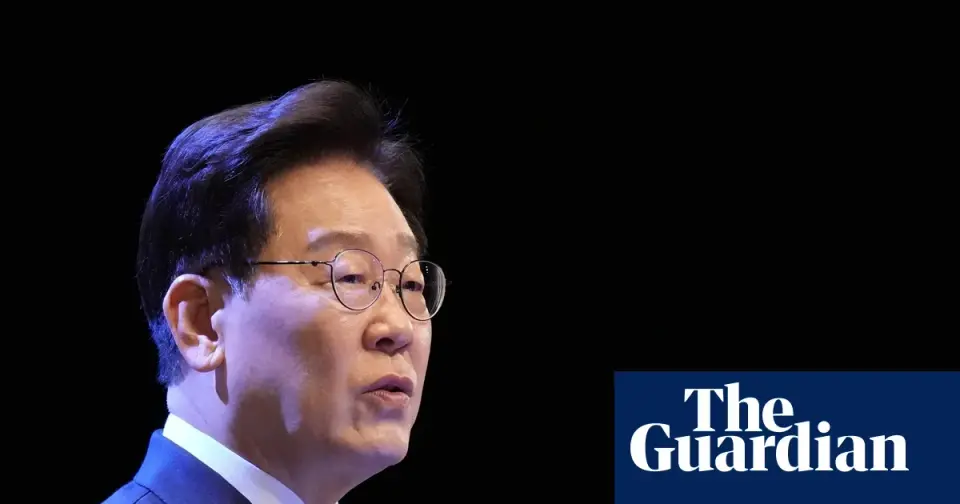
South Korean President Lee Jae-myung has proposed direct talks with North Korea to formally end the Korean War, which remains technically active due to the lack of a peace treaty. Lee aims to replace the 1953 armistice with a 'peace regime' and establish a multi-layered security system to prevent conflict. While Seoul offers dialogue on coexistence and nuclear containment, Pyongyang has rejected these overtures, citing US-South Korean drills as provocations and deepening ties with Russia.
Key points
- Lee urged the two Koreas to hold sit-down talks to replace the 1953 armistice with a formal peace treaty.
- Seoul proposes a 'multi-layered security system' to manage tensions along the Demilitarized Zone (DMZ).
- Lee suggested discussions could include measures to halt the advancement of North Korea’s nuclear capabilities.
- North Korea has rejected engagement offers, labeling joint US-South Korean military exercises as provocations.
- Pyongyang has abandoned its reunification policy and now views Seoul as its most hostile state.
Background
This proposal follows Lee’s assumption of office in June 2025, reversing the hawkish stance of his predecessor, Yoon Suk Yeol, who was impeached for attempting to declare martial law. Previous archive entries from August 2026 confirm that Seoul had already signaled a shift toward dialogue without preconditions, while North Korea continued to bolster military ties with Russia, reportedly supplying troops and munitions for the war in Ukraine in exchange for financial and technological support.
How outlets are covering it
The Guardian emphasizes Lee’s call for a 'peace regime' and pre-emptive steps to ease tensions, framing the move as a continuation of his pledge to respect North Korea’s system. BBC highlights the practical aspect of discussing ways to halt Pyongyang’s nuclear ambitions, noting that the conflict remains technically active since 1953. France 24 provides broader geopolitical context, pointing out that North Korea has declared itself an 'irreversible' nuclear state since the failed 2019 Hanoi summit and is currently bristling over Japan’s military build-up and US-South Korean drills. While all three outlets agree on Lee’s diplomatic initiative, they differ in emphasis: The Guardian focuses on the structural shift from armistice to peace, BBC on the security mechanisms, and France 24 on the external factors, such as the Russia-North Korea alliance, complicating Seoul’s efforts.
Why it matters
Ending the Korean War formally would alter the security architecture of Northeast Asia, potentially reducing the justification for the 28,500 US troops stationed in South Korea. However, North Korea’s refusal to engage and its deepening alliance with Russia suggest that immediate de-escalation is unlikely. The proposal also signals a shift in South Korean foreign policy toward China and away from the hardline stance of the previous administration, potentially affecting regional alliances and defense cooperation with Japan and the US.
What to watch
North Korea is expected to continue rejecting Seoul’s overtures, possibly escalating provocations along the DMZ or in the Pacific. Lee’s administration may proceed with the 11-day joint US-South Korean military exercises despite Pyongyang’s warnings. Analysts anticipate that Kim Jong-un may visit Russia later in 2026 to discuss further weapons supplies, further complicating diplomatic efforts on the peninsula.
- South Korea’s Lee urges talks with North Korea about finally ending Korean war The Guardian
- South Korea proposes talks to officially end war with North BBC
- South Korea's Lee urges talks with North Korea to replace armistice with peace Reuters
- South Korea president proposes talks with Pyongyang to formally end Korean War france24.com
- South Korea’s Lee Proposes Talks With North in Pursuit of Peace Bloomberg.com
Want the full story? Read the original reporting
Read on The Guardian