
Hormuz Tanker Strike Contradicts Trump’s 'Functioning Strait' Claim
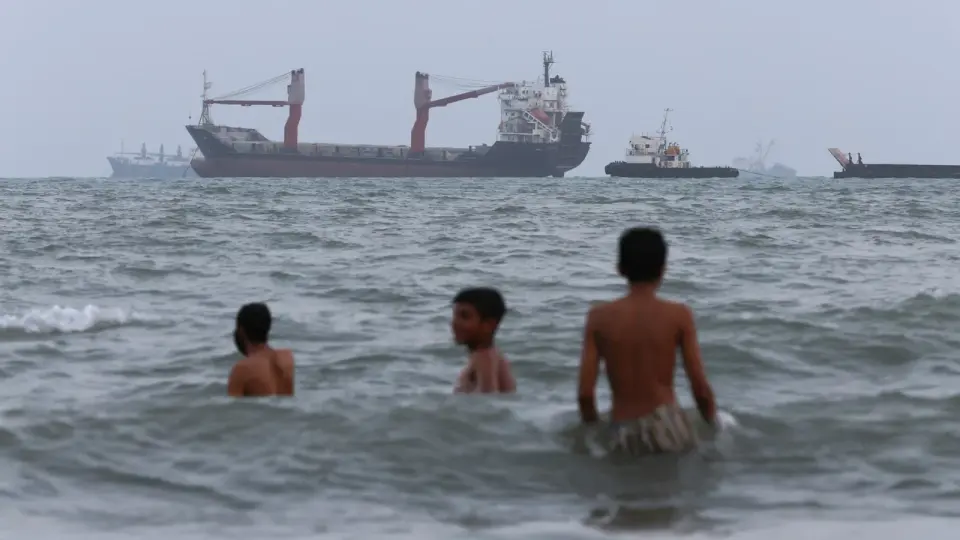
An oil tanker was hit by an unidentified projectile in the Strait of Hormuz on Tuesday, causing a fire that was extinguished with no casualties. This incident challenges President Trump’s recent assertion that the strait is fully cleared of mines and functioning normally. Traffic through the corridor has dropped to five ships daily, down from over 130 before the war, as the US maintains a naval blockade and escalates economic sanctions against Iran.
Key points
- UK Maritime Trade Operations (UKMTO) reported an oil tanker was struck by an unidentified projectile off the Omani coast on Tuesday, resulting in a fire that was extinguished; all crew members were safe.
- President Trump claimed on Wednesday that the Strait of Hormuz was a 'functioning strait' fully cleared of mines, but US allies reportedly doubt this assessment, according to Bloomberg.
- Traffic through Hormuz has collapsed to five confirmed crossings on Tuesday, down from seven the previous day and over 130 before the war, according to tracking firm Kpler.
- The US has launched a new wave of economic sanctions against Iran’s global financial connections, which Iran’s Foreign Minister Abbas Araghchi condemned as 'economic terrorism' at the UN.
- Iran and Oman agreed on a temporary maritime corridor, but Iran’s Deputy Foreign Minister warned full reopening depends on the US fulfilling commitments from a lapsed June interim peace deal.
Background
The Strait of Hormuz has seen a series of incidents since mid-2026, including a mine strike in July and multiple attacks on ADNOC tankers in August. These events occurred amid a six-month war and a lapsed interim peace deal signed in June, leading to a US naval blockade and ongoing disputes over navigation rights and revenue sharing.
How outlets are covering it
CNBC emphasizes the contradiction between Trump’s public claims of a 'functioning strait' and the reality of continued attacks and low traffic, highlighting skepticism from US allies. The Jerusalem Post confirms the tanker incident via UKMTO but frames it within broader regional instability, including IDF strikes in Lebanon and US counterterrorism designations, suggesting a wider geopolitical context beyond just the strait. Both sources agree on the incident details but differ in emphasis: CNBC focuses on the diplomatic and economic fallout, while JPost situates it within a broader live-update context of Middle East conflicts.
Why it matters
The incident underscores the fragility of global energy supply chains and the failure of recent diplomatic efforts to stabilize the Strait of Hormuz. With traffic at historic lows and economic sanctions escalating, the risk of further disruption to oil flows and potential military escalation remains high, impacting global markets and geopolitical stability.
What to watch
The US and Iran may see further escalation if economic sanctions do not lead to negotiations, as Trump has no set timeline for resuming talks. Iran may continue to restrict shipping or retaliate against US economic measures, while the US could intensify its naval presence or sanctions. The outcome of the temporary maritime corridor agreement between Iran and Oman will be critical in determining whether traffic can recover.
- Tanker attack tests Trump’s claim that Hormuz is a 'functioning strait' CNBC
- New Tanker Strike in Hormuz as Iran Vows Retaliation for U.S. Economic Offensive WSJ
- Live Updates: Latest from Israel, Iran, and the Middle East The Jerusalem Post
- 2 Mariners Killed in Strait of Hormuz as Transits See Small Increase USNI News
- 20 dead in 68 incidents near Hormuz over six months of war, maritime agency says The Times of Israel
Want the full story? Read the original reporting
Read on CNBC