
Trump Claims Kim Response as He Scales Back US-South Korea Drills Amid Iran Dispute
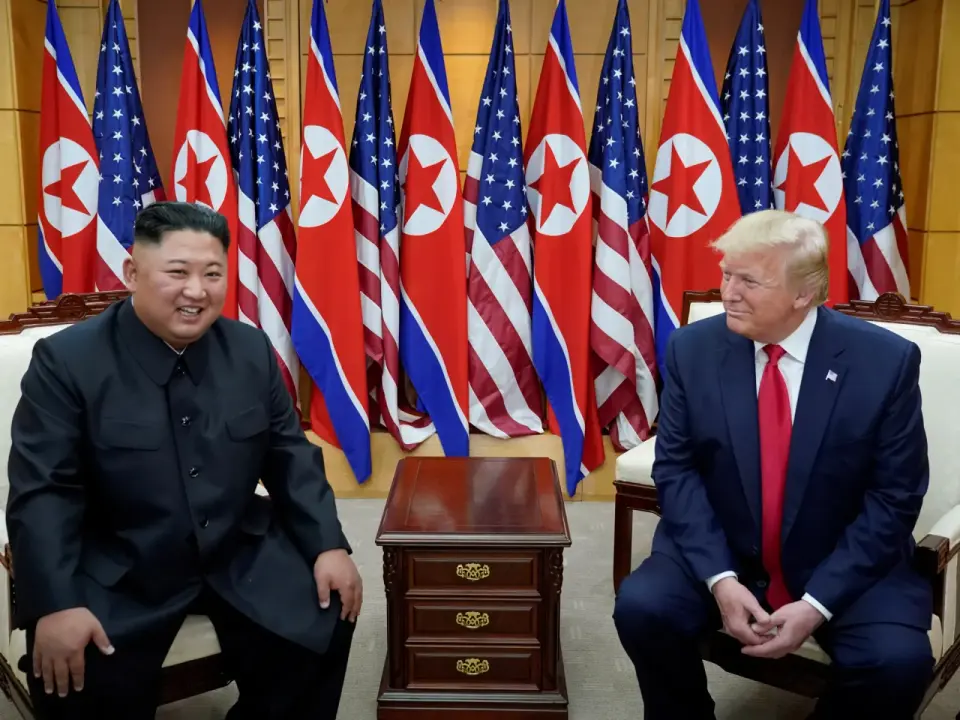
President Donald Trump stated that North Korean leader Kim Jong-un has responded to his diplomatic outreach, describing the exchange as 'very positive' without providing details. This claim followed Trump’s Sunday order to 'substantially reduce' joint military exercises with South Korea, citing the drills as costly and hostile to Pyongyang. Trump linked the decision to Seoul’s refusal to assist in the US war against Iran, criticizing South Korea for not supporting a 'very easy military operation' while the US maintains 39,000 troops in the region. South Korean President Lee Jae Myung emphasized the importance of the US alliance, noting that the drills are defensive and do not intend to escalate tensions. Analysts suggest Kim may delay a formal response, while South Korean officials hope the personal rapport between Trump and Kim will lead to meaningful dialogue.
Key points
- Trump asserted Kim Jong-un responded to his request for conversation, calling the interaction 'very positive' but offering no specifics.
- Trump ordered the Pentagon to 'substantially reduce' joint military exercises with South Korea, labeling them 'hostile' to North Korea.
- Trump criticized South Korea for refusing to assist in the US war against Iran, questioning why the US protects allies who do not reciprocate.
- South Korean President Lee Jae Myung stressed the importance of the US alliance, stating the drills are for safeguarding daily lives, not attacking North Korea.
- Analysts noted that Kim may 'bide his time' before responding, while South Korea faces concerns over the reliability of the US security commitment.
Background
This development follows Trump’s first-term efforts to negotiate with Kim, which ended without denuclearization. Since 2019, North Korea has strengthened ties with Russia and China, including military support for Russia in Ukraine. Trump’s current administration has repeatedly criticized North Korea’s support for Russia but maintains a focus on personal diplomacy with Kim. The current dispute also involves broader trade issues, including South Korea’s delayed $350 billion investment pledge to the US, which has contributed to administration frustrations.
How outlets are covering it
Al Jazeera highlights Trump’s claim of a positive response from Kim and his criticism of South Korea’s stance on Iran. U.S. News & World Report emphasizes the confusion and anxiety in South Korea over the abrupt scaling back of drills, noting concerns about the reliability of the US alliance and the 'nuclear umbrella' protection. Politico points to broader frustrations with South Korea’s slow progress on a $350 billion investment pledge and its response to the Iran war, suggesting Trump’s move is part of a leverage strategy. The New York Times frames the situation as Trump turning to a familiar face in North Korea amid a quagmire in Iran, questioning whether the same diplomatic failure could occur as in his first term.
Why it matters
The scaling back of joint military exercises could weaken deterrence against North Korea and undermine the US-South Korea alliance, which is critical for regional security. Trump’s focus on personal diplomacy with Kim may shift attention away from the Iran conflict, potentially complicating US efforts in the Middle East. The dispute also highlights tensions over trade and investment commitments, which could affect broader US-Asia economic relationships. South Korea’s lack of nuclear weapons makes it reliant on the US 'nuclear umbrella,' and any weakening of this commitment could increase regional instability.
What to watch
South Korea and the US are expected to continue discussions on practical military contributions to the Iran conflict, including restoring freedom of navigation in the Strait of Hormuz. The US and South Korea may announce new investment pledges in late August or early September, though negotiations remain unsettled. Analysts predict that North Korea may delay a formal response to Trump’s overtures, while South Korean officials hope that the personal relationship between Trump and Kim will lead to meaningful dialogue. The Pentagon may also consider withdrawing approximately 4,500 troops from South Korea for redeployment in the Indo-Pacific region, a move opposed by Congress.
- Trump says N Korea’s Kim has responded to his request for a conversation Al Jazeera
- Trump says North Korea's Kim has responded to his overtures Reuters
- South Korea President Stresses US Alliance as Many Baffled by Trump Order to Cut Exercises U.S. News & World Report
- ‘Not the way it works’: Korea’s miscalculation on trade may cost them on security Politico
- Facing Quagmire in Iran, Trump Turns to a Familiar Face: North Korea’s Kim Jong-un The New York Times
Want the full story? Read the original reporting
Read on Al Jazeera