
Trump Claims Kim Jong-un Responds to US Drill Cuts Amid Iran Stalemate
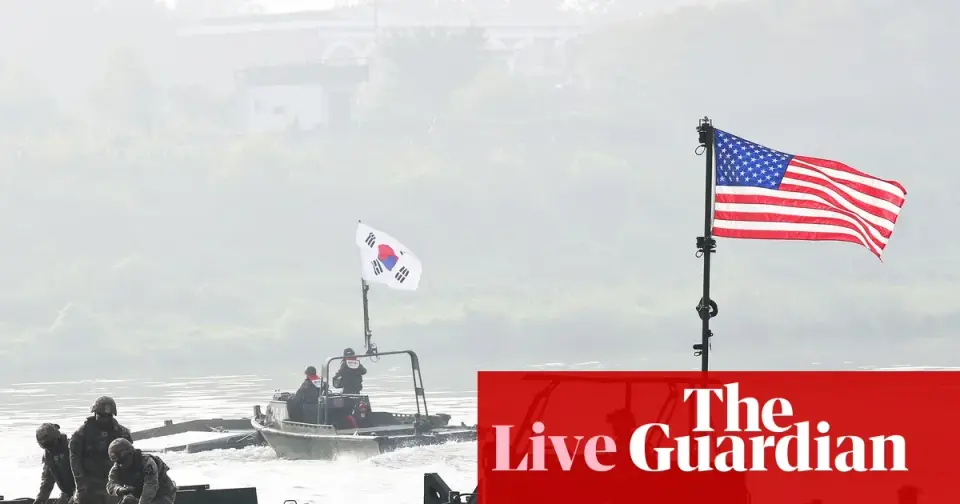
President Trump stated that North Korean leader Kim Jong-un has responded positively to his overtures following the US decision to scale back joint military drills with South Korea. While Trump described the dialogue as 'very positive,' he provided no specific details on the nature of the response. This development follows a directive to reduce the Ulchi Freedom Shield exercises, a move criticized by South Korean officials who maintain that the drills are essential for defense and not provocative. The shift in US posture occurs as Trump’s administration faces a stalemate in negotiations with Iran, with some analysts drawing parallels between the current situation and the failed denuclearization efforts of his first term.
Key points
- Trump confirmed in the Oval Office that Kim Jong-un has responded to his diplomatic overtures, describing the current stage of conversations as 'very positive' without offering further specifics.
- The US administration ordered a substantial reduction in joint military exercises with South Korea, specifically the Ulchi Freedom Shield drills, citing cost and the desire to de-escalate tensions with North Korea.
- South Korean President Lee Jae Myung countered the US move, stating that a strong US-South Korea alliance and independent national defense are mutually necessary, and affirmed that the Ulchi exercise is defensive in nature.
- Trump’s engagement with Pyongyang comes amid a stalled peace process with Iran, where the US-Iran memorandum of understanding expired without a deal, and Trump’s approval rating has fallen to 33%.
- Analysts and media outlets have noted the parallel between Trump’s current approach to Iran and his previous failed attempts to denuclearize North Korea, which resulted in Kim Jong-un expanding his nuclear arsenal.
Background
In August 2026, Trump directed Defense Secretary Pete Hegseth to reduce joint drills with South Korea, arguing that the exercises were provocative and costly, while also criticizing Seoul for not supporting the US in the conflict with Iran. This decision was widely interpreted as a signal of a shift in US Asia security policy, potentially undermining alliances with South Korea, Japan, and Taiwan. The current developments in October 2026 represent a continuation of this strategic pivot, where Trump is prioritizing diplomatic overtures to Pyongyang while facing diplomatic deadlocks in the Middle East.
How outlets are covering it
The Guardian reports that Trump confirmed Kim Jong-un’s response to his overtures but withheld details, framing the interaction as a positive development in their personal relationship. In contrast, The New York Times provides a more skeptical analysis, drawing a direct parallel between the current situation in Iran and the failed denuclearization efforts of Trump’s first term with North Korea. The Times notes that while Trump previously claimed a 'great relationship' with Kim, the outcome was an expansion of North Korea’s nuclear arsenal to approximately 60 weapons. South Korean officials, as reported by The Guardian, maintain a defensive stance, emphasizing that the Ulchi exercises are necessary for national security and not intended to provoke North Korea, thereby highlighting a divergence in strategic priorities between Washington and Seoul.
Why it matters
This diplomatic maneuvering signals a potential realignment of US foreign policy priorities, shifting focus from East Asian security commitments to Middle Eastern negotiations. The lack of transparency regarding the nature of Kim Jong-un’s response raises questions about the effectiveness of Trump’s transactional diplomacy. Furthermore, the reduction of joint drills with South Korea could weaken regional deterrence against North Korea, while the ongoing stalemate with Iran and low approval ratings suggest that the administration’s foreign policy strategies are facing significant domestic and international scrutiny.
What to watch
The US administration is expected to continue its diplomatic engagement with North Korea, potentially leading to further reductions in military presence or exercises in the region. South Korea is likely to maintain its defense posture and seek to preserve the US-South Korea alliance despite the US scaling back joint drills. In the Middle East, the US may continue to press for a deal with Iran, though the expiration of the memorandum of understanding suggests a prolonged stalemate. The outcome of these diplomatic efforts will likely influence US credibility with allies and the broader regional security landscape.
- Trump says Kim Jong-un has responded to his overtures when asked about scaling back US drills with South Korea – live theguardian.com
- Facing Quagmire in Iran, Trump Turns to a Familiar Face: North Korea’s Kim Jong-un The New York Times
- Trump’s ‘Very Good Relationship’ With Kim Jong Un in Pictures Newsweek
- Trump Says North Korea’s Kim Jong Un Replied to Overtures Bloomberg.com
- Trump says North Korea's Kim has responded to his overtures Reuters
Want the full story? Read the original reporting
Read on theguardian.com