
UK imposes settlement sanctions as Israel orders consulate closure
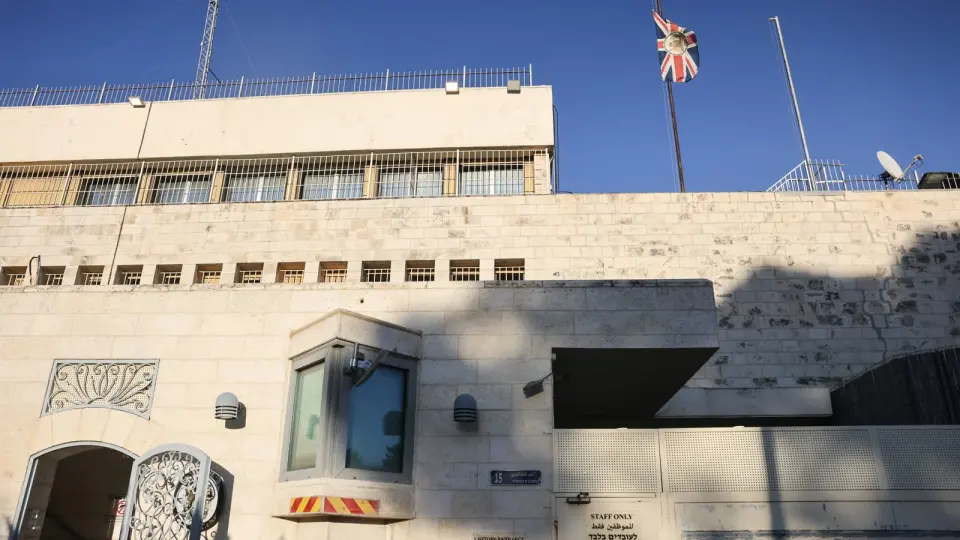
The UK banned imports from Israeli West Bank settlements and sanctioned settlement facilitators, prompting Israel to order the closure of the British consulate in East Jerusalem within 30 days and ban 12 UK lawmakers. While the US administration did not oppose the move, it distanced itself from the specific sanctions, citing regional stability concerns.
Key points
- UK Foreign Secretary Ed Miliband announced a ban on imports from Israeli settlements and sanctions against entities facilitating their expansion, citing the illegality of the occupation.
- Israel responded by ordering the closure of the UK consulate in East Jerusalem within 30 days, expelling British diplomats, and banning 12 UK lawmakers from entering the country.
- Twelve other nations, including France, Canada, and Germany, joined the UK in announcing similar restrictions on trade with Israeli settlements.
- US Secretary of State Marco Rubio stated the White House was aware of the decision in advance but did not comment, emphasizing a desire for regional stability.
- Israeli Foreign Minister Gideon Saar condemned the UK’s actions as 'outrageous lies' and accused London of working against Israel.
Background
This escalation follows years of increasing tension over Israeli settlement expansion in the West Bank. A 2025 UN report documented 166 settlements housing over 700,000 people, with expansion accelerating since 2022. The recent Israeli decision to build in the E1 area, which would divide the West Bank, was cited by the UK as a critical threat to the viability of a two-state solution. Previous diplomatic efforts, such as the Oslo Accords, had failed to resolve the conflict, leading to a growing consensus among Western allies that passive observation was no longer viable.
How outlets are covering it
Outlets diverge on the US position and the nature of the conflict. CNBC and Axios report that the Trump administration did not oppose the UK’s sanctions, with Axios noting that US officials shared concerns about Netanyahu’s West Bank policy. However, CNBC highlights that the US explicitly stated it would not follow the UK’s path, fearing destabilization. BBC emphasizes the internal UK debate, noting that Chief Rabbi Ephraim Mirvis condemned the sanctions as 'gesture politics' that harm Jewish safety, while Miliband defended the move as necessary to prevent the destruction of the two-state solution. Israel’s perspective, reported by all outlets, frames the sanctions as an act of hostility and 'ethnic cleansing' rhetoric, whereas the UK and its allies frame them as a legal and moral imperative to stop settler violence.
Why it matters
The crisis marks a significant rupture in UK-Israel relations, with Israel threatening to expel British diplomats and close its consulate. The US refusal to back the UK signals a potential divergence in Western policy toward Israel, complicating efforts to maintain regional stability. The move by 13 nations indicates a coordinated Western response to settlement expansion, potentially setting a precedent for future international sanctions against Israeli policies in the occupied territories.
What to watch
Israel is expected to enforce the 30-day deadline for the closure of the UK consulate in East Jerusalem. The UK and its allies will likely monitor the impact of the sanctions on settlement construction, particularly in the E1 area. The US may continue to distance itself from the specific sanctions while maintaining diplomatic pressure on Israel to avoid further escalation. The UK government will face ongoing pressure from domestic Jewish community leaders and international partners to maintain its stance despite Israeli retaliation.
- U.K. defends sanctions on Israeli settlements after 30-day consulate closure order CNBC
- Europe Unites to Pressure Israel, Breaking With U.S. The New York Times
- Miliband says UK had to 'call out' Israeli West Bank settlements BBC
- Trump didn't oppose UK sanctions on Israeli settlements Axios
- Israel tells Britain to close East Jerusalem consulate within 30 days, officials say Reuters
Want the full story? Read the original reporting
Read on CNBC