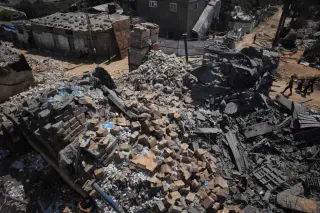
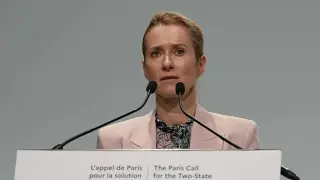
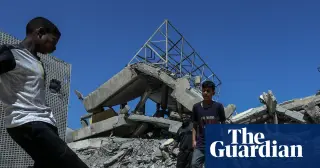
An official leading Donald Trump’s Gaza ceasefire effort criticizes Israeli attacks and pushes for a credible path to disarmament, rebuilding Gaza, and a two-state solution, noting that Netanyahu opposes a Palestinian state.
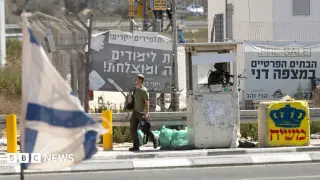
Israel invited bids to build more than 1,200 homes in E1, linking Ma’ale Adumim to East Jerusalem and effectively splitting the West Bank, a move many say would end the prospect of a Palestinian state. It drew broad international condemnation from the UN, EU and other leaders, though some right-wing figures, including Netanyahu, may use the backlash for political gain ahead of elections. The United States opposed West Bank annexation but did not publicly criticize E1; analysts say the reactions could be leveraged to bolster domestic support, while the UN warns the expansion could fragment the West Bank and displace Palestinian communities.
Eight Arab and Muslim-majority states condemned far-right and settler incursions into the Al-Aqsa Mosque in occupied East Jerusalem, saying the actions are unlawful, fuel hate, and jeopardize the two-state peace process; in a joint statement they urged Israel to lift access restrictions, protect holy sites, and urged the international community to uphold the status quo amid the incident during Tisha B’Av.
Andy Burnham apologizes for Labour’s Gaza stance and says the party didn’t get it right, pledging to press Israel and keep a two‑state solution alive. With a leadership question looming, observers see the remarks as an attempt to placate voters and set the stage for a possible policy shift if he becomes prime minister, though analysts warn any real change depends on concrete policy actions like ceasefire, arms controls, and accountability for Israel.
Andy Burnham apologized for Labour's initial response to Israel's Gaza war, saying Labour did not get it right and must do better under his leadership. He condemned Hamas and antisemitic attacks, noted Labour later called for an immediate humanitarian ceasefire, and urged stronger measures—sanctions on illegal settlements, tighter arms controls, and pressure on Israel to respect international law—to keep a two-state solution viable. He also praised some Labour policies while calling for a clearer, more robust approach.
House Democratic Leader Hakeem Jeffries is taking a cautious, hands-off approach to Israel policy, convening long caucus forums that let members air their views rather than imposing a leadership position ahead of a contentious vote on aid to Israel. He says he’ll offer more concrete guidance after the Massie amendment reaches a vote, which has been delayed by GOP dysfunction; he signaled support for a two-state solution and referenced an opposing statement from J Street to inform his caucus. The strategy could serve as a model for managing a divided caucus if he becomes speaker, and the piece also notes related Capitol updates on Speaker Johnson’s SAVE Act and open seats on tax-writing panels.
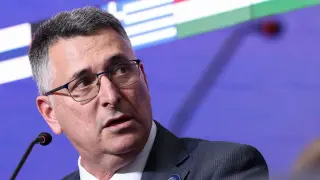
EU foreign policy chief Kaja Kallas responded to Israeli Foreign Minister Gideon Sa’ar’s threat to sever contact over reports she compared Israel to apartheid, saying she values dialogue and that the EU remains committed to a two-state solution; Sa’ar demanded a denial if the remarks were false. The piece provides political context on EU-Israel relations and notes the ongoing Gaza conflict and UN support for two states.
Palestinian and Israeli civil-society groups meeting in Paris urged G7 leaders at the Évian summit to take concrete action on Gaza, including a ceasefire, Hamas disarmament, humanitarian access and reconstruction, and to integrate peace efforts into one program, warning that the window for a two-state solution is narrowing and calling for diplomacy led by civil society with proper funding and Palestinian elections to stabilize the region.
A coalition of Western leaders from Canada, Australia, France, Germany, Italy, the Netherlands, New Zealand, Norway and Britain issued a joint statement opposing Israel’s settlement expansion in the West Bank, warning that projects like the E1 plan would split Judea and Samaria and violate international law, and calling for halting construction, investigating alleged settler violence and security-forces abuses, respecting the Hashemite custodianship of Al‑Aqsa and the status quo, and lifting Palestinian financial restrictions as part of their support for a two-state solution. The statement also noted potential legal consequences for leaders involved in settlement activities and referenced Bezalel Smotrich’s announced Bedouin-outpost demolition tied to E1.
A joint statement by leaders from the UK, France, Germany, Italy, Canada, Australia, New Zealand, Norway and the Netherlands condemns the deterioration in the West Bank, denounces settlement expansion as a breach of international law (notably the E1 plan), calls for accountability for settler violence and a lifting of Palestinian Authority financial restrictions, and reiterates commitment to a negotiated two-state solution with secure, recognized borders and status quo protections for Jerusalem.
The European Union hosts a Brussels-based Palestinian peace conference to bolster its influence in the Middle East and press for progress toward a two-state solution, with EU officials like Kaja Kallas and Palestinian Prime Minister Mohammad Mustafa leading discussions within the Global Alliance for the Implementation of the Two-State Solution; momentum is described as rising following Viktor Orbán’s defeat within the EU.
The Organisation of Islamic Cooperation condemned Israel’s reportedly secret approval of 34 new West Bank settlements, calling it a grave violation of international law that undermines the two-state solution; the move adds to ongoing expansion since 2022 and drew condemnations from the EU and Sweden, while Israel has not issued an official comment.
A Gallup poll shows Americans' sympathies now tilt toward the Palestinians (41% vs. 36% for Israelis), a shift led by independents and Democrats that ends a long Israeli lead. Still, Israel is viewed more favorably overall (46% vs. 37%), and 57% support a two-state solution, a 23-year high.
Cardinal Pierbattista Pizzaballa, speaking in Rome, says a short-term peace between Israelis and Palestinians is unlikely after Gaza and warns slogans won’t rebuild trust; he urges concrete actions, opportunities for encounter, and leadership on both sides, questions the Board of Peace as serving major powers, notes the worsening plight of Christians in the Holy Land including emigration and permit hurdles, backs working toward a two-state solution, and calls pilgrims to return to Bethlehem and Jerusalem to show presence.
Pope Leo met with Palestinian President Mahmoud Abbas at the Vatican to discuss the urgent need to end the Gaza conflict and facilitate humanitarian aid, emphasizing the importance of pursuing a two-state solution. The meeting coincided with Abbas's visit to Pope Francis' tomb and marked the 10th anniversary of the Palestine-Holy See agreement.