
Ukraine’s Robot-Driven 'Operation Vivaldi' Reverses Russian Gains in Donbas
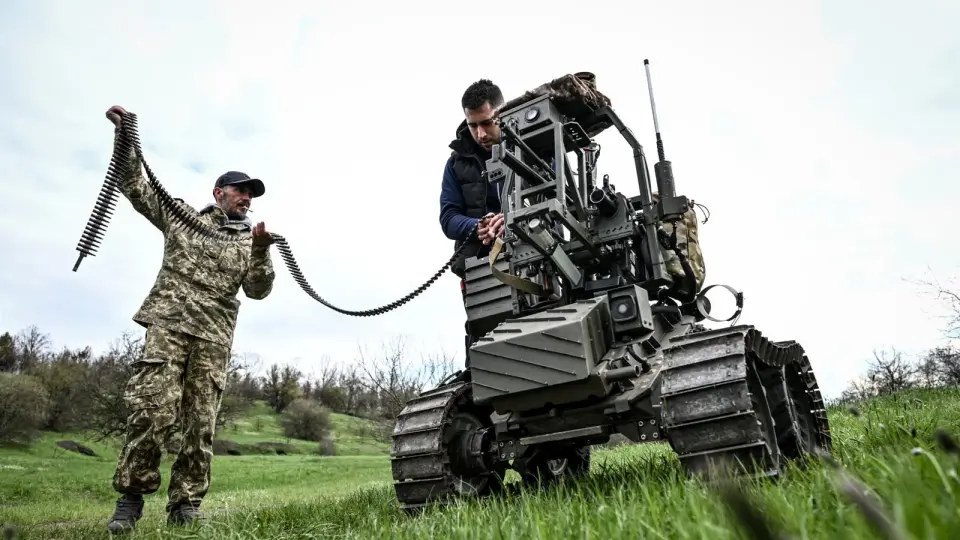
Ukraine’s Third Army Corps has executed a successful counteroffensive in the eastern Donbas, reversing over a year of Russian territorial gains through the systematic use of ground robots and drones. Dubbed 'Operation Vivaldi,' the campaign has reclaimed 176 square kilometers of land since May, inflicting over 2,000 Russian casualties and capturing more than 250 soldiers. By neutralizing Russian drone threats and deploying remote-controlled vehicles behind enemy lines, Ukrainian forces have secured air superiority in the Lyman area. This strategic shift has disrupted Moscow’s timeline to capture the Donetsk region by year's end, forcing Russian leadership to seek an extension to March 2027. While not a decisive breakthrough, the operation demonstrates a new paradigm in warfare where robots replace human personnel for high-risk tasks, significantly reducing Ukrainian losses while increasing Russian attrition.
Key points
- Ukraine’s Third Army Corps reclaimed 176 square kilometers in the northern Donetsk Oblast through 'Operation Vivaldi,' reversing over 12 months of Russian advances.
- The offensive utilized remote-controlled ground robots and large bomber drones to attack Russian positions from behind, minimizing Ukrainian personnel exposure.
- Ukrainian forces achieved air superiority in the Lyman area, neutralizing Russian drone threats and allowing mechanized advances without significant interference.
- The operation inflicted over 2,000 Russian casualties and resulted in the capture of more than 250 Russian soldiers during its third phase alone.
- President Zelenskyy confirmed that Russian monthly casualties have risen to 42,000, compared to 30,000-32,000 earlier in the year, while Ukrainian losses remain significantly lower.
- The success has forced Russian leadership to delay its objective of capturing the Donetsk region from the end of 2026 to March 2027.
Background
This development follows a period of slow Russian gains and significant manpower strains, as noted in earlier coverage of the Kinburn Peninsula standstill and Putin’s plans for a massive mobilization of up to 400,000 troops. Previous reports indicated that while Russia maintained a hardline stance and continued strikes on Ukrainian infrastructure, Ukrainian forces were deepening their long-range strike campaigns against Russian oil and military assets. The current counteroffensive represents a shift from defensive attrition to active territorial reclamation, contrasting with the stalemate dynamics observed in August and September 2026.
How outlets are covering it
CNBC emphasizes the strategic impact of the operation, describing it as a 'big bloody nose' to Putin’s war aims and highlighting the innovative use of robotics to change the paradigm of modern warfare. Ukrainian Pravda focuses on the quantitative success, citing Zelenskyy’s figures of 125-140 square kilometers liberated and the sharp increase in Russian casualties to 42,000 per month. The Institute for the Study of War (ISW) provides a tactical analysis, noting that Ukrainian forces successfully feinted to distract Russian forces and utilized converted armored vehicles to break through fortifications, while also highlighting internal Russian military dysfunction. ISW points to ultranationalist Russian milbloggers criticizing the 'culture of lying' within the Russian command, which obscured battlefield realities and hindered operational planning. While all sources agree on the tactical success, they differ in emphasis: CNBC and Ukrainian sources focus on the technological and human cost aspects, whereas ISW highlights the informational and command failures within the Russian military structure.
Why it matters
The success of 'Operation Vivaldi' signals a potential shift in the balance of power in the Donbas, challenging Russia’s ability to achieve its territorial objectives. The effective use of robotics and drones to neutralize Russian air superiority suggests that Ukraine may be able to sustain offensive operations with lower personnel losses. This could influence future negotiations, as demonstrated military capability may strengthen Kyiv’s position. Additionally, the increased Russian casualties and delayed timelines may impact domestic stability in Russia, where fuel shortages and economic pressures are already straining the system. The operation also underscores the evolving nature of modern warfare, where technology plays a decisive role in determining battlefield outcomes.
What to watch
Ukraine is expected to scale up the use of ground robotic systems in future operations, as indicated by Zelenskyy’s statement on expanding this capability. Russian forces may attempt to adapt their drone and electronic warfare strategies to counter Ukrainian air superiority in the Lyman area. The delayed timeline for capturing the Donetsk region may lead to further Russian mobilization efforts or shifts in strategic priorities. Continued Ukrainian strikes on Russian oil infrastructure and logistics hubs are likely to persist, aiming to raise the cost of the war for Moscow. The situation in the Donbas will remain a focal point for international observers, as it may influence broader diplomatic efforts and the potential for a negotiated settlement.
- Ukraine’s surprise robot offensive exposes a vulnerability in Putin’s war machine CNBC
- Ukraine’s Surprise Counterattack Sets Back Putin’s Donbas Goals Bloomberg.com
- Up to 140 sq km already liberated in Operation Vivaldi, Zelenskyy says Українська правда
- Russian Offensive Campaign Assessment, September 28, 2026 understandingwar.org
- Ukrainian forces advance in key eastern battlefield, senior commander says Reuters
Want the full story? Read the original reporting
Read on CNBC