
US-Israeli Nuclear Ambiguity Faces Scrutiny Amid Regional Proliferation Risks
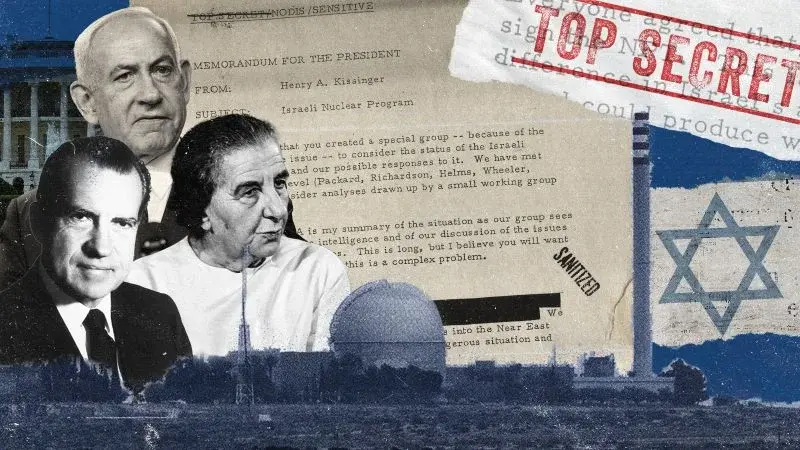
The longstanding US-Israeli policy of deliberate ambiguity regarding Israel’s nuclear arsenal is under renewed pressure. While the strategy originated in the 1960s to prevent regional proliferation, current tensions with Iran and potential Saudi nuclear ambitions are prompting US lawmakers to question its viability. Officials maintain official denial, but experts warn that the status quo may become unsustainable if neighboring states acquire nuclear capabilities.
Key points
- The policy of ambiguity, rooted in a 1969 agreement between Richard Nixon and Golda Meir, allows Israel to possess nuclear weapons without public confirmation, leveraging the Non-Proliferation Treaty’s definition of a nuclear state as one that has tested a weapon.
- Democratic Rep. Joaquin Castro argues the policy is now 'reckless and dangerous,' citing risks for US troops in the region if Israel’s nuclear 'red lines' or contingency plans remain unknown.
- Secretary of State Marco Rubio acknowledged in June that most of the world assesses Israel possesses nuclear weapons, but stated the US does not discuss this publicly as part of foreign policy.
- President Donald Trump indicated potential cuts to nearly $4 billion in military aid to Israel, while a US-Saudi nuclear cooperation agreement is pending before Congress, potentially enabling Saudi uranium enrichment.
- Nonproliferation expert James Acton estimates a 50-50 chance that Iran acquires a nuclear weapon within three years, despite ongoing US-Israeli military efforts to eliminate its highly enriched uranium stockpiles.
Background
This development follows recent US-Israeli military operations against Iran and stalled diplomatic talks in Doha. Previous coverage noted that US and Israeli officials are preparing for potential post-midterm strikes on Iranian nuclear facilities, including the deeply buried 'Pickaxe Mountain' site. The current scrutiny of nuclear ambiguity occurs amidst these escalating tensions and ongoing debates over US military aid levels.
How outlets are covering it
CNN and Mezha.net emphasize the shifting geopolitical landscape, highlighting that the ambiguity policy may be unraveling due to Iran’s persistent nuclear capabilities and Saudi Arabia’s hedging strategies. They note that US lawmakers are increasingly critical of the policy’s risks. In contrast, the Freeman Spogli Institute focuses on the historical and diplomatic mechanics of the 'Nixon-Meir understanding,' detailing how it has provided strategic benefits to Israel while limiting its access to civilian nuclear infrastructure. SadaNews provides a detailed historical recount of the policy’s origins, including the 1960 'textile factory' incident and the 1986 Vanunu leak, framing the current debate as a continuation of decades-long secrecy. All sources agree that the policy’s future depends heavily on the actions of regional neighbors, particularly Iran and Saudi Arabia.
Why it matters
The potential abandonment of nuclear ambiguity could trigger a regional arms race, undermining US nonproliferation efforts. It also raises critical questions about the coordination of US and Israeli military strategies in a conflict zone, potentially affecting the safety of US personnel and the stability of the Middle East. The outcome may influence future US foreign policy regarding nuclear weapons and alliances in the region.
What to watch
Congress will review the US-Saudi nuclear cooperation agreement, which could set a precedent for regional nuclear expansion. US officials may face further pressure to clarify Israel’s nuclear posture, especially if Iran advances its weapons program. The outcome of the ongoing US-Israeli war against Iran will likely determine whether the ambiguity policy is maintained or formally abandoned.
- 60 years of denial about Israel’s nuclear weapons program confronts a new reality CNN
- Israel’s Nuclear Policy: Deliberate Ambiguity and American Support Freeman Spogli Institute for International Studies
- Israel's nuclear secret is facing its biggest test yet. What changed? inkl
- After six decades, Israel’s nuclear ambiguity faces growing pressure Mezha.net
- "Textile Factory"... How Israel and the United States Concealed the Truth About Israel's Nuclear Arsenal? وكالة صدى نيوز
Want the full story? Read the original reporting
Read on CNN