
U.S. Latin America Strategy Faces Setbacks as Hegseth's 'Donroe Doctrine' Stalls
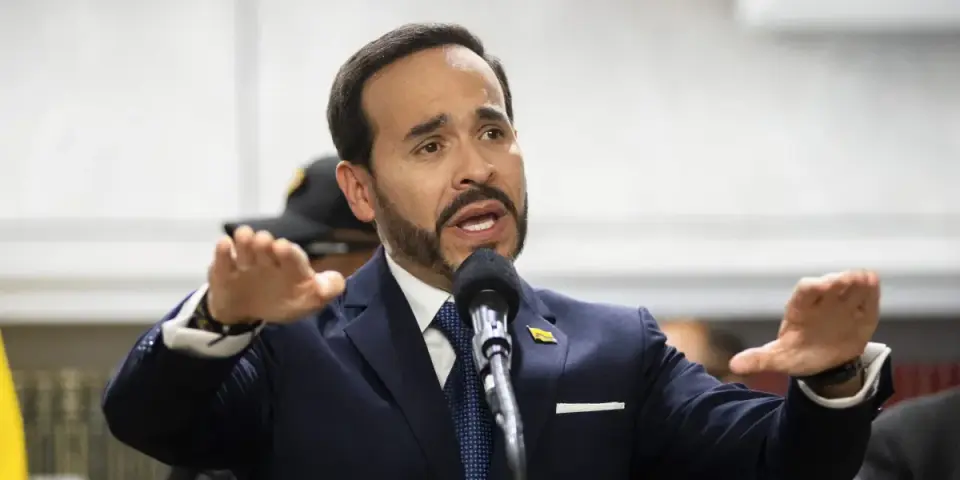
U.S. Secretary of War Pete Hegseth recently toured Latin America to promote the 'Donroe Doctrine,' a strategy aimed at securing U.S. dominance in the hemisphere. While the administration secured a military alliance with Venezuela following its January 2026 intervention, it faced significant pushback in Colombia, where Congress rejected a proposal for joint military operations. Critics argue that the strategy is faltering due to rising left-wing opposition, human rights concerns, and the inability to impose U.S. will on sovereign nations.
Key points
- Hegseth visited Venezuela, Colombia, Ecuador, and Honduras in November 2026 to promote U.S. military cooperation, despite facing potential impeachment in the U.S. Congress.
- The U.S. signed a military alliance with Venezuela's acting president, Delcy Rodríguez, including joint training and intelligence sharing, following the January 2026 capture of Nicolás Maduro.
- Colombia rejected a plan for joint U.S. military operations, citing lack of congressional support and public opposition, leading Hegseth to cut his visit short.
- The U.S. paused joint military operations with Ecuador in October due to concerns over human rights violations, including alleged torture and drone strikes on civilians.
- The 'Donroe Doctrine' faces backlash from left-wing movements in Bolivia, Chile, and Argentina, as well as legal challenges over U.S. maritime strikes that have killed over 240 people since September 2025.
Background
The 'Donroe Doctrine' is a modern corollary to the Monroe Doctrine, outlined in the Trump administration's National Security Strategy, which seeks to treat Latin America as a U.S. sphere of influence. This follows the January 2026 U.S. military intervention in Venezuela, which captured President Nicolás Maduro and installed a U.S.-aligned government. The strategy has expanded to include maritime strikes against suspected drug traffickers and joint military exercises in Ecuador, Panama, and Colombia. Previous U.S. interventions in the region, such as during the Cold War, have often led to human rights abuses and political instability.
How outlets are covering it
The Intercept emphasizes the 'faltering' nature of the U.S. strategy, highlighting setbacks in Colombia, Ecuador, and rising left-wing opposition across the region. It frames the U.S. actions as imperialist and notes the human rights violations associated with the military partnerships. In contrast, the secondary source from Her Campus focuses on the historical context of U.S. interventionism and the economic implications, noting that Trump's aggressive approach may push Latin American countries toward China. The third secondary source, from IFZ RAN, provides a more analytical view, noting that while the U.S. has expanded its military presence, it faces limits due to sovereignty concerns and legal challenges. It suggests that quiet institutional work may be more effective than flashy unilateral strikes. The sources agree that the U.S. has expanded its military presence in Latin America but differ on the long-term viability of the 'Donroe Doctrine' and the potential for backfire.
Why it matters
The 'Donroe Doctrine' represents a significant shift in U.S. foreign policy, aiming to secure U.S. dominance in Latin America through military and economic means. However, the strategy faces significant challenges, including human rights concerns, legal challenges, and rising opposition from local populations and governments. The success or failure of this strategy could have long-term implications for U.S. influence in the region and its relationships with other global powers, such as China. The human rights violations and legal challenges associated with the U.S. military operations also raise questions about the legitimacy and effectiveness of the 'Donroe Doctrine.'
What to watch
The U.S. administration is likely to continue its efforts to expand military cooperation in Latin America, but it faces significant challenges from local opposition, legal challenges, and human rights concerns. The potential impeachment of Hegseth in 2027 could also impact the strategy. The U.S. may also face increased competition from China, which is expanding its influence in the region. The long-term viability of the 'Donroe Doctrine' will depend on the ability of the U.S. to balance its military and economic interests with the sovereignty and human rights of Latin American nations.
- Trump’s Imperialist Fantasy for Latin America Is Already Failing The Intercept
- Latin America's political divide with two former presidents GZERO Media
- How Trump is reshaping U.S. influence in Latin America Her Campus
- Why Us Military Intervention In Latin America Is Back And What It Actually Means ИФЗ РАН
- Latin America doesn’t want to be America’s backyard, say two former presidents GZERO Media
Want the full story? Read the original reporting
Read on The Intercept