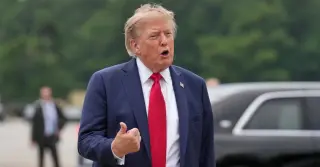
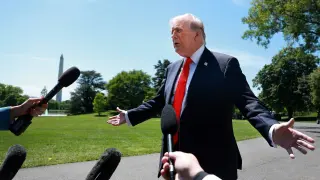
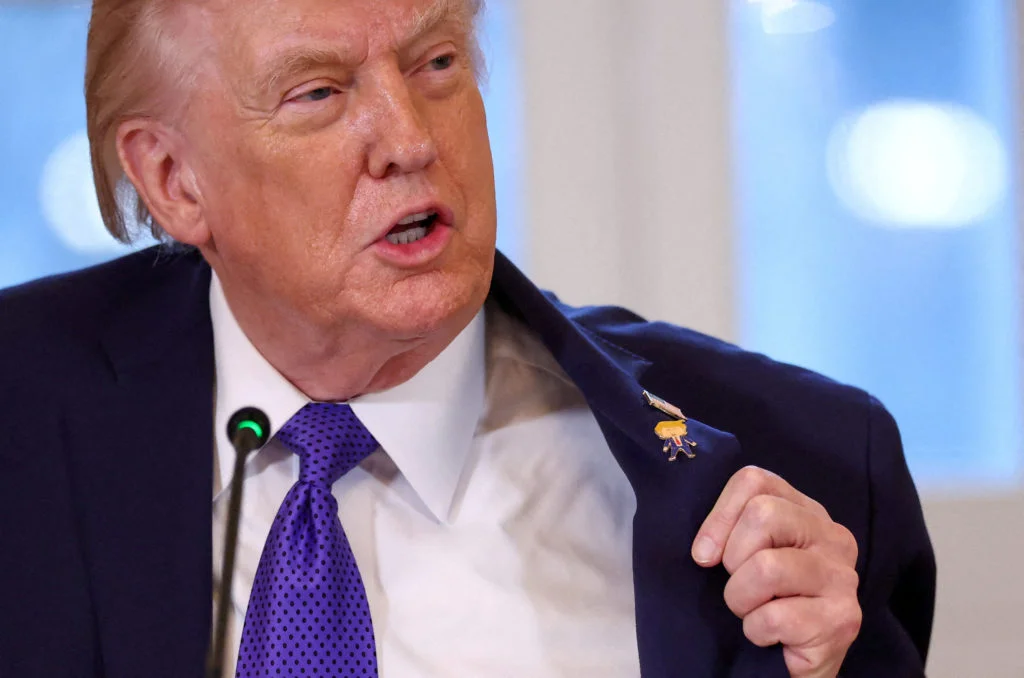
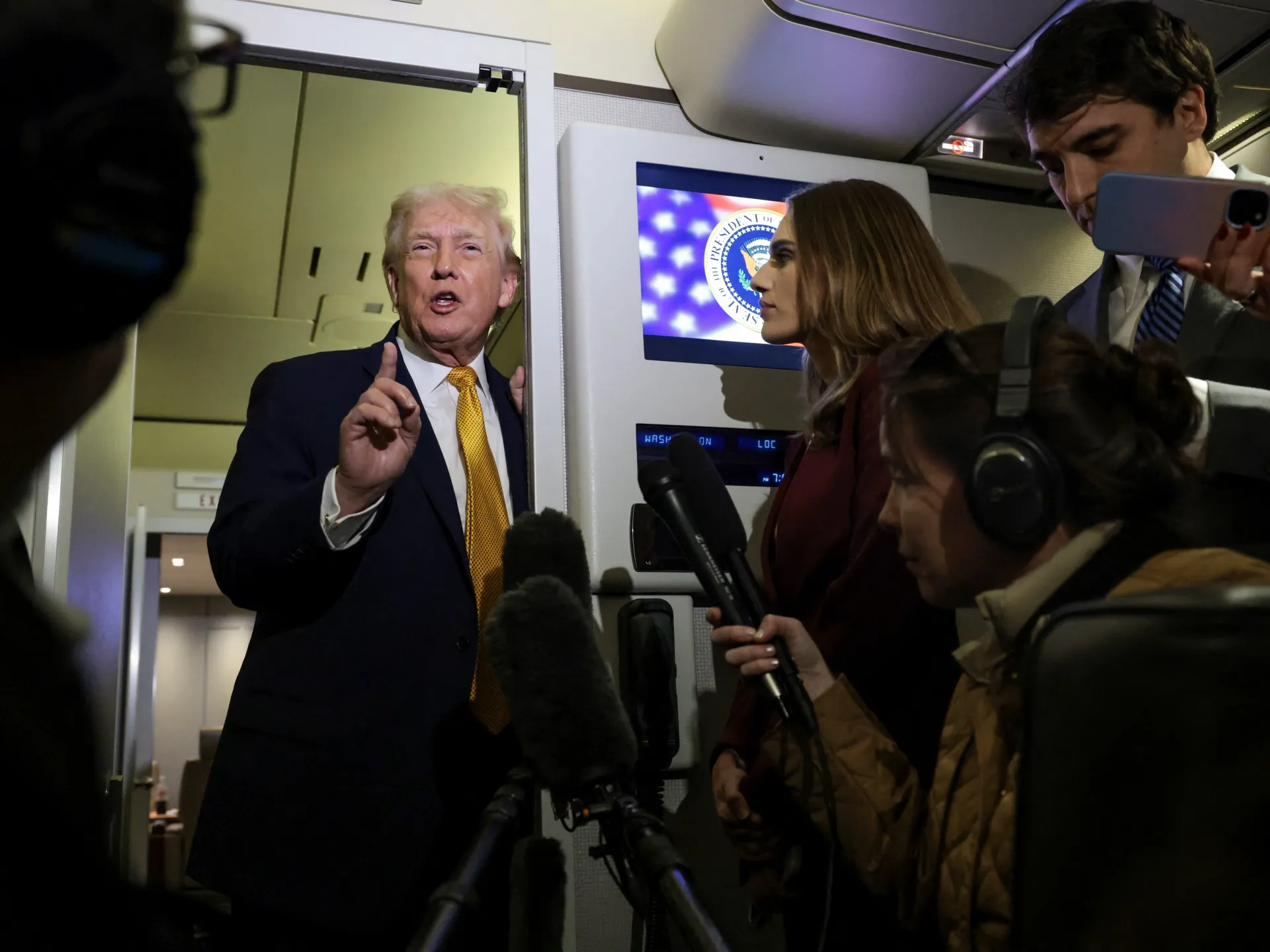
Trump suggested the 'ultimate intervention' for volatile bond markets could be military action, a remark that sparked widespread mockery online; he denied directing Treasury to act and it remained unclear what he meant, with no immediate White House clarification.
President Donald Trump said the U.S. will attempt to 'free' civilian ships stranded in the Strait of Hormuz as the war with Iran continues, a plan dubbed 'Project Freedom' that would begin Monday and focus on vessels flagged in non-conflicting countries; details on how it would be carried out or whether Iran will allow it are unclear, and the operation's potential impact on global oil markets remains a concern.
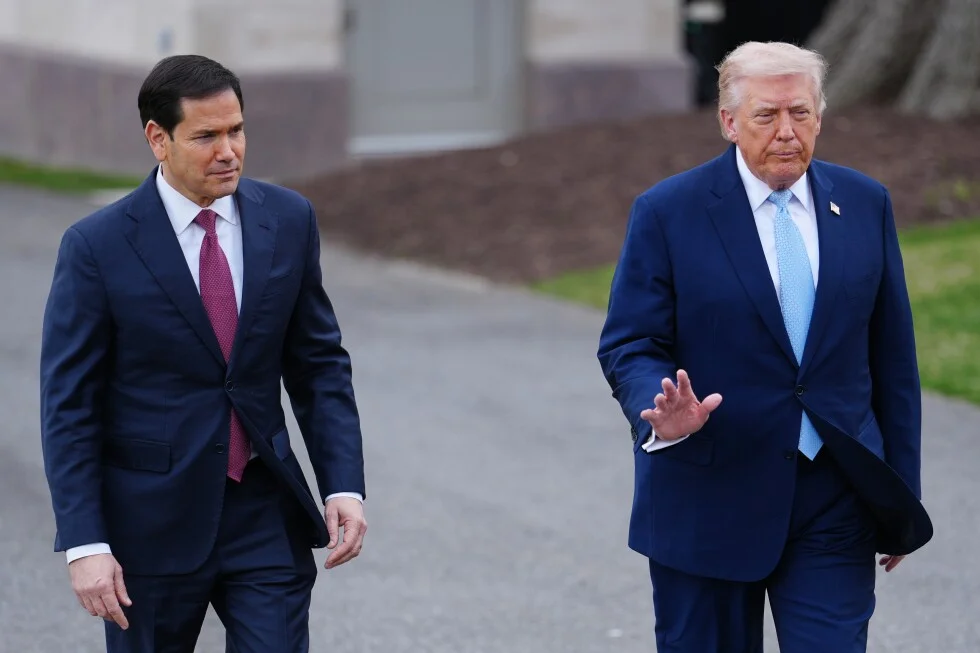
US Secretary of State Marco Rubio works to win G7 backing for a potential military action against Iran, with President Trump at his side as skeptical allies weigh the plan.
The White House claims Operation Epic Fury has achieved overwhelming success against Iran in three weeks, destroying the regime’s air and naval capabilities, ballistic missiles, and production facilities, and crippling its funding for proxies (with over 7,000 targets hit). It also highlights broad polling support from MAGA Republicans and Republicans generally, while framing media opposition as fake news and praising a Peace Through Strength approach.
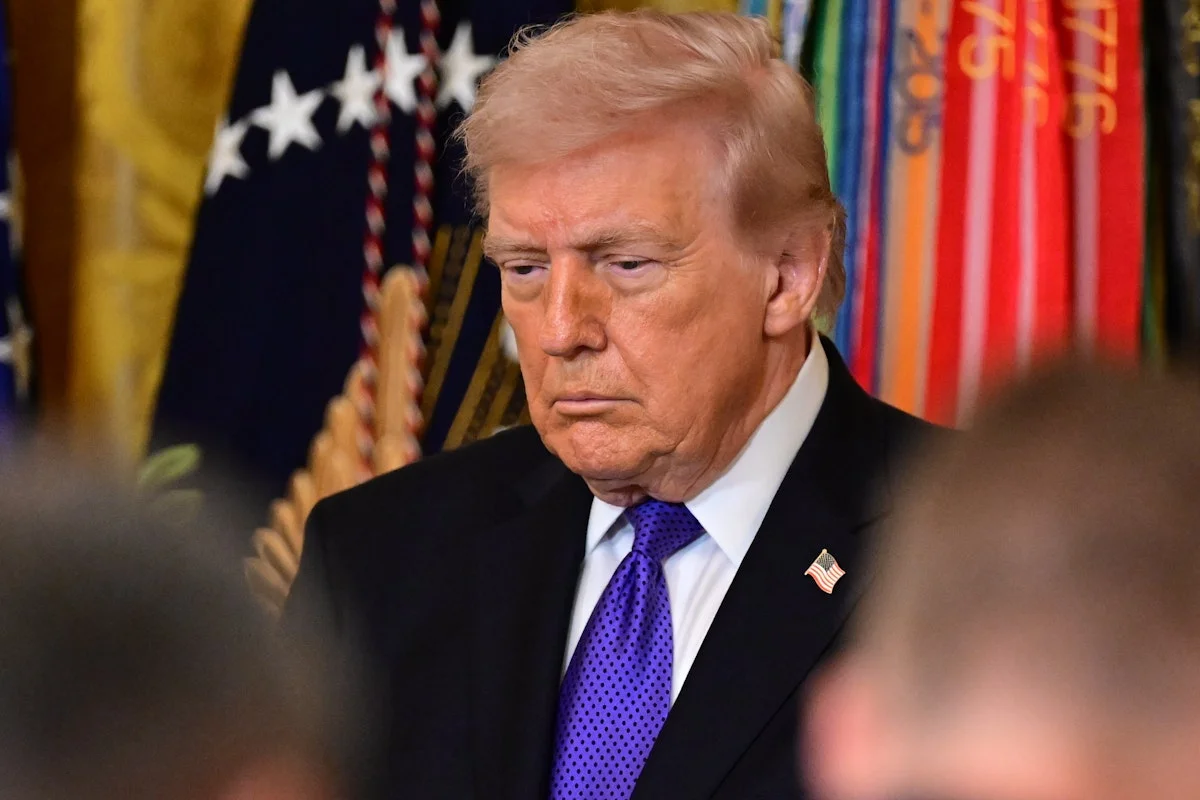
During a Medal of Honor ceremony, Donald Trump argued Iran's pursuit of nuclear weapons posed an immediate threat and supported continuing U.S. strikes, even as he previously claimed Iran's nuclear program had been obliterated, raising questions about whether the war was truly necessary and about the public justification for escalating tensions.
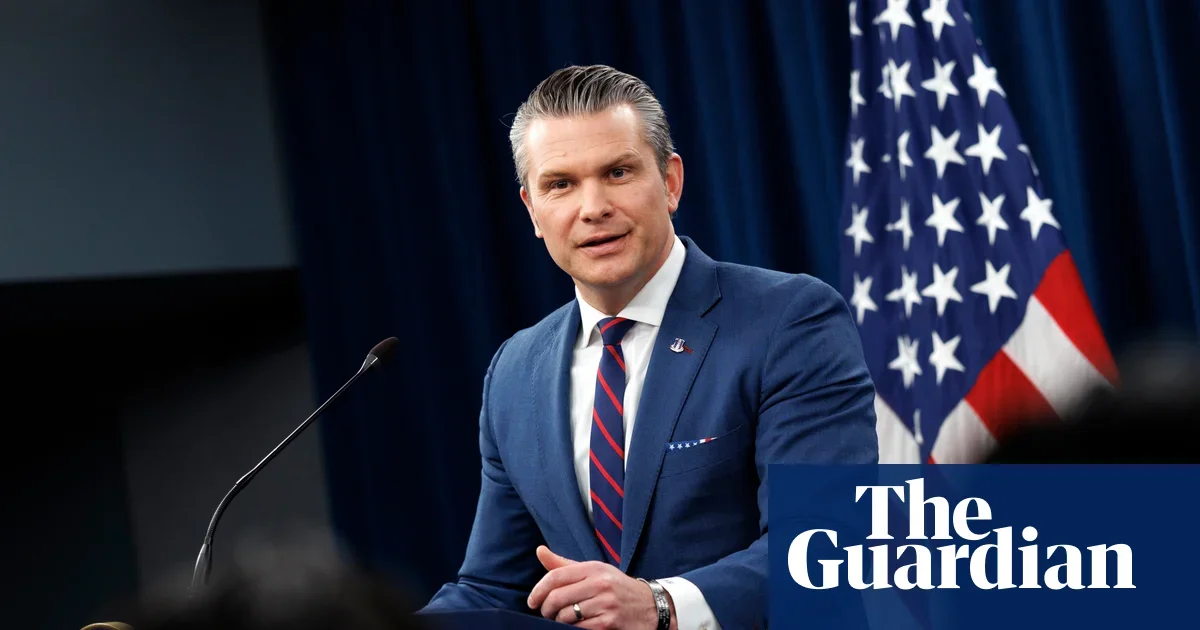
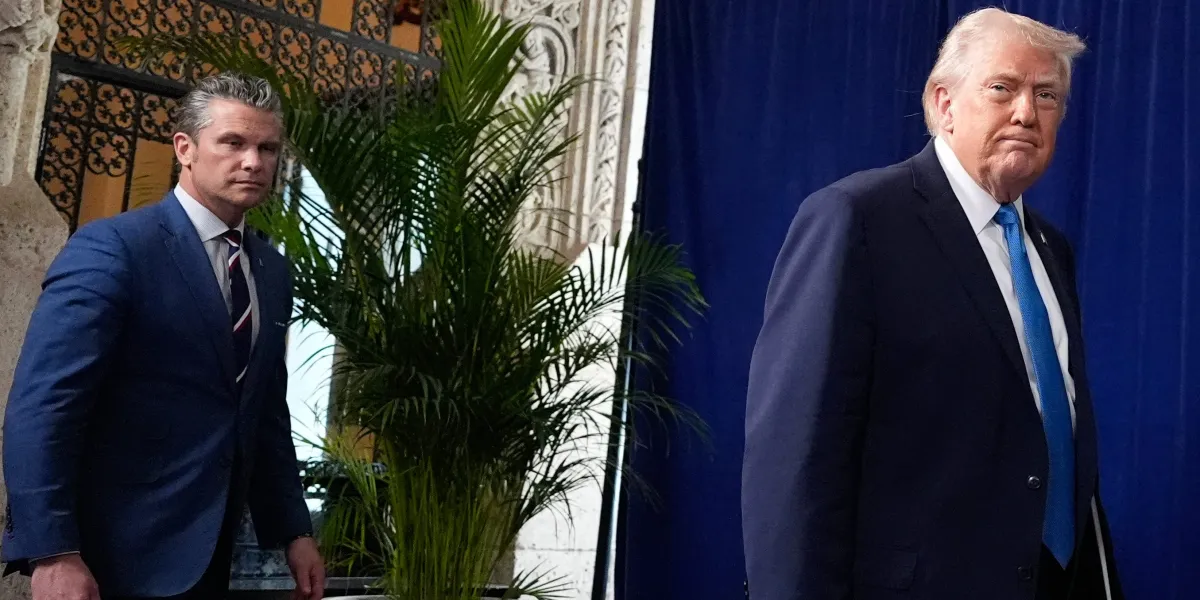
Pete Hegseth casts the Iran strikes as a decisive, anti‑political‑correctness operation fought on US terms, insisting it won’t resemble Iraq-era wars with nation-building. He touts fewer rules of engagement and potential unilateral action, while acknowledging possible troop involvement without a fixed exit timeline. Trump’s shifting rhetoric about duration and objectives is noted, but the press conference offered few concrete goals or a clear exit plan, serving mainly as mood-affirming messaging for a defiant stance.
The article uses Trump’s Iran strikes to illustrate how presidents justify military action without new congressional authorizations, relying on broad commander-in-chief powers and existing authorizations (notably the 2001 AUMF) for time-sensitive operations. It traces historical precedents (Korea, Bay of Pigs, Cambodia, Panama, Libya) and notes that no new AUMF has been passed since 2002, while Presidents Obama, Trump, and Biden have conducted actions in multiple countries. The piece also discusses the tension between swift executive action and Congress’s slower, deliberative role, highlighting ongoing debate over presidential overreach versus necessary agility in national security.
EU Parliament member Sebastian Tynkkynen says that after sanctions and diplomacy, military intervention may be required to force regime change in Iran, including designating the IRGC as a terrorist organization, tightening sanctions, ending trade, and expelling Iranian diplomats; NATO discussions have touched on a coalition for action, while the EU also pushed a resolution calling for an end to executions. He argues that harder sanctions are supported by the Iranian people despite hardship, and that the leadership is not legitimate.
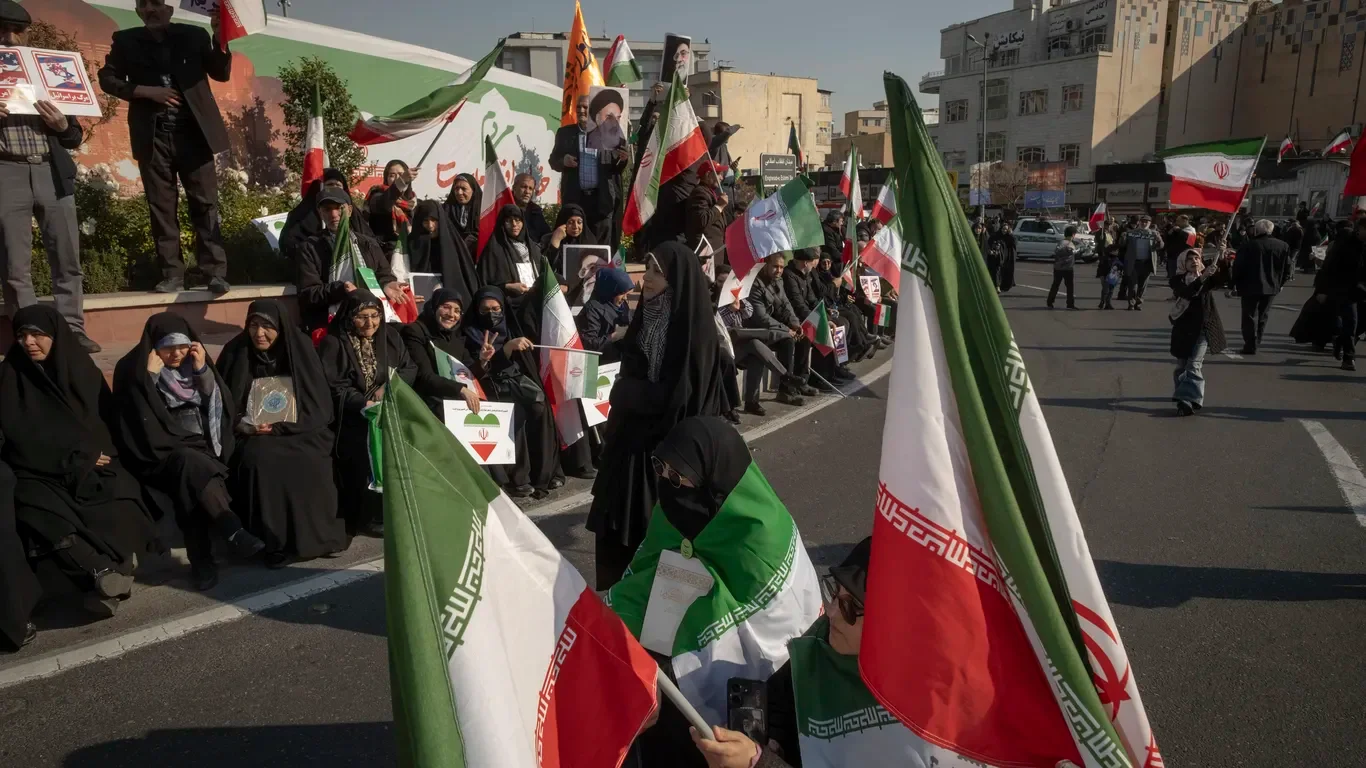
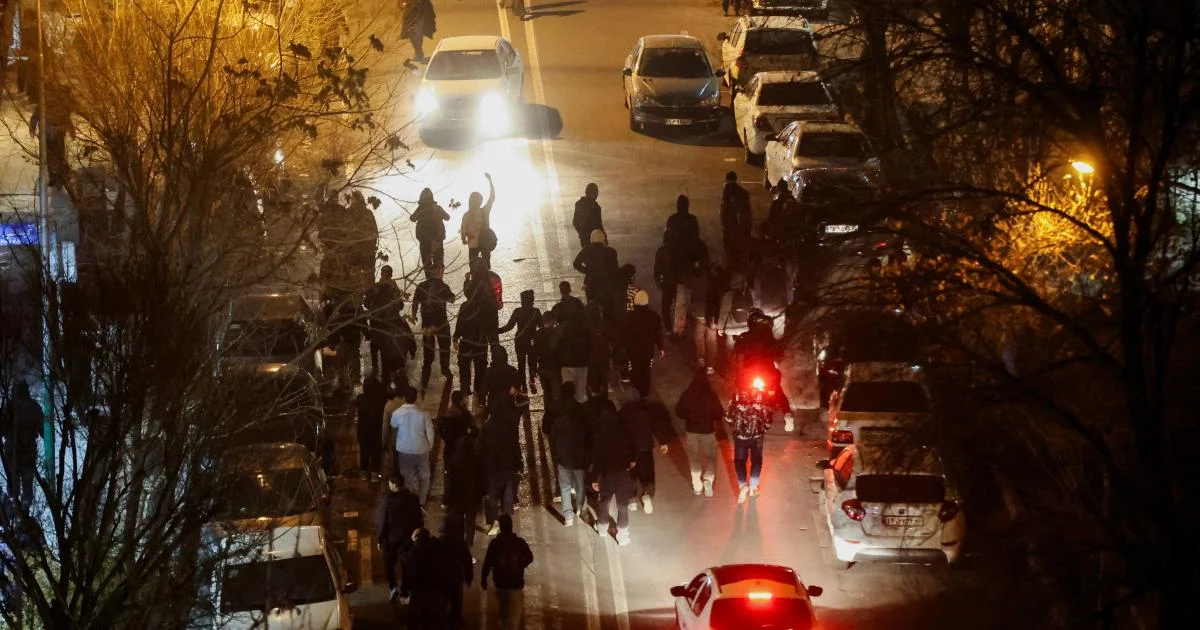
Foreign Affairs senior fellow Andrew P. Miller argues that U.S. military intervention to shield Iranian protesters would likely be limited in effect and risk a broader backlash, offering only temporary relief and potentially undermining long-term democratic prospects. He organizes options into deterrence (targeting missiles or regime leadership) and disruption (attacking communications, security bases, or using cyber tools), but cautions that even successful strikes might not alter the regime’s repression and could provoke retaliation. Miller urges a cautious U.S. role: no ground troops or coercive regime changes, but support through nonmilitary means—such as expanding free communications access (Starlink), international accountability for abuses, and diplomacy—to empower Iranians to determine their own future.
A new AP-NORC poll finds 56% of U.S. adults believe President Trump has gone too far in using the military abroad, with broad disapproval of his foreign policy and Venezuela handling. While some see benefits in halting drug trafficking from Venezuela, Americans are split on economic and national security impacts, and most prefer a less active U.S. role overseas; Republicans largely back the actions as 'about right' and oppose further escalation.
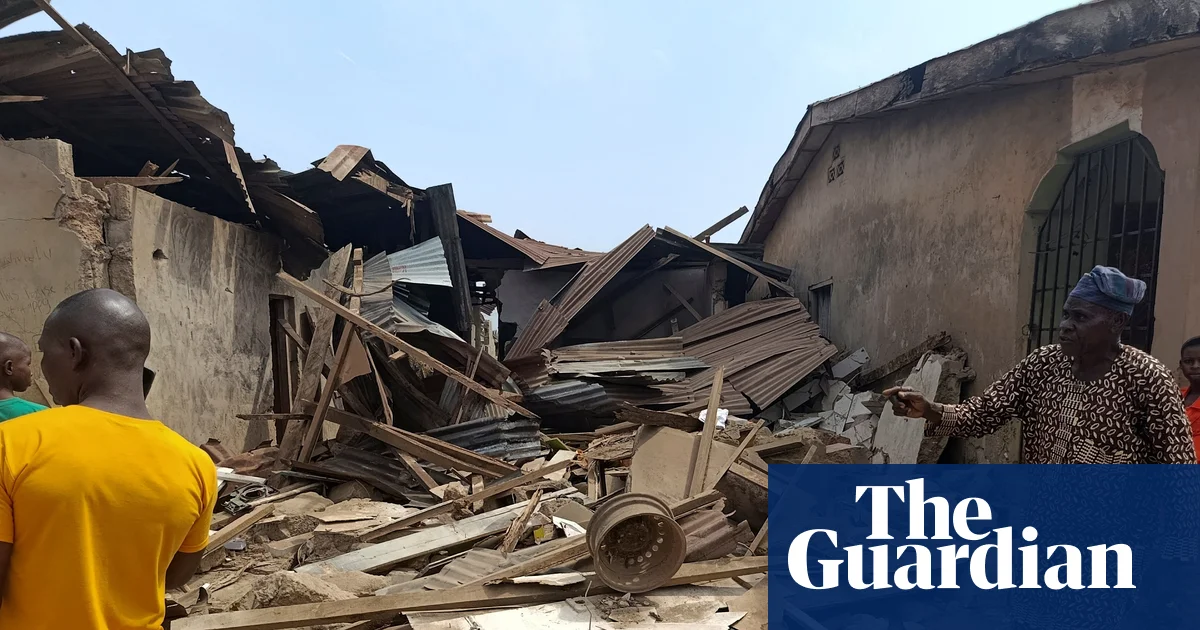
Two weeks after US airstrikes in northwest Nigeria targeting the group Lakurawa, questions remain about the operation's impact and the specific group targeted, with limited information on casualties and motives, raising concerns about the effectiveness and transparency of such military actions.
The article reports on President Trump's aggressive military actions and threats against multiple countries including Venezuela, Cuba, Colombia, Mexico, Greenland, and Iran, highlighting a shift from his campaign promises of ending wars to a more interventionist foreign policy, with potential for further conflicts and territorial ambitions.
European leaders and Greenland's officials strongly oppose US threats of military action and potential annexation by Donald Trump, emphasizing Greenland's sovereignty and the importance of collective security in the Arctic region, amid rising US interest in the territory.
The article discusses the recent US military operation in Caracas, which marks the realization of long-standing Venezuelan fears of US invasion, highlighting the historical context of US-Venezuela relations, political rhetoric, and the surreal nature of the event amid ongoing tensions.
U.S. President Donald Trump threatened Colombia's Petro and suggested Cuba might fall soon, amid recent U.S. actions in Latin America including the seizure of Maduro in Venezuela, signaling potential increased military intervention and a push to assert U.S. dominance in the region, while Latin American leaders call for regional unity and condemn unilateral U.S. actions.