
U.S.-Saudi Nuclear Deal Faces Congressional Hurdles and Proliferation Concerns
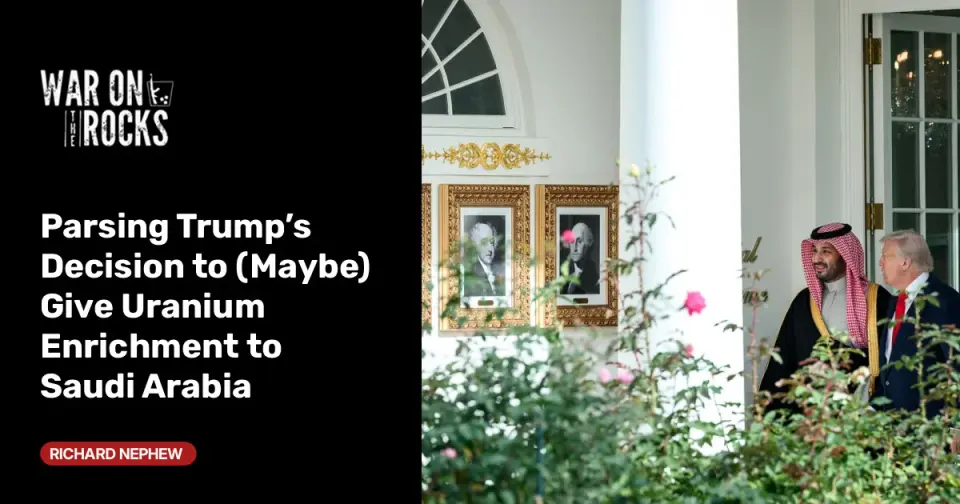
The U.S. and Saudi Arabia signed a Section 123 nuclear cooperation agreement on June 22, 2026, potentially allowing Saudi uranium enrichment. The deal faces congressional scrutiny, with President Trump conditioning approval on Saudi normalization with Israel. Critics warn of weakened nonproliferation standards, while supporters cite economic benefits and regional stability.
Key points
- The agreement, signed June 22, 2026, authorizes U.S. nuclear technology transfers to Saudi Arabia but requires congressional review within 90 days.
- President Trump linked the deal’s approval to Saudi Arabia joining the Abraham Accords, a condition Saudi Arabia has not accepted.
- The deal reportedly abandons the Additional Protocol for IAEA inspections, replacing it with bilateral U.S. safeguards and a potential 10-year moratorium on enrichment.
- Republican Sen. John Kennedy and Democratic Sen. Chris Van Hollen criticized the deal, citing timing concerns and the bait-and-switch nature of the Israel condition.
- Industry estimates suggest the deal could create 12,500 U.S. jobs over 25 years, but nonproliferation experts warn it sets a dangerous precedent.
Background
The U.S. has historically used Section 123 agreements to balance nuclear commerce with nonproliferation goals. The 2009 U.S.-UAE agreement, known as the 'gold standard,' required the UAE to forgo enrichment and accept the Additional Protocol. The current Saudi deal departs from this model, reflecting a shift in U.S. policy to accommodate commercial interests amid competition from Russia and China. Earlier in 2026, the deal was stalled due to Iran tensions and bipartisan opposition, with concerns over a potential pathway to weapons.
How outlets are covering it
War on the Rocks emphasizes the deal’s departure from decades-old nonproliferation policies, noting the absence of the Additional Protocol and the potential for a 10-year enrichment moratorium. Time Magazine highlights bipartisan opposition, with Sen. Kennedy citing the ongoing Iran war and Sen. Van Hollen calling the Israel condition a 'bait-and-switch.' Vox focuses on Israel’s unease and the deal’s potential to spark a regional nuclear race, while the Council on Foreign Relations warns of a 'slippery slope' toward unchecked nuclear material. All sources agree the deal’s future is uncertain due to congressional review and Trump’s conditional stance.
Why it matters
The deal could reshape U.S. nonproliferation policy and regional security dynamics. If approved, it may encourage other nations to seek similar exemptions from stringent safeguards, potentially accelerating a Middle East nuclear arms race. Conversely, it could bolster U.S. nuclear competitiveness and strengthen ties with Saudi Arabia, a key ally in countering Iran. The outcome will influence global norms for nuclear commerce and the balance between economic interests and security concerns.
What to watch
Congress has 90 days to review the deal, with a veto-proof majority required to block it. President Trump may withhold the deal if Saudi Arabia does not join the Abraham Accords. The full text, including any 'secret side letters,' will be scrutinized for details on inspections and enrichment pathways. The next Congress, elected in November 2026, may also weigh in, potentially delaying or altering the agreement.
- Parsing Trump’s Decision to (Maybe) Give Uranium Enrichment to Saudi Arabia War on the Rocks
- Saudi Arabia stares down Trump whiplash on nuclear deal The Hill
- Republican Lawmaker Breaks Ranks With Trump Over U.S.-Saudi Arabia Nuclear Deal Time Magazine
- Trump-Netanyahu meeting: Why Trump’s Saudi nuclear deal is making Israel uneasy vox.com
- The Saudi Nuclear Deal Would Set a Dangerous New Proliferation Precedent Council on Foreign Relations
Want the full story? Read the original reporting
Read on War on the Rocks