
UN and Red Cross Warn of 'Moral Red Line' as AI-Enabled Drone Warfare Escalates
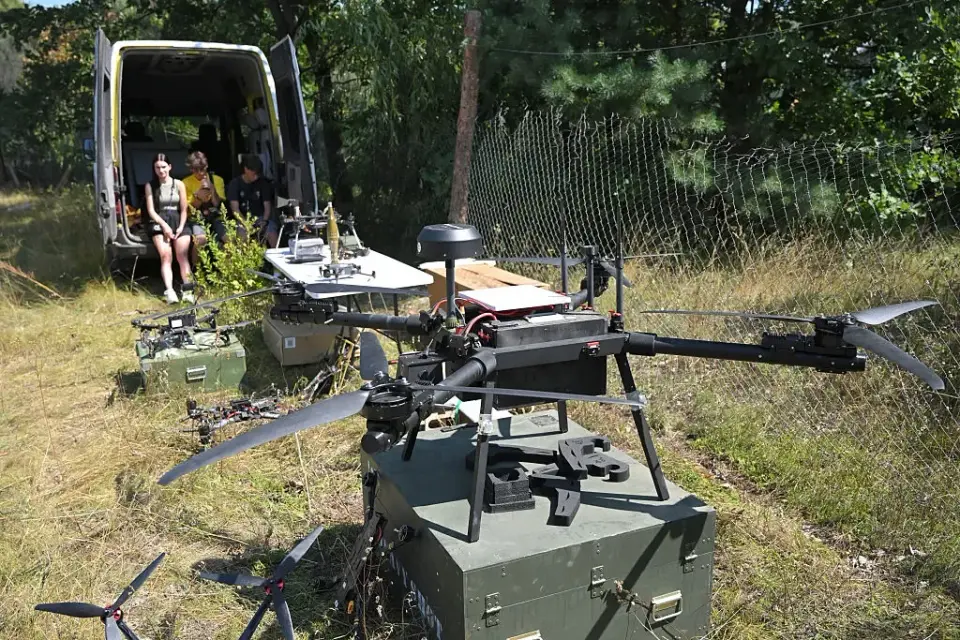
The UN and International Committee of the Red Cross have issued an urgent joint appeal for binding international regulations on lethal autonomous weapons systems, warning that the world is 'dangerously close' to crossing a moral red line. This call follows a rapid acceleration in AI-driven warfare, including Ukraine’s deployment of massive drone swarms against Russia and the use of AI targeting algorithms in the Middle East. While no fully autonomous weapon has been confirmed in use, the gap between technological capability and legal oversight is widening, prompting a critical review of the Convention on Conventional Weapons in November 2026.
Key points
- UN Secretary-General António Guterres and ICRC President Mirjana Spoljaric Egger renewed a 2023 call for restrictions, stating that 'risks have intensified' due to record-speed weapon development.
- Ukraine has launched swarms of nearly 800 drones against Russian targets, including strikes on the Wildberries logistics network, and is developing AI-guided swarms for potential attacks on Moscow airports.
- Russia reportedly used an AI-guided drone with an Nvidia chip to kill three civilians in Zaporizhzhia in July 2026, marking a significant step toward autonomous lethal decision-making.
- The U.S. Pentagon has contracted with eight major tech firms, including Google and Microsoft, to integrate AI into military operations, aiming to establish an 'AI-first fighting force.'
- A critical review of the Convention on Conventional Weapons is scheduled for November 2026, where negotiators will decide whether to launch full treaty negotiations on autonomous weapons.
Background
This escalation follows a period of rapid AI integration in military contexts. In July 2026, CIA Director John Ratcliffe noted that AI-guided Ukrainian drones had reduced the average survival time of new Russian recruits to 20-30 minutes. Additionally, in August 2026, Ukrainian forces used British-made drones to strike deep inside Russia, including an oil refinery near Volgograd, signaling a shift toward long-range, potentially autonomous strike capabilities. These developments build on earlier concerns raised in 2023 about the pace of autonomous weapon development outstripping international regulatory frameworks.
How outlets are covering it
The UN and ICRC emphasize the urgent need for binding legal rules, warning that the gap between technological capacity and regulatory constraints is widening. They argue that scientists and engineers themselves are calling for limits, suggesting that states cannot remain passive. In contrast, The Intercept highlights the immediate, real-world deployment of AI in lethal contexts, citing specific incidents like the July 2026 drone strike in Zaporizhzhia and the use of Israel’s Lavender system in Gaza, which reportedly had a 10% error rate. Small Wars Journal takes a more strategic, forward-looking view, arguing that the U.S. military must prepare for a future where Artificial General Intelligence (AGI) controls warfare entirely, with humans only setting initial 'commander’s intent.' This perspective suggests that current debates about 'human-in-the-loop' controls may be obsolete within a decade, as AGI could arrive by 2029-2030. The sources differ in their focus: The UN and ICRC focus on immediate legal and ethical risks, The Intercept on current battlefield applications and corporate involvement, and Small Wars Journal on the long-term strategic implications of AGI.
Why it matters
The rapid deployment of AI in warfare poses a direct threat to international humanitarian law and civilian protection. If autonomous weapons become normalized, the legal and ethical frameworks for accountability may collapse, as responsibility for AI actions is difficult to assign. The November 2026 review of the Convention on Conventional Weapons is a critical juncture; failure to act could lead to the proliferation of autonomous weapons beyond control, with potentially catastrophic consequences for global security and human rights.
What to watch
The next major step is the November 2026 review of the Convention on Conventional Weapons in Geneva, where negotiators will decide whether to launch full treaty negotiations on autonomous weapons. The outcome of this review will determine whether binding international rules can be established before the technology proliferates further. Additionally, the U.S. and other nations will continue to integrate AI into their military operations, with the Pentagon’s contracts with tech firms likely expanding. The development of AI-guided drone swarms by Ukraine and other nations will also continue, potentially leading to more autonomous strikes in the coming months.
- It’s Time to Rein in Lethal AI Drones The Intercept
- U.N. and Red Cross urge global rules on 'killer robot' weapons systems Spectrum News
- World must rein in autonomous weapons, UN and Red Cross chiefs say Euronews.com
- Humanity’s Last Order: War in the Age of AGI Small Wars Journal
- UN chief, Red Cross renew call for rules on lethal autonomous weapons UN News
Want the full story? Read the original reporting
Read on The Intercept