
Digital reconstruction of 11th-century 'Conquest Man' reveals a Scandinavian identity that defies the Norman-Saxon binary
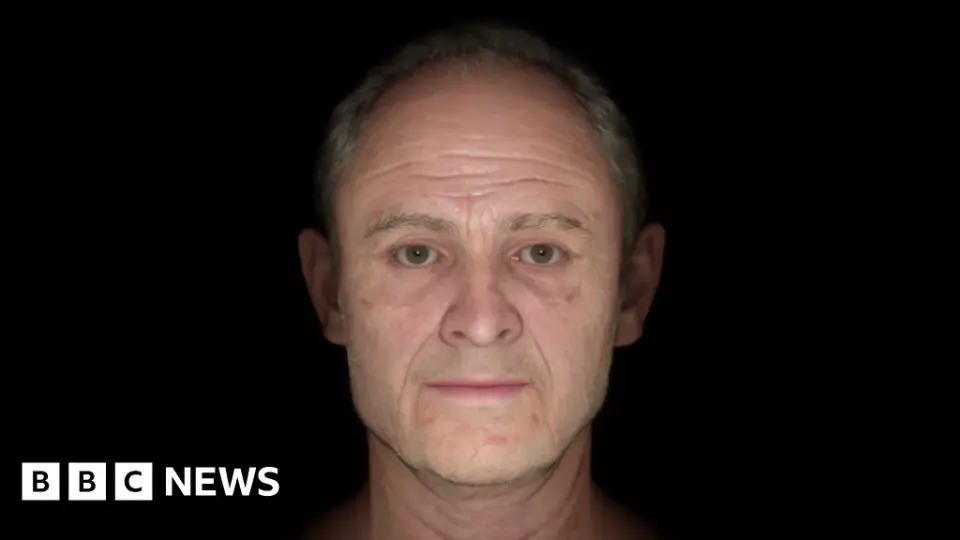
A digital facial reconstruction of an 11th-century man buried in 1079 at St Peter's Church in Barton-upon-Humber has been completed by researchers from Liverpool John Moores University and English Heritage. Known as 'Conquest Man,' the individual was a stocky, muscular male in his 50s or 60s with multiple healed fractures. Analysis of his ancient DNA, isotopes, and skull shape indicates he was of Scandinavian origin, not Norman or Anglo-Saxon. This finding challenges the traditional binary narrative of the 1066 Battle of Hastings, suggesting a more complex demographic reality where people moved across the North Sea and lived through the transition between pre- and post-Conquest societies.
Key points
- The skeleton of 'Conquest Man' was discovered 50 years ago during excavations at St Peter's Church in Barton-upon-Humber, which yielded nearly 3,000 remains.
- The man was buried in a coffin made from an oak tree felled in 1079, confirming the date of his death.
- Physical analysis revealed he was just over 5 feet tall, stocky, and had multiple healed fractures, suggesting a life of physical activity or conflict.
- Ancient DNA and isotope testing from his teeth indicate he had substantial continental ancestry and likely spent his adolescence in a colder region, consistent with Scandinavian origins.
- The digital reconstruction, produced by the Face Lab at Liverpool John Moores University, depicts a man with thin lips, a receding hairline, and a frank gaze.
- Kevin Booth, English Heritage's head curator, notes that the man's grave goods included applewood staffs, indicating a Scandinavian cultural influence.
Background
This story builds on previous archaeological findings at St Peter's Church, where the Anglo-Saxon tower and baptistery date to the early 11th century. The church was declared redundant in 1972, leading to excavations that uncovered nearly 3,000 skeletons. While earlier archive entries discuss unrelated topics such as the Huygens probe and US political races, the current focus is on the historical implications of the Conquest Man findings for understanding medieval migration and identity in the Danelaw region.
How outlets are covering it
The BBC emphasizes the humanizing aspect of the reconstruction, highlighting how Conquest Man represents an 'everyday person' who helps illustrate the 'mingling and coming and going' of 11th-century communities. Kevin Booth, quoted by the BBC, stresses that the man is not an oddity but a representation of shared common culture. The Guardian provides a more detailed scientific breakdown, noting that the research has not been peer-reviewed and involves multiple institutions, including Historic England and the Francis Crick Institute. The Guardian highlights the uncertainty regarding whether Conquest Man was a Norman, Saxon, or Scandinavian, with Booth suggesting he was 'likely neither' in the traditional binary sense. The Yahoo source is a technical error page and provides no substantive content. The BBC and The Guardian agree on the core findings but differ in emphasis: the BBC focuses on the emotional and cultural connection to the past, while The Guardian focuses on the scientific methodology and the challenge to the traditional Battle of Hastings narrative.
Why it matters
The reconstruction of Conquest Man's face and the analysis of his origins provide tangible evidence that the population of 11th-century England was more diverse and interconnected than the traditional Norman-Saxon binary suggests. It highlights the role of Scandinavian migration in the Danelaw and the complex social transitions that occurred during the Norman Conquest. This finding challenges simplistic historical narratives and offers a more nuanced understanding of medieval identity, migration, and cultural exchange in the British Isles.
What to watch
The research team hopes that Conquest Man will inspire the next generation of researchers to apply similar techniques to the remaining nearly 3,000 skeletons found at St Peter's Church. Kevin Booth has expressed a desire for these studies to reveal more about the community of Barton-upon-Humber. The digital reconstruction is permanently on display at St Peter's Church and was featured during Heritage Open Days in September 2026. Future peer-reviewed publications may provide further insights into the man's life and the broader demographic shifts of the era.
- Digital reconstruction reveals Conquest Man's face BBC
- Researchers find Britain’s 11th-century ‘Conquest Man’ was Scandinavian – but did he land with the Norman army? The Guardian
- Scientists reconstruct face of 1,000-year-old ‘Conquest Man' yahoo.com
- Scientists reconstruct face of 1,000-year-old ‘Conquest Man’ The Elkhart Truth
- Is this the face of a man who witnessed the Norman Conquest? The Times
Want the full story? Read the original reporting
Read on BBC