
Coroner confirms Iron Age woman in Northern Ireland bog was ritually decapitated
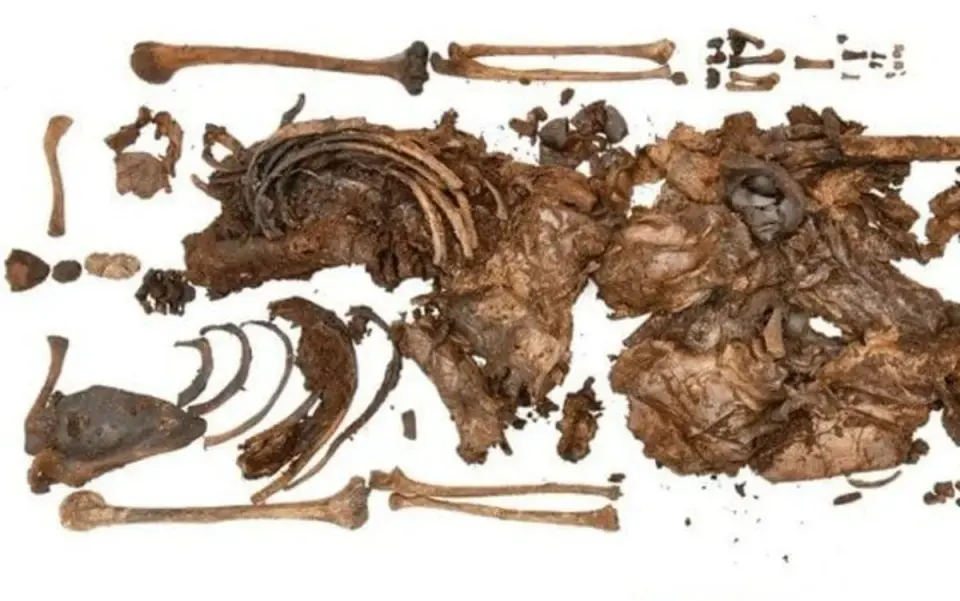
A coroner in Belfast has determined that an Iron Age woman found in a bog in Co Londonderry, Northern Ireland, was deliberately decapitated approximately 2,000 years ago. The remains, discovered in October 2023 by workers from Bulrush Horticulture, were exceptionally well-preserved, with skin, nails, and a kidney intact. The investigation, described as the first coroner's inquest into an ancient death at a museum, concluded that the woman, aged between 15 and 22, died as part of a ritual sacrifice. Fabric found with the body dates to between 363 BC and 160 BC, a period when pre-Christian Northern Ireland was divided among numerous tribes. Although no skull was recovered, cut marks on the neck support the conclusion of intentional decapitation. Experts note this is the first such find of a woman in Northern Ireland, offering rare insight into Iron Age practices in the region.
Key points
- Coroner Joe McCrisken concluded the woman was aged 15 to 22 and died from deliberate decapitation, likely from behind with a bladed weapon.
- The remains were found in a bog in Bellaghy, Co Londonderry, in October 2023 by workers from Bulrush Horticulture.
- The body was exceptionally well-preserved, with skin, nails, and a kidney still intact, though no skull was recovered.
- Fabric found with the remains dates to between 363 BC and 160 BC, aligning with the Iron Age period.
- The investigation is believed to be the first coroner's inquest into an ancient death conducted at a museum.
- Experts suggest the death was part of a ritual or sacrifice, a pattern seen across north-west Europe in the Iron Age.
Background
This case follows other significant Iron Age discoveries in Europe, such as the largest Iron Age iron hoard found in Austria in 2026, which highlighted extensive prehistoric trade networks. Additionally, ongoing debates about the roles of women in ancient history, such as the theory that a female ruler may have influenced Roman Britain's invasion, provide broader context for understanding gender-specific findings in archaeology.
Why it matters
This finding provides rare, direct evidence of ritual practices in Iron Age Northern Ireland, a period with limited historical records. The exceptional preservation of the remains allows for detailed forensic analysis, offering insights into ancient customs and the lives of women in pre-Christian societies. As the first such coroner's inquest into an ancient death, it sets a precedent for integrating modern forensic methods with archaeological investigations.
What to watch
Further research may be conducted to uncover additional details about the woman's life and the specific rituals of the Iron Age period. The findings will likely be shared with the public through exhibitions or educational programs at the Ulster Museum in Belfast, aiming to honor the individual and shed light on this mysterious era.
Want the full story? Read the original reporting
Read on Yahoo