
Trump Orders Major Cut to US-South Korea Drills Amid North Korea Missile Tests
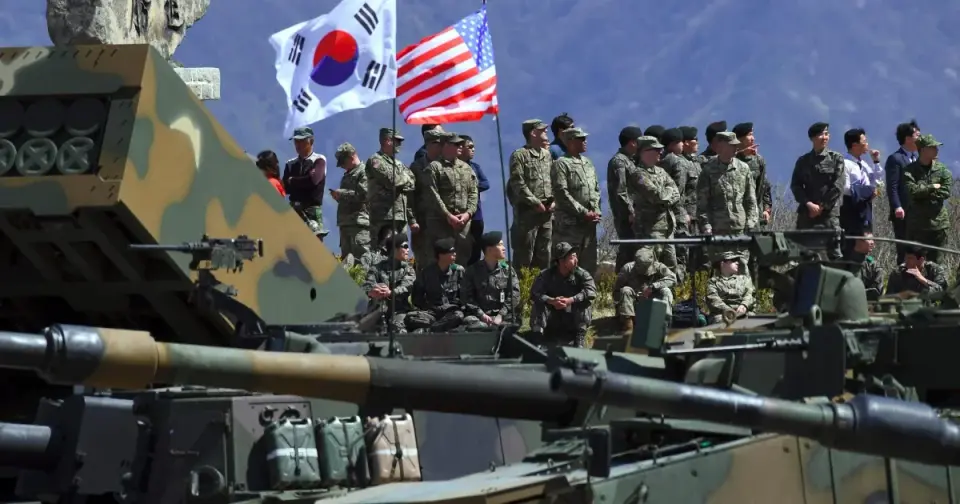
President Trump has ordered a substantial reduction in joint military exercises with South Korea, citing costs and his relationship with Kim Jong Un. The move follows North Korean missile tests and criticism of Seoul for refusing to join the US war in Iran.
Key points
- Trump directed Defense Secretary Pete Hegseth to 'substantially reduce' the Ulchi Freedom Shield drills, which were scheduled to begin on Monday and run until August 27.
- The president cited the high cost of the exercises and South Korea's refusal to join the US 'denuclearization' of Iran as primary reasons for the decision.
- Trump claimed North Korea has been 'unthreatening and respectful' during his presidency, despite recent ballistic missile tests by Pyongyang.
- South Korean officials stated the drills would proceed as planned, emphasizing continued coordination with the US on defense matters.
- Critics, including Senator Mark Kelly and military analysts, warned that scaling back the exercises could weaken deterrence and damage alliance readiness.
Background
This decision follows a series of earlier announcements in August 2026 regarding the potential reduction of US-South Korea military drills. Previous coverage highlighted concerns that North Korea had gained battlefield experience through its involvement in the Ukraine war, leading to updated drill scenarios involving drones and cyber attacks. The current order represents a significant shift in alliance posture, potentially affecting deterrence on the Korean Peninsula.
How outlets are covering it
NBC News and BBC reported the core facts of the order, highlighting Trump's social media posts and the immediate reaction from South Korean officials. CNN and The Guardian provided deeper analysis, emphasizing the strategic implications. CNN noted that the move risks deepening concerns over US reliability and provides a 'gift' to Kim Jong Un, who has expanded his nuclear program and military ties with Russia. The Guardian highlighted warnings from military officials that North Korea has learned new tactics from Ukraine, making the drills essential for countering evolving threats. While NBC focused on the political justification, CNN and The Guardian stressed the potential long-term damage to alliance coordination and deterrence.
Why it matters
The reduction in joint exercises could weaken the US-South Korea alliance and reduce deterrence against North Korea, which has been advancing its nuclear and missile capabilities. It also raises questions about US commitment to allies in the region, particularly as the US military is stretched by the conflict in Iran. The move may embolden North Korea and other adversaries, potentially destabilizing the region.
What to watch
South Korea is expected to continue the drills as planned, but the long-term impact on the alliance and deterrence remains uncertain. Analysts suggest that the move could lead to a push for South Korea to develop its own nuclear deterrent. The US may need to find alternative ways to maintain readiness and alliance coordination, potentially through other exercises or diplomatic efforts.
- Trump orders military to ‘substantially reduce’ joint exercises with South Korea NBC News
- Trump has handed a gift to Kim Jong Un and deepened concerns over US reliability CNN
- Trump tells Pentagon to scale back joint exercises with South Korea, citing anger over Iran war The Times of Israel
- Trump says US scaling back joint military operations with South Korea BBC
- Trump orders cuts to South Korea joint drills despite warnings of North’s growing battlefield experience The Guardian
Want the full story? Read the original reporting
Read on NBC News