
Houthi Siege of Taiz Threatens Yemen’s Government as Humanitarian Crisis Deepens
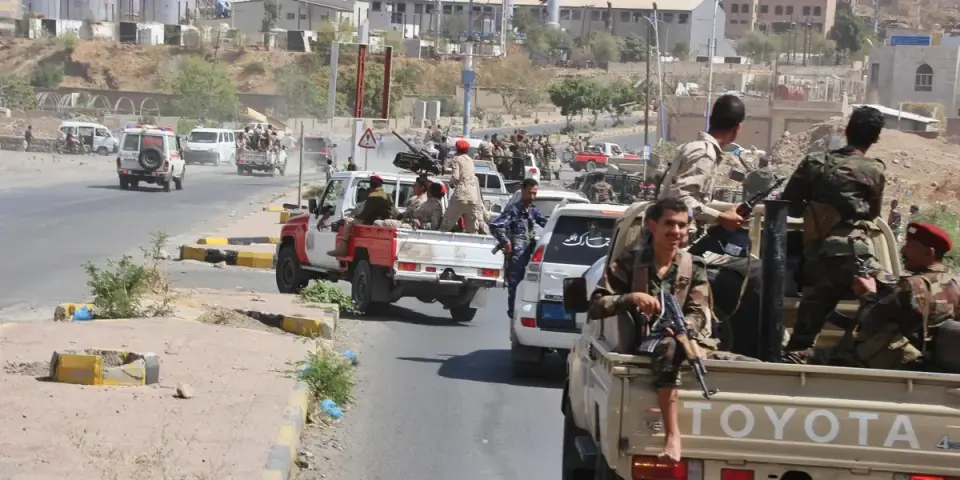
Houthi forces have encircled Taiz, Yemen’s third-largest city, cutting off aid to 800,000 people and threatening the Saudi-backed government’s stability. While the government’s 'Dawn of Yemen' counteroffensive has stalled, the conflict has escalated into a broader regional crisis involving Saudi airstrikes and Iranian-backed attacks on Saudi infrastructure.
Key points
- The World Food Programme reports it can no longer reach 800,000 people in and around Taiz due to blocked roads and shifting frontlines, with wheat flour stocks nearly exhausted.
- The Saudi-backed government’s 'Dawn of Yemen' counteroffensive, launched on October 5, has stalled in its second week, failing to retake the coastal city of Mokha despite recapturing ground near Bab al-Mandab.
- Houthi attacks on Saudi Arabia have intensified, including strikes on King Khalid International Airport in Riyadh and Aramco’s headquarters in Dhahran, causing significant economic losses for Riyadh.
- The UN Population Fund reports that three women die daily from pregnancy-related causes in Yemen, with over 3,100 pregnant women displaced since September and nine health facilities destroyed or nonfunctional.
- Iran has offered to mediate but is rejected by Yemen’s recognized government, while Saudi Arabia maintains a strategy of punitive airstrikes without direct confrontation with Tehran.
Background
This escalation follows a series of Houthi advances in September 2026, including the capture of the coastal city of Mokha and strikes on Aden’s airport. Previous coverage noted that the conflict had already displaced over 200,000 people and that the Saudi-backed government’s offensive had faced initial resistance from Houthi forces. The current situation represents a significant intensification of the civil war, with the siege of Taiz mirroring the 2015-2017 blockade and threatening to collapse the government’s administrative capital in Aden.
How outlets are covering it
Responsible Statecraft emphasizes the strategic and political implications of the Taiz siege, highlighting the symbolic weight of the city and the fragility of the Saudi-backed government’s counteroffensive. The outlet notes the disconnect between Saudi rhetoric and its limited options, as well as the contradictory stance of Iran, which offers mediation while its hardline press celebrates Houthi attacks. In contrast, the UN World Food Programme focuses on the immediate humanitarian catastrophe, stressing the loss of access to 800,000 people and the risk of a 'humanitarian catastrophe' if assistance cannot move. Africanews highlights the specific impact on women’s health, noting the displacement of pregnant women and the destruction of healthcare facilities, providing a ground-level view of the crisis that complements the broader strategic analysis.
Why it matters
The siege of Taiz threatens to destabilize the Saudi-backed government, potentially leading to a decisive turning point in Yemen’s civil war. The humanitarian crisis, with 800,000 people cut off from aid, risks a mass famine and further displacement. The conflict has also escalated into a broader regional crisis, with Houthi attacks on Saudi infrastructure causing significant economic losses and straining Saudi-Iran relations. The situation underscores the complex interplay between local, regional, and global powers in the Middle East, with implications for oil prices, regional security, and humanitarian aid.
What to watch
The Saudi-backed government’s counteroffensive is likely to continue, but its success is uncertain given the stalled progress and internal divisions among government forces. The humanitarian situation in Taiz is expected to worsen, with WFP warning of a potential 'humanitarian catastrophe' if access is not restored. The conflict may further escalate, with Houthi attacks on Saudi infrastructure likely to continue, and Saudi Arabia may increase its airstrikes in response. The role of Iran and the potential for mediation remain uncertain, but the current trajectory suggests a prolonged and intensifying conflict.
- As Houthis encircle Taiz, Yemen's Saudi-backed gov't faces disaster Responsible Statecraft
- Major Yemeni City Running Out of Food and Water as Houthis Encircle It The New York Times
- WFP warns escalating Yemen conflict is cutting off life-saving assistance to city of Taiz | World Food Programme UN World Food Programme
- Fighting intensifies in Yemen as humanitarian crisis deepens Vatican News
- Pregnant women in Yemen at growing risk as healthcare limited by fighting Africanews
Want the full story? Read the original reporting
Read on Responsible Statecraft