
Iranian hardliners revive hijab enforcement as war priorities shift
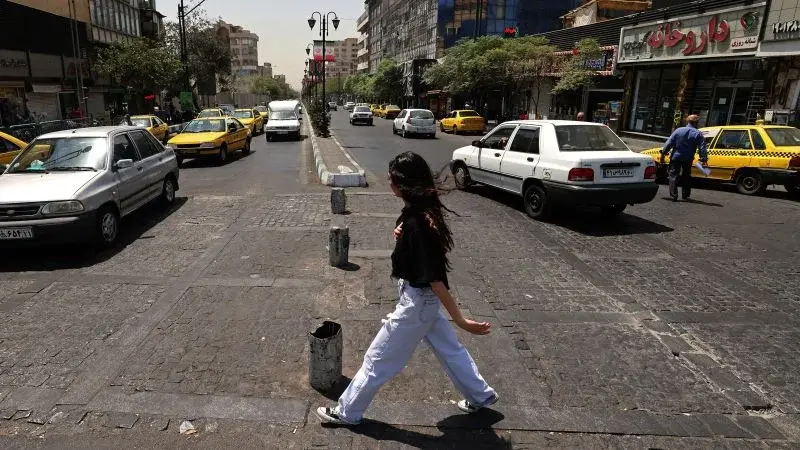
Iranian authorities are intensifying efforts to enforce mandatory hijab laws, closing businesses and establishing new judicial units to monitor dress codes and social media. This crackdown follows a period of relaxed enforcement during the recent conflict with the United States. While President Masoud Pezeshkian has expressed skepticism about forcing cultural change, hardliners argue that unveiling threatens national security and religious identity. The move risks reigniting the widespread public defiance that characterized the 2022 protests.
Key points
- Tehran Prosecutor Ali Salehi announced the creation of a new prosecutor's office for 'moral security' to handle hijab violations and critical social media posts, staffed by 12 judges.
- Authorities have closed over 15 businesses, including cafes and clothing stores, in multiple cities for failing to enforce dress codes or selling 'unconventional' clothing.
- President Masoud Pezeshkian has publicly questioned the efficacy of forcing cultural change through laws, stating that belief cannot be created by force.
- The 'Hijab and Chastity' law, finalized in 2024, remains suspended by the Supreme National Security Council to prevent a repeat of the 2022 mass protests.
- Hardliners, including clerics and parliament members, are framing the issue as a matter of national survival, comparing unveiled women to enemy agents.
Background
This development follows the 2022 'Woman, Life, Freedom' protests triggered by the death of Mahsa Amini in police custody. Those demonstrations were brutally suppressed but led to a lasting cultural shift where many young Iranian women openly defy dress codes. A stricter law passed in 2024 was never implemented due to fears of renewed unrest. The current crackdown occurs amid ongoing economic difficulties and the aftermath of a conflict with the United States, during which enforcement was largely paused.
How outlets are covering it
CNN emphasizes the tension between the regime's desire for control and the practical reality of widespread public defiance, noting that authorities are hesitant to launch a full street crackdown. The Jerusalem Post highlights the institutional expansion of state power, focusing on the new judicial unit and the monitoring of cyberspace. Iran International provides a more critical analysis, arguing that the hardliners are using the hijab issue to distract from economic failures and that the suspended law is too dangerous to implement without triggering another major uprising. While CNN and Iran International note the president's reluctance, Iran International points out that the freeze on the law was a decision by the Supreme National Security Council, not the president alone.
Why it matters
The enforcement of hijab laws serves as a proxy for the broader struggle between Iran's hardline establishment and its population. A successful crackdown could signal a return to severe repression, while a failure could embolden further social defiance. The issue also intersects with international relations, as hardliners link domestic dress codes to foreign policy and national security narratives.
What to watch
The new 'moral security' prosecutor's office is expected to begin taking action against businesses and social media users in the coming weeks. Hardliners are pushing to lift the suspension of the 2024 'Hijab and Chastity' law, which would allow civilian groups to confront women in public. The regime's ability to enforce these measures without triggering a new wave of protests remains uncertain.
- Iranian women defy efforts by hardliners to enforce wearing of hijab CNN
- Iran tightens monitoring of hijab compliance, social media in Tehran court The Jerusalem Post
- Morality police fight back in Iran’s war over women’s bodies The Times
- Iran state TV analyst suggests mining waters off Florida Iran International
- Iranian MPs Warn Pezeshkian Over Hijab Rules GünAz TV
Want the full story? Read the original reporting
Read on CNN