
Iran's fractured leadership and failed US economic pressure reshape the war
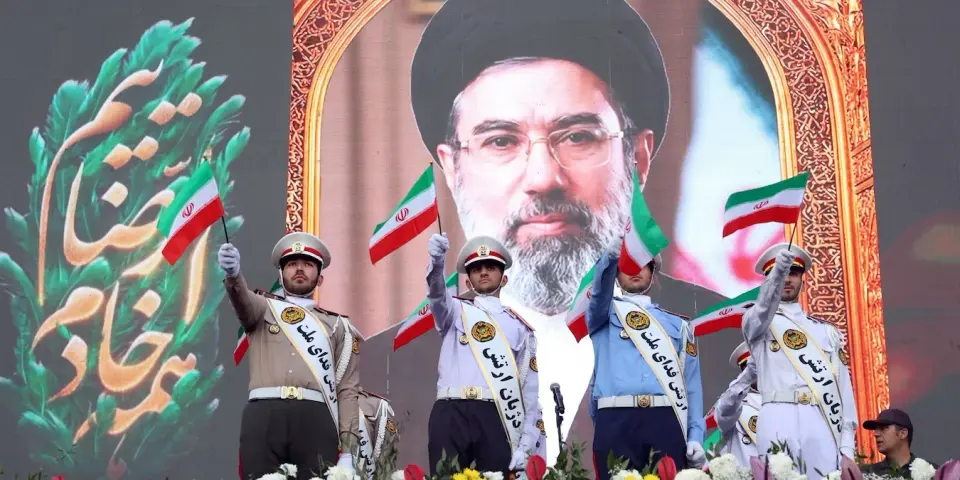
The six-month US-Iran conflict has triggered a shift in Tehran's power structure, moving from a vertical hierarchy to a decentralized network where the IRGC gains influence. Simultaneously, Washington's 'Economic D-Day' sanctions failed to isolate Iran, as global partners ignored US pressure, deepening Tehran's distrust of American negotiations.
Key points
- Mojtaba Khamenei, the new supreme leader, governs through a decentralized 'network state' rather than a strict vertical hierarchy, balancing power among the IRGC, parliament, and the presidency.
- The IRGC is increasingly becoming the effective decision-maker as the war centralizes authority, despite the system's design to disperse power.
- US 'Economic D-Day' sanctions, announced in August, failed to isolate Iran; countries like China, Russia, and India continued ties, and Iran joined the Shanghai Cooperation Organization.
- Iranian factions agree on the need for negotiation but disagree on terms: economic stabilizers want sanctions relief, while IRGC-linked groups demand that missile programs remain off the table.
- The conflict has eroded trust in US commitments, with Tehran viewing continued pressure as proof that Washington prefers confrontation over settlement.
Background
This development follows months of stalled talks and intensified sanctions, including a July 2026 push by US Democrats to standardize casualty tallies and a June 2026 accusation that Congress surrendered war powers to the executive. The current power shift in Iran contrasts with earlier reports of Pezeshkian urging an end to the war from a position of strength, highlighting the internal tension between diplomatic and military factions.
How outlets are covering it
Asia Times emphasizes the internal Iranian power dynamics, noting that while factions disagree on tactics, they largely agree that negotiation is necessary, with the IRGC gaining leverage due to the prolonged conflict. MS NOW and Bloomberg focus on the failure of US economic pressure, highlighting that global partners ignored Trump's threats, leading to a 'yawn' rather than isolation. The New York Times frames the situation as a stalemate, noting that the war remains elusive to end six months after it began, with the US and Iran exchanging fire recently. AP News notes that dire economic predictions for the global economy have not materialized, suggesting the sanctions' impact may be limited.
Why it matters
The failure of US economic pressure and the centralization of power within Iran's IRGC suggest that the conflict may prolong, as Tehran's internal factions prioritize military leverage over diplomatic concessions. This dynamic complicates US efforts to force a settlement and risks further escalation if the IRGC's influence continues to dominate policy decisions.
What to watch
Watch for further IRGC influence on Iran's negotiation stance, potential shifts in US sanctions enforcement, and any direct communications between the Trump administration and IRGC leadership via intermediaries like Iraqi Kurdistan.
- War has shifted how power works in Iran Asia Times
- Investors prosper and consumers pay as the Iran war exacts an uneven economic toll 6 months in AP News
- U.S. Tries to Squeeze Iran With New Strikes, Economic Pain WSJ
- ‘Economic D-Day’ policy flops, as Trump and Bessent suffer another embarrassment MS NOW
- Your Iran Questions, Answered The New York Times
Want the full story? Read the original reporting
Read on Asia Times