
Russia’s New Jet Drone Bases and Faster Geran Variants Challenge Ukrainian Air Defenses
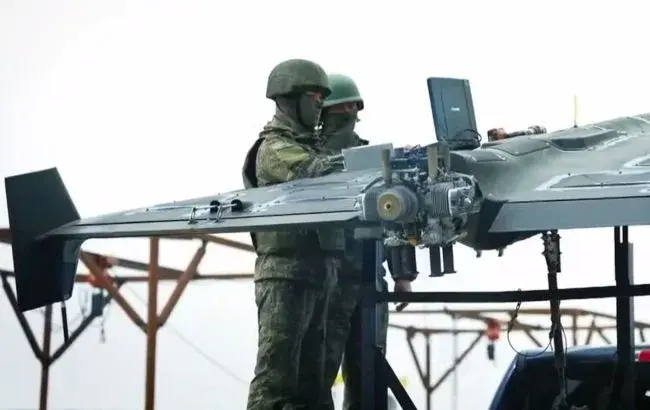
Russia is deploying faster jet-powered drones, including new Geran variants, to overwhelm Ukrainian air defenses. This shift is supported by the construction of 10 new border bases with 59 launch pads, designed to launch heavy drones rapidly. While these drones are cheaper than cruise missiles, their speed complicates interception economics, prompting Ukraine to develop its own jet drones and cheaper interceptors.
Key points
- Russia is increasingly using jet-powered drones like the Geran-4 and Geran-5, which are faster than conventional Shaheds but cheaper than cruise missiles.
- The Telegraph reported that Russia has established 10 new drone bases along the Ukrainian and Belarusian borders, featuring 59 launch rails to facilitate rapid mass launches.
- Satellite imagery shows one base has storage for over 1,000 drones, with production supplied by facilities in the Alabuga special economic zone.
- Ukrainian experts note that while jet drones are faster, they are harder to mass-produce due to complex jet engines, often sourced from Chinese private companies.
- Ukraine is developing its own jet drones, such as Bars and Palyanytsya, to counter the threat and strike targets in Russian-occupied territories.
Background
This development follows a period of intense drone warfare, including a massive Ukrainian raid on Russia in August 2026 and strikes on Russian air-defense units in Krasnodar. The shift to jet drones represents an evolution from the Shahed-type drones that have dominated recent exchanges, aiming to penetrate defensive layers more effectively.
How outlets are covering it
RBC-Ukraine and Kyiv Post emphasize the technical shift toward jet drones as a response to declining effectiveness of conventional Shaheds, highlighting production bottlenecks like jet engines. The Telegraph and Meduza focus on the strategic infrastructure, detailing the 10 new bases and 59 launch pads, and raising concerns about potential reach into NATO territory like Warsaw. Ukrainian experts, such as Anton Zemlyanyi and Oleh Katkov, stress the economic inefficiency of using expensive missiles against cheap drones and the need for Ukraine to develop its own high-speed weapons and cheaper interceptors. While all sources agree on the threat, they differ in emphasis: some focus on the technological gap, while others highlight the logistical expansion and geopolitical implications.
Why it matters
The introduction of faster, jet-powered drones changes the dynamics of the air war, making interception more difficult and costly for Ukraine. The expansion of launch infrastructure suggests Russia is preparing for a sustained, high-intensity campaign, potentially threatening not only Ukraine but also NATO borders. Ukraine’s response involves developing its own jet drones and cheaper interceptors to balance speed, cost, and payload, indicating a long-term adaptation to this new threat.
What to watch
Ukraine is expected to continue developing its own jet drones and cheaper interceptor systems, such as the P1-Sun, to counter Russian high-speed threats. Russia may further expand its drone production and launch infrastructure, potentially attempting to reproduce the Shahed model by initially importing components before developing domestic production. The balance of speed, cost, and payload will likely determine the future effectiveness of these weapons in the conflict.
- Russia Deploys Faster Jet Drones, 3 Key Limits Could Prevent Them from Replacing Shaheds Kyiv Post
- Russia builds secret drone bases in striking distance of Nato The Telegraph
- Map Shows Russia’s New Secret Bases That Could Strike NATO Newsweek
- The Telegraph: Russia’s new drone bases on the Ukrainian and Belarusian borders put NATO territory within range Meduza
- Russia deploys 10 new bases near borders to launch jet drones against Ukraine – The Telegraph Українська прав��а
Want the full story? Read the original reporting
Read on Kyiv Post