
Ancient Arabian Lakes Lacked the Stone Needed for Human Settlement
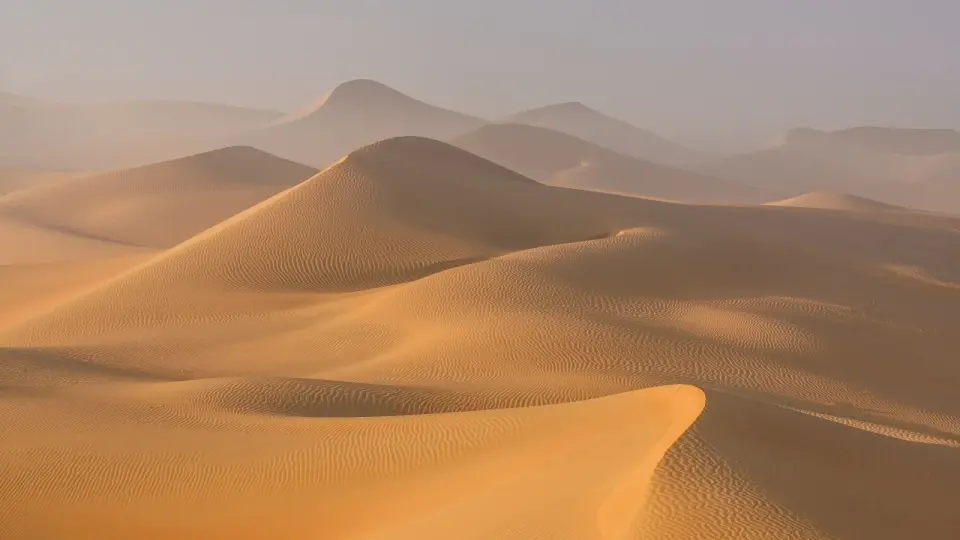
A new study in Nature reveals that early humans did not settle in the world's largest sand desert, the Rub' al Khali, despite the presence of ancient freshwater lakes. Researchers found that the lack of suitable stone for toolmaking, rather than a lack of water, prevented sustained human occupation in the desert's interior.
Key points
- An international team surveyed 125 locations across 1,500 kilometers of the Rub' al Khali desert in late 2023, finding evidence of ancient lakes at 55 sites but no human artifacts.
- The desert's central basin is composed of carbonate and evaporite rocks, which are unsuitable for knapping into tools, whereas only 10 sites on the desert's periphery had usable stone.
- Researchers calculated that 57% of water-accessible terrain in prehistoric Arabia lacked the raw materials necessary for stone tool production, a prerequisite for long-term settlement.
- The study suggests that 'Green Arabia' was a 'lithic archipelago,' where habitable zones were defined by the co-occurrence of water and stone, challenging models that rely solely on climate and water availability.
Background
Previous research had hypothesized that temporary green corridors and ancient lakes in the Rub' al Khali, dating to 122,000–67,000 years ago, served as migration routes for early humans moving from Africa to Asia. This new study builds on broader discussions about human migration patterns, such as recent genetic reviews of Indigenous American ancestors and Celtic language spread, by emphasizing how geological constraints, not just climate, shaped human dispersal.
How outlets are covering it
ScienceAlert and The Times of India emphasize the 'lithic archipelago' concept, highlighting that water alone was insufficient for settlement. Archaeology News Online provides specific details on the expedition, noting that ground visibility exceeded 95%, making the absence of tools significant. UA.NEWS summarizes the core finding that 57% of water-accessible terrain lacked suitable stone. All sources agree that the lack of knappable stone, not water scarcity, explains the absence of human traces in the desert's interior.
Why it matters
This research refines models of prehistoric human migration by demonstrating that geological factors, specifically the availability of toolmaking stone, were as critical as water and climate in determining where early humans could sustainably settle. It challenges the assumption that wet periods in arid regions automatically supported human populations.
What to watch
Researchers acknowledge limitations in their coarse geological maps and suggest future work could identify small, short-term camps in the desert interior. The study may prompt a re-evaluation of other 'Green' regions globally, where water availability has been used to predict human habitation without considering lithic resources.
- The World's Biggest Sea of Sand Shows No Trace of Ancient Humans. Here's Why. ScienceAlert
- Stone and water together shaped where early humans settled in Arabia’s desert, study finds Archaeology News Online Magazine
- Early humans needed more than access to water to settle ancient Arabian deserts Phys.org
- Traces of 55 ancient lakes found in Rub' al Khali, but no humans — ScienceAlert UA.NEWS
- Researchers surveyed 1,500 km of ancient Arabian desert and checked 125 sites, finding evidence of lakes at 55 but no early human tools; a new study suggests missing toolmaking stone mattered as much as water The Times of India
Want the full story? Read the original reporting
Read on ScienceAlert