
Crows Outpace Humans in Visual Decision-Making, Study Finds
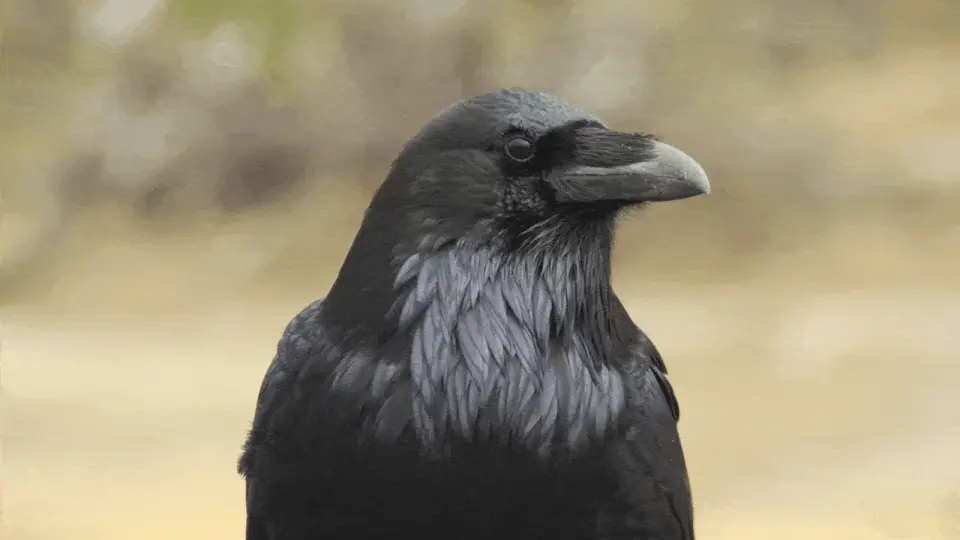
A new study in Science reveals that carrion crows can make visual decisions twice as fast as humans and primates. The birds processed moving dot patterns in an average of 235 milliseconds with high accuracy, suggesting their compact brains utilize efficient neural circuits for rapid information processing.
Key points
- Carrion crows completed a visual motion discrimination task in an average of 235 milliseconds, roughly half the time taken by humans and primates in similar historical studies.
- The birds maintained high accuracy, reaching nearly 100% when visual cues were clear, indicating that speed did not compromise decision quality.
- Neural recordings from 248 neurons in the nidopallium caudolaterale showed activity predictive of the crows' choices 70 milliseconds after stimulus onset, similar to primate decision-making processes.
- Researchers suggest the crows' small brain size, high neuron density, and higher body temperature may contribute to faster signal transmission and processing.
- The study highlights that complex computational abilities do not require a mammalian neocortex, challenging traditional views on the biological basis of intelligence.
Background
This finding builds on previous research showing crows possess cognitive abilities comparable to human children, including tool use and long-term face recognition. While earlier studies established their problem-solving skills, this new research focuses specifically on the speed of perceptual decision-making, adding to the growing body of evidence that corvids are highly intelligent despite their distinct brain architecture.
How outlets are covering it
Live Science and The Transmitter emphasize the evolutionary implications, noting that birds and mammals diverged over 300 million years ago yet developed similar computational solutions. NPR highlights the practical implications for understanding 'bird brain' as a compliment, while Michael Colombo of the University of Otago notes that despite different brain architectures, the underlying circuitry is remarkably similar to humans. The Transmitter also points out that the study only tested two crows and did not include direct comparisons with primates in the same task, suggesting further research is needed to determine if this speed is specific to crows or avian species in general.
Why it matters
This research challenges the assumption that mammalian brains are the blueprint for intelligent behavior. It suggests that different evolutionary paths can lead to similar cognitive outcomes, potentially reshaping how scientists define and measure intelligence across species. Understanding these mechanisms could also inform the development of more efficient artificial intelligence systems that mimic biological processing speeds.
What to watch
Researchers plan to explore more complex decision-making models and investigate how crows assess confidence during choices. Further studies will aim to determine whether the observed speed is unique to crows or a broader avian trait, and how factors like brain size and neuron density contribute to rapid processing.
- Crows may make lightning-fast decisions, sometimes twice as fast as humans, study hints Live Science
- Should 'bird brain' be a compliment? Here's how crows think fast NPR
- Crows have brains ‘in the fast lane’ The Transmitter
- Study: crows made decisions about dot movement in 235 ms — Live Science UA.NEWS
- Crows Make Decisions Twice as Fast as Humans, Monkeys Mirage News
Want the full story? Read the original reporting
Read on Live Science