
LIDAR Survey Reveals 30,000 Hidden Earthworks of Ancient Amazonian Civilization
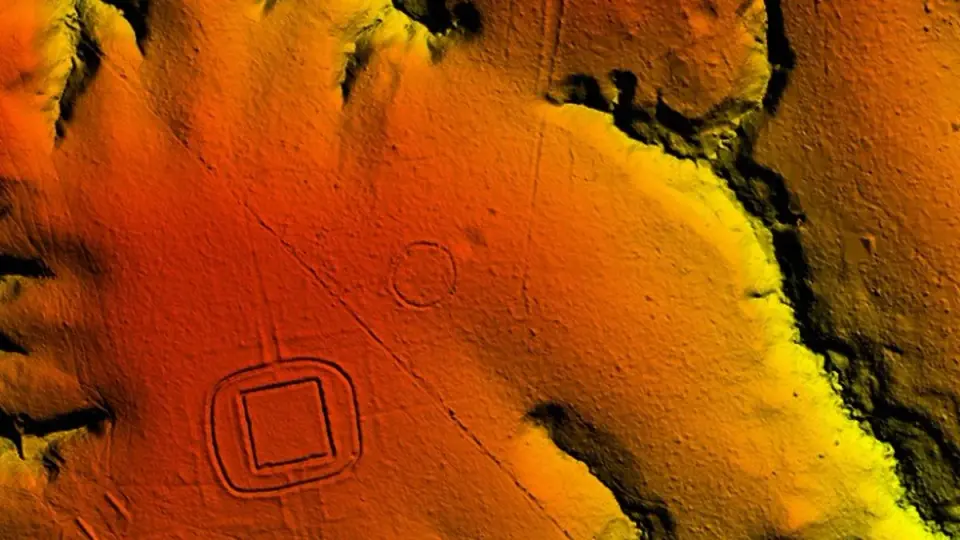
A new LIDAR survey of the Amazon rainforest has uncovered hundreds of previously unknown geometric earthworks, suggesting the ancient Aquiry civilization was far larger and more populous than previously thought, with a peak population of up to 3 million people.
Key points
- A 2024 LIDAR survey covering 4,497 square kilometers in Brazil's Acre and Amazonas states identified 432 earthworks, 396 of which were previously unknown.
- Researchers estimate the Aquiry civilization, active from 600 BCE to 850 CE, may have had a peak population of 1.25 to 3 million people around 100-300 CE.
- The civilization's territory is estimated to span 183,000 square kilometers, potentially containing up to 30,000 earthworks.
- The findings challenge the long-held view of the Amazon as an untouched wilderness, indicating significant human modification of the landscape.
- The Aquiry built geometric earthworks, likely used for ceremonies and political gatherings, without metal tools or domesticated animals.
Background
Previous studies using satellite imagery and aerial photography had identified around 1,300 earthworks in the region, but LIDAR technology, which penetrates the forest canopy, has revealed a much larger scale. The Aquiry civilization, named after the Acre River, is known for its ditched geometric enclosures, or geoglyphs, which were constructed over 2,500 years ago. The new findings build on earlier discoveries that have already revised estimates of pre-Columbian population density in Amazonia.
How outlets are covering it
ScienceAlert and New Scientist emphasize the transformative nature of the LIDAR findings, highlighting the sheer scale of the Aquiry civilization and its implications for understanding human impact on the Amazon. New Scientist notes that the population estimates are 'bold' but 'plausible and extremely important,' while ScienceAlert quotes Martti Pärssinen calling the discovery 'transformative.' Nature, the journal where the study was published, provides the technical details of the LIDAR survey and the extrapolation of results, noting that the findings suggest a need to re-evaluate pre-Columbian population density and its environmental legacy. Live Science focuses on the mystery of the civilization's disappearance around 850 CE, a question that remains unanswered. All sources agree on the significance of the findings but differ in their emphasis: ScienceAlert and New Scientist focus on the scale and implications, Nature on the methodology and data, and Live Science on the unresolved questions.
Why it matters
The discovery of the Aquiry civilization's scale challenges the traditional view of the Amazon as a pristine wilderness and highlights the significant role of pre-Columbian societies in shaping the landscape. The findings have implications for understanding human impact on biodiversity, soil structure, and even global climate models. They also raise questions about the sustainability of large human populations in tropical rainforests and the reasons for the civilization's decline.
What to watch
Researchers plan to continue using LIDAR and other technologies to map more of the Amazon and uncover additional earthworks. Further archaeological excavations are needed to understand the daily lives of the Aquiry and the reasons for their disappearance. The findings may also prompt a re-evaluation of other regions in Amazonia that may have been similarly densely populated and modified.
- 'Completely Transformed My Understanding': Scientists Uncover Hundreds of Hidden Structures Beneath The Amazon ScienceAlert
- Over 20,000 precolonial earthworks in the Southwest Amazonia Nature
- An ancient civilization of millions once flourished in the Amazon Phys.org
- Lasers reveal hundreds of geoglyphs made by a mysterious civilization in the Amazon rainforest thousands of years ago Live Science
- Lost civilisation in the Amazon may have numbered 3 million people New Scientist
Want the full story? Read the original reporting
Read on ScienceAlert