
Polish archaeologists reveal 17th-century 'vampire' was a wealthy teen girl
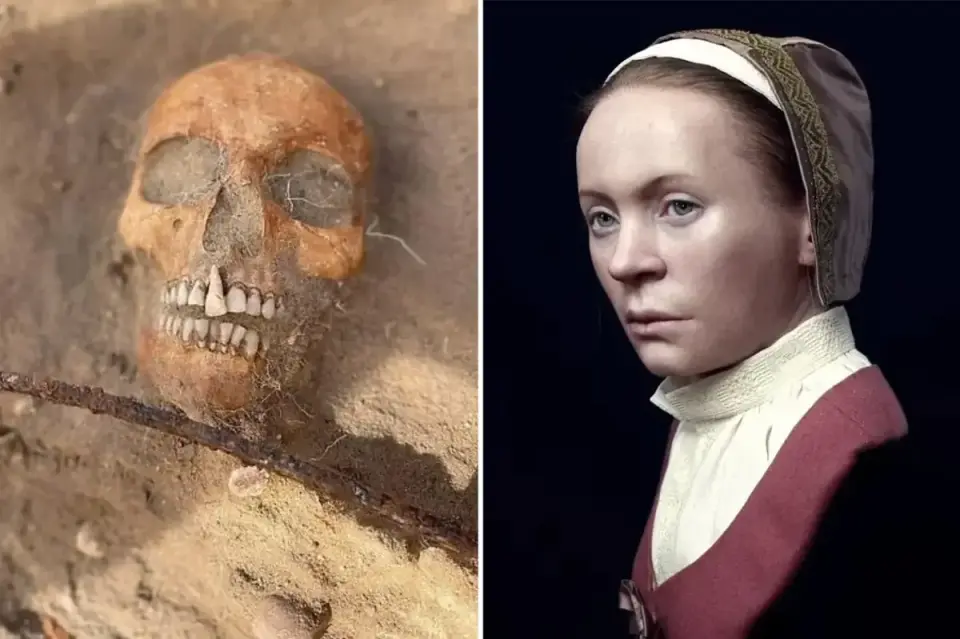
A new study confirms that Zosia, a 17th-century woman buried with anti-revenant safeguards in Poland, was a wealthy teenager whose death remains a mystery. Researchers found no evidence of violence or disease, suggesting she was likely blamed for local misfortunes like famine or plague. The discovery highlights how 17th-century communities used physical barriers to protect themselves from perceived supernatural threats.
Key points
- Zosia, a 17-19-year-old woman, was buried in Pień, Poland, with a padlock on her toe and a sickle across her neck to prevent her from rising as a revenant.
- New research published in the Journal of Archaeological Science: Reports found no evidence that Zosia died from violence or disease, contradicting earlier theories of ritual sacrifice.
- Zosia likely belonged to a wealthy or noble family, evidenced by a silk cap with gold and silver threads found near her skull.
- A mysterious copper object was placed in her mouth, adding a third layer of protection to her grave.
- The Pień cemetery contains 101 burials, with at least a dozen classified as 'extraordinary' or 'anti-vampire' due to unusual protective measures.
Background
Zosia's remains were first discovered in 2022 in a 400-year-old unmarked burial site in Pień, Poland. Previous studies, including a 2024 facial reconstruction by Oscar Nilsson, had already established her age and the presence of the padlock and sickle. The new study builds on these findings by analyzing her DNA, isotopes, and the cause of death, providing a more comprehensive understanding of her life and the community's fears.
How outlets are covering it
The New York Post emphasizes the 'horror movie' aspect of Zosia's burial, highlighting the sickle and padlock as a 'booby-trapped grave.' Science in Poland focuses on the archaeological and anthropological details, such as the copper object in her mouth and the isotope analysis suggesting she was a migrant. The Economic Times provides a broader context, noting that Zosia may have been blamed for misfortunes like famine or plague, and that the 'vampire' label is a modern misnomer for a broader fear of dangerous or demonic beings. Mezha. Noviny Ukrainy. offers a concise summary of the findings, emphasizing the unusual nature of the burial and the ongoing research into her origins and cause of death.
Why it matters
This discovery sheds light on the cultural and social dynamics of 17th-century Poland, revealing how communities dealt with fear and uncertainty through physical and symbolic barriers. It also highlights the importance of interdisciplinary research in archaeology, combining DNA analysis, isotope studies, and historical context to piece together the lives of individuals from the past. The case of Zosia serves as a reminder of the complex and often irrational ways in which societies have historically dealt with perceived threats and misfortunes.
What to watch
Researchers plan to continue analyzing Zosia's DNA and the other burials at Pień to further understand the community's beliefs and practices. They hope to determine the exact cause of her death and the reasons why she was considered dangerous by her community. Further studies may also reveal more about the social and economic structures of 17th-century Poland, providing a richer understanding of the period.
- 'Vampire' so feared she was locked in booby-trapped grave was teen girl who met horror movie fate: experts New York Post
- ‘Vampire’ grave mystery deepens as 17th-century woman ‘may have been an outsider’ Science in Poland
- week 36 / 2026 Phys.org
- Archaeologists investigate a Polish burial designed to stop a young woman returning from the grave Межа. Новини України.
- 300 years later, archaeologists uncovered why this 17th-century Polish woman was buried with a padlock on economictimes.com
Want the full story? Read the original reporting
Read on New York Post