Geneticist Turi King details how mitochondrial DNA and Y-chromosome testing identified the remains of Tsar Nicholas II, his wife, and their children, who were executed in 1918. The identification relied on living relatives of the British royal family, including Prince Philip, to confirm the lineage after the bodies were discovered in 1991 and 2007.
Italian police recovered a 17th-century painting stolen from a church near Naples in 2004 using a new AI system. The artwork, depicting Saint Agnese, had been altered to hide its identity but was detected at an antiquity fair in Parma in October 2024. The system, known as Swoads, has helped recover over 300 major artworks and 165,000 smaller items since 2023. While experts note AI cannot replace human investigators or catch high-profile thefts, it significantly speeds up the search process by matching visual patterns in a database of over one million stolen items.
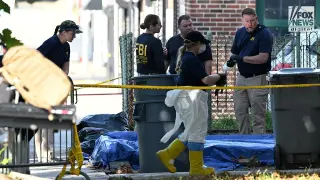
FBI and Philadelphia police have resumed excavating the backyard of the late Raymond 'R.C.' Horsch’s home in Olney, Philadelphia, as part of an investigation into seven missing women. On October 15, investigators discovered bones in the yard, prompting the arrival of the Philadelphia Medical Examiner to determine if they are human or animal remains. The property, linked to Horsch’s son Eugene, has been under surveillance since June 2026 after Eugene’s arrest for impersonating a federal agent and possessing a missing woman’s ID. While previous searches uncovered over one million digital files, ash-filled urns, and chemicals, no bodies were found in earlier digs. Experts note the scale of the current excavation, involving dozens of technicians and heavy machinery, suggests a thorough search for physical evidence to corroborate the digital findings.
Las Vegas authorities have identified the remains of a man found in a barrel in Lake Mead in 2022 as Edward Lelburian Jackson, a native of Arkansas. While the victim's identity was confirmed through genealogical DNA testing, the murder remains unsolved, and police have stated there is no evidence linking the killing to organized crime.
Las Vegas authorities have identified the remains found in a barrel in Lake Mead in 2022 as Edward Lelburian Jackson, a man from Arkansas. The identification, confirmed via genealogical DNA testing, solves the mystery of the victim's identity but not the cause of his death. Jackson was likely killed by a gunshot to the head in the late 1970s or early 1980s. Police have dismissed speculation linking the murder to organized crime, noting no evidence ties Jackson to the Las Vegas area.
Las Vegas authorities have identified the man found in a barrel in Lake Mead in 2022 as Edward Lelburian Jackson, a man in his mid-to-late 50s from Arkansas. The remains, discovered by boaters at Hemenway Harbor after drought-exposed water levels revealed the drum, were ruled a homicide from a gunshot wound to the head. Investigators believe Jackson was killed in the early 1980s, though his specific connection to Las Vegas remains unknown. While public speculation suggested organized crime involvement, police state they have no evidence to support that theory. The case remains unsolved as detectives seek information on Jackson's associates.
Rhode Island authorities arrested 61-year-old William Morton on Tuesday for the 1985 murder of 22-year-old Hillary Hellewell. Investigators identified Morton after collecting DNA from a water bottle he discarded at a rock concert in August. The case, which had been unsolved for 41 years, was reopened in 2023 using advanced forensic testing. Morton has been charged with first-degree murder and pleaded not guilty.
FBI and Philadelphia police have launched an intensive, multi-day forensic search of a home in the Olney neighborhood, linked to the disappearances of seven women. Investigators are dismantling interior walls and removing items like glass vials and a vacuum cleaner to find evidence of 'wet cremation' or other crimes. The probe stems from the discovery of over one million digital files at the property, which was formerly owned by late pornographer Raymond Horsch. While five of the missing women are presumed dead, authorities are still determining which recovered footage depicts real crimes versus staged scenes.
Jackson County District Attorney Angel Myers McIlrath defended the grand jury's no true bill in the death of 18-year-old Nolan Wells, disputing new claims from his family's legal team. Attorney Ben Crump and forensic expert Andrew Garrett presented findings from Wells' phone and a state autopsy, alleging deleted data and a lack of water in Wells' lungs. McIlrath countered that the family withheld full evidence and that the activity described was from other users, not physical access to the device.
Texas Attorney General Ken Paxton confirmed that human remains discovered in Caldwell County in September 2026 belong to Jason Landry, a 21-year-old Texas State University student who vanished in December 2020. DNA testing by the University of North Texas Center for Human Identification verified the identity. While the discovery closes a six-year search, investigators report no evidence of foul play and the cause of death remains undetermined.
The North Carolina State Bureau of Investigation has identified skeletal remains found in Wilson County in 1977 as those of Cindy Marcell Blizzard, a 15-year-old girl who disappeared from Monkton, Maryland, that same year. The identification, announced on September 8, 2026, was achieved through advanced DNA testing and genetic genealogy, which were unavailable when the remains were first discovered. While the victim’s identity has been confirmed after nearly five decades, the cause of death remains undetermined, and the case is still being investigated as a homicide.
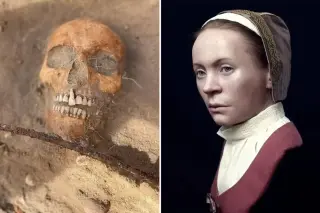
A new study confirms that Zosia, a 17th-century woman buried with anti-revenant safeguards in Poland, was a wealthy teenager whose death remains a mystery. Researchers found no evidence of violence or disease, suggesting she was likely blamed for local misfortunes like famine or plague. The discovery highlights how 17th-century communities used physical barriers to protect themselves from perceived supernatural threats.
Melting glaciers in the Swiss Alps have led to the discovery of remains from individuals missing for decades. Recent findings include two Belgian mountaineers who disappeared in 1992, identified via DNA. Authorities note this phenomenon is becoming more frequent due to climate change, with records of missing persons dating back to 1925. Similar discoveries have occurred in Antarctica and Pakistan, while receding waters in Lake Mead, USA, have also uncovered human remains.
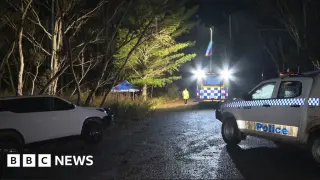
A suitcase found on a roadside in rural New South Wales initially sparked a murder investigation after two men reported what appeared to be a human body. Forensic testing confirmed the contents were a lifelike doll with realistic features, including hair, clothing, and markings resembling bruises. Police defended their initial response as standard procedure to preserve evidence, and the case has been closed.
Greek authorities have charged a 26-year-old Afghan national with the murder of Elisabeth-Jane Ross, a 38-year-old British charity worker whose body was found in a suitcase in Athens. The suspect confessed to transporting the body and using her bank cards after police traced him via CCTV and digital evidence. While the cause of death remains under toxicological review, Ross was identified through fingerprints recovered despite decomposition, and the case involved cooperation between Greek, UK, and US agencies.