
1864 Guinness Stout Recovered from English Channel Wreck
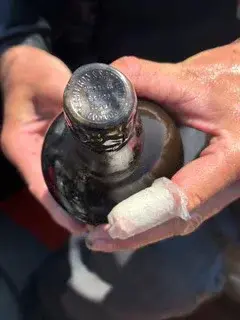
Belgian diver Stefan Panis recovered an intact 162-year-old bottle of Guinness Extra Stout from the wreck of the Mindoro in the English Channel. The bottle, which dates to 1864, was found with its seal intact and is being analyzed by researchers at KU Leuven University to potentially recreate the historic brew. Diageo, the parent company, is collaborating with the divers to evaluate the find and recover additional bottles.
Key points
- The bottle was recovered in 2025 from the wreck of the Mindoro, which sank in 1864 after colliding with another ship in the English Channel.
- The seal on the bottle reads 'Guinness Extra Stout, London,' indicating it was bottled in London despite the brand's Dublin origins.
- Researchers at KU Leuven are analyzing the contents to extract yeast DNA, aiming to identify a modern living relative to recreate the 1864 recipe.
- Divers plan to return to the site to recover four additional bottles, with two allocated to the lab and two to the company.
- Diageo's Guinness Archive team is liaising with the divers to gather information and evaluate the historical significance of the find.
Background
This discovery follows a pattern of significant maritime finds, such as the 2024 recovery of 100 sealed champagne bottles from a 19th-century Baltic Sea wreck. Previous archive coverage noted that Panis had found up to 20 bottles in the Mindoro wreck, though the current focus is on the single intact bottle with a legible seal. The Mindoro had sailed from London to Vancouver in November 1864 before sinking in a collision.
How outlets are covering it
The Washington Post emphasizes the scientific potential of recreating the beer using yeast DNA and notes that 19th-century brewing lacked modern sterile conditions, which may result in sour flavors. The BBC highlights public curiosity in Belfast, with many residents expressing willingness to try the aged stout if deemed safe, while others remain hesitant. UPI focuses on the technical possibility of the beer remaining drinkable due to the bottle being stored upside-down, which may have prevented seawater ingress. The Times of India provides a general overview of the discovery and the scientific efforts to analyze the contents. All sources agree on the basic facts of the discovery and the involvement of KU Leuven and Diageo, but differ in their emphasis on the drinkability of the beer versus the scientific recreation of the recipe.
Why it matters
The recovery of a 162-year-old, sealed bottle of Guinness offers a rare opportunity to study 19th-century brewing techniques and potentially recreate a historical recipe. It also highlights the role of maritime archaeology in preserving and understanding historical artifacts, and the collaboration between private divers, academic institutions, and corporate entities in evaluating such finds.
What to watch
Divers plan to return to the Mindoro wreck site in two weeks to recover four additional bottles. Researchers at KU Leuven will continue analyzing the recovered bottle for yeast DNA, with the goal of identifying a modern living relative to recreate the 1864 recipe. Diageo's Guinness Archive team will continue to liaise with the divers to gather more information and evaluate the find.
- Divers recover a bottle of Guinness from a 162-year-old shipwreck The Washington Post
- Guinness: 162-year-old bottle of stout found off the coast of Dover BBC
- 162-year-old bottle of Guinness from shipwreck might be drinkable upi.com
- Divers find 162-year-old Guinness bottle off UK coast, scientists hope to recreate historic beer The Times of India
- Rare 1864 Guinness Bottle Found In Shipwreck, Scientists Hopeful Of Recreating Original Recipe NDTV
Want the full story? Read the original reporting
Read on The Washington Post