
Tiny 40,000-Year-Old Bird Carvings Unearthed in German Cave Reveal Ice Age Artistic Skill
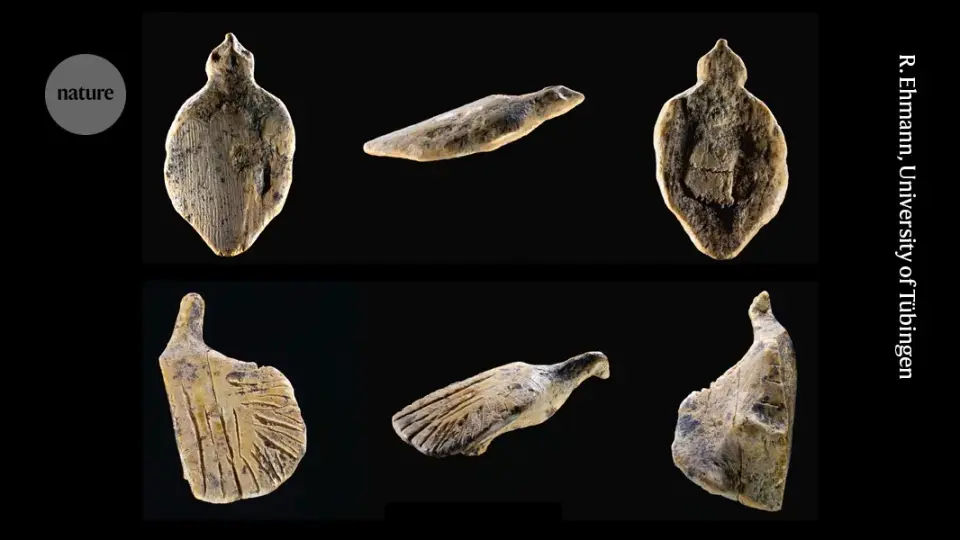
Archaeologists in Germany have discovered two miniature bird figurines carved from mammoth ivory, dating back approximately 40,000 years. Found in Hohle Fels Cave, these artifacts are the smallest known Ice Age artworks in the UNESCO World Heritage region. The finds suggest that early humans in Europe possessed sophisticated artistic skills and may have used art to adapt to harsh environmental conditions.
Key points
- Two bird figurines, resembling ptarmigans, were discovered in 2025 in Hohle Fels Cave, Germany.
- The figurines, measuring 2-3 cm in length and weighing less than 1.3 grams, are the smallest Ice Age artworks found in the Swabian Jura region.
- The artifacts were carved from mammoth ivory and exhibit detailed anatomical features, such as wings and beaks.
- The discovery adds to a collection of Aurignacian-era art, including the 'Venus of Hohle Fels' and a vulture-bone flute.
- Researchers believe these artistic capabilities may have helped early humans survive and expand across Europe during the Ice Age.
Background
Hohle Fels Cave in the Swabian Jura has been a major site for Paleolithic research since the late 1990s. Previous discoveries include the 'Venus of Hohle Fels,' a 40,000-year-old human figurine, and some of the world's oldest known musical instruments. The cave is part of a UNESCO World Heritage cluster that includes other significant Ice Age art sites. Recent studies have also explored how ancient DNA preserved in cave sediments and walls can provide insights into the movements and genetic makeup of prehistoric populations, complementing the physical artifacts found at sites like Hohle Fels.
How outlets are covering it
Nature emphasizes the broader implications of the find, suggesting that the artistic and cognitive sophistication of Aurignacian humans may have been a key factor in their success during the Ice Age, a period when other human groups vanished. Yahoo and Arkeonews focus on the physical characteristics of the figurines, highlighting their small size and detailed craftsmanship, while noting that the specific purpose of the birds remains unclear. Sci.News highlights the technical skill of the carvers, noting that the figurines are among the finest depictions from the period. All sources agree on the significance of the find but differ in their emphasis, with Nature focusing on evolutionary success, while others focus on the artistic and archaeological details.
Why it matters
The discovery of these tiny, detailed bird figurines provides new evidence of the advanced artistic and cognitive abilities of early humans in Europe. It suggests that symbolic expression and artistic skill were not just cultural luxuries but may have been essential tools for survival and social cohesion during the challenging conditions of the Ice Age. The finds also highlight the importance of Hohle Fels Cave as a site for understanding the cultural development of early Homo sapiens.
What to watch
Researchers plan to collect ancient DNA from cave sediments at Hohle Fels to further test theories about the cultural and cognitive shifts that allowed early humans to flourish. The figurines will be displayed at the Museum of Prehistory and Ice Age Art in Blaubeuren until April 2027, allowing the public to see these delicate artifacts up close.
- 40,000-year-old bird carvings provide clues to how ice age humans flourished Nature
- Miniature, 40,000-year old ivory birds discovered in German cave Yahoo
- Ice Age artists carved thumbnail-size bird figurines from mammoth ivory 40,000 years ago Phys.org
- Archaeologists Unearth Two Miniature Mammoth Ivory Birds Carved 40,000 Years Ago Arkeonews
- 40,000-Year-Old Bird Figurines Found in German Cave Sci.News
Want the full story? Read the original reporting
Read on Nature