Tag

Active Directory

All articles tagged with #active directory

FOG Project Patched for Unauthenticated Credential Leak in Deployment Tool
technology11 hours ago

FOG Project Patched for Unauthenticated Credential Leak in Deployment Tool

A medium-severity vulnerability in FOG Project, an open-source network deployment tool, has been patched. The flaw allowed unauthenticated attackers to retrieve host tokens and subsequently extract Active Directory join credentials and Windows product keys during deployment windows. The issue, rated 6.1 by NVD and 7.4 by the advisory, was fixed in version 1.6.0.158.
Samba DNS Type Confusion Flaw CVE-2026-125633 Enables DoS via HINFO Records
cybersecurity16 hours ago

Samba DNS Type Confusion Flaw CVE-2026-125633 Enables DoS via HINFO Records

A medium-severity vulnerability in Samba's DNS server RPC module allows low-privileged attackers to crash Active Directory domain controller services by exploiting a type confusion in HINFO record handling. The flaw, rated 6.5 on the CVSS scale, impacts availability but not data integrity or confidentiality, and affects all Samba versions from 4.0.0 onward. Red Hat notes its enterprise products are unaffected due to compilation configurations.

Samba AD DC Flaw CVE-2026-125627 Allows Low-Privilege Users to Crash LDAP Workers
cybersecurity23 hours ago

Samba AD DC Flaw CVE-2026-125627 Allows Low-Privilege Users to Crash LDAP Workers

A medium-severity vulnerability in Samba's Virtual List View module allows low-privileged users to crash Active Directory domain controller LDAP workers. The flaw, CVE-2026-125627, stems from a null pointer dereference when sorting search results on missing attributes. Red Hat rates the risk as moderate, noting that their enterprise Linux products are unaffected because they compile Samba without the vulnerable modules.

Direk Tech Smart Portal Flaw Allows Authenticated Users to Seize Domain Admin Rights
technology1 day ago

Direk Tech Smart Portal Flaw Allows Authenticated Users to Seize Domain Admin Rights

A critical missing authorization vulnerability in Direk Tech’s Smart Portal software has been disclosed, allowing authenticated remote attackers to add accounts to the Active Directory Domain Admins group. The flaw, rated 9.4 on the CVSS 4.0 scale, affects all versions of the product and currently has no public patch, with remediation limited to contacting the vendor.

Samba Active Directory Flaw Allows Low-Privilege Users to Crash Domain Controllers
security2 days ago

Samba Active Directory Flaw Allows Low-Privilege Users to Crash Domain Controllers

A medium-severity vulnerability in Samba's Active Directory domain controller allows low-privileged users to crash the directory service by manipulating DNS host names or service principal names. The flaw, identified as CVE-2026-125634, stems from a null pointer dereference in ACL validation functions. Red Hat has issued advisories for affected Enterprise Linux versions, and a fix is available via a Samba merge request.

Microsoft Warns of Intrusions Using Fake IT Support and Flawed Certificate Settings
cybersecurity25 days ago

Microsoft Warns of Intrusions Using Fake IT Support and Flawed Certificate Settings

Microsoft detailed two intrusions where attackers posed as IT support on Teams to gain remote access. They exploited insecure Active Directory Certificate Services (AD CS) configurations to steal privileged credentials and exfiltrate data. No software flaws were involved; the breaches relied on social engineering and misconfigurations.

AI-Assisted Attack Chain Roots 25 Firewalls, Breaches U.S. Government Network
cybersecurity1 month ago

AI-Assisted Attack Chain Roots 25 Firewalls, Breaches U.S. Government Network

A suspected China-nexus threat actor used AI-assisted tooling and custom exploits for PHP2Shell and a Linux kernel flaw to root 25 firewalls, including three in a U.S. government-affiliated environment, on October 25, 2026. The attacker established persistent access via reverse SSH tunnels and attempted to extract credentials from Active Directory, though the full extent of the compromise remains unclear. The operation targeted systems in the U.S., Japan, Taiwan, and South Korea, leveraging a custom build of the PHP2Shell exploit tailored for a specific firewall platform.

AI-Driven PHP2Shell Attacks Breach European Government, Target Global Critical Infrastructure
cybersecurity1 month ago

AI-Driven PHP2Shell Attacks Breach European Government, Target Global Critical Infrastructure

Threat actors are leveraging agentic AI to exploit critical PHP vulnerabilities, achieving rapid privilege escalation in a European government entity. Simultaneously, a suspected North Korean campaign is conducting low-and-slow scanning against 216 global targets, including financial and government sectors, to prepare for active exploitation.

Microsoft Investigates KB5124008 Domain Trust Failures Amid Broader Patch Issues
technology2 months ago

Microsoft Investigates KB5124008 Domain Trust Failures Amid Broader Patch Issues

Microsoft is investigating reports that the September 2026 Windows 11 security update KB5124008 breaks domain trust relationships on enterprise systems. Administrators report that affected devices lose their secure channel with Active Directory, preventing valid logins. The issue appears linked to the 'Machine Identity Isolation' feature, which moves machine account secrets into Credential Guard. While Microsoft has not confirmed the root cause, some users have restored access by disabling this feature and repairing the secure channel via PowerShell. This domain issue is part of a broader set of problems caused by the same update, including USB audio failures and Remote Desktop instability, which Microsoft addressed with an out-of-band patch earlier in October.

AI-Generated PowerShell Tool Maps Active Directory in Rapid Breach
security4 months ago

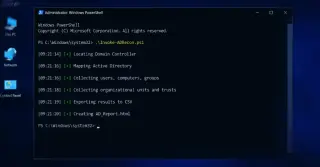
AI-Generated PowerShell Tool Maps Active Directory in Rapid Breach

Cybersecurity researchers flag a June 2026 intrusion where attackers used an AI-generated, vibe-coded PowerShell script to enumerate a Windows Active Directory after gaining RDP access to a domain-joined server. The tool locates the Domain Controller, maps AD users, computers, groups, OUs, and trusts, creates a staging area, and exports results (including AD_Report.html). Attackers then deployed s5cmd and SharpShares to locate data repositories, exported data to CSV, archived it, and exfiltrated it to a remote server. The incident highlights how AI-assisted tooling lowers entry barriers and accelerates reconnaissance, aligning with established smash-and-grab playbooks, while a related Sygnia report notes AI-enabled cloud intrusions can scale quickly using credentials and cloud weaknesses rather than new malware.

Fortinet breach leaks thousands of network credentials, impacting global enterprises
technology5 months ago

Fortinet breach leaks thousands of network credentials, impacting global enterprises

Security researchers say a broad breach of Fortinet firewalls exposed plaintext credentials for about 74,000 devices across 194 countries, enabling attackers to access centralized authentication systems and move laterally into networks of major organizations including Oracle, Lenovo, FedEx, and a Turkish NATO contractor; investigators note many compromised devices remained online and the attackers reportedly used a GPU-based password-cracking operation, underscoring the risk across multiple industries.

Public Rainbow Tables Sharpen NTLMv1 Attacks, Prompting Urgent Remediation
cyber-security10 months ago

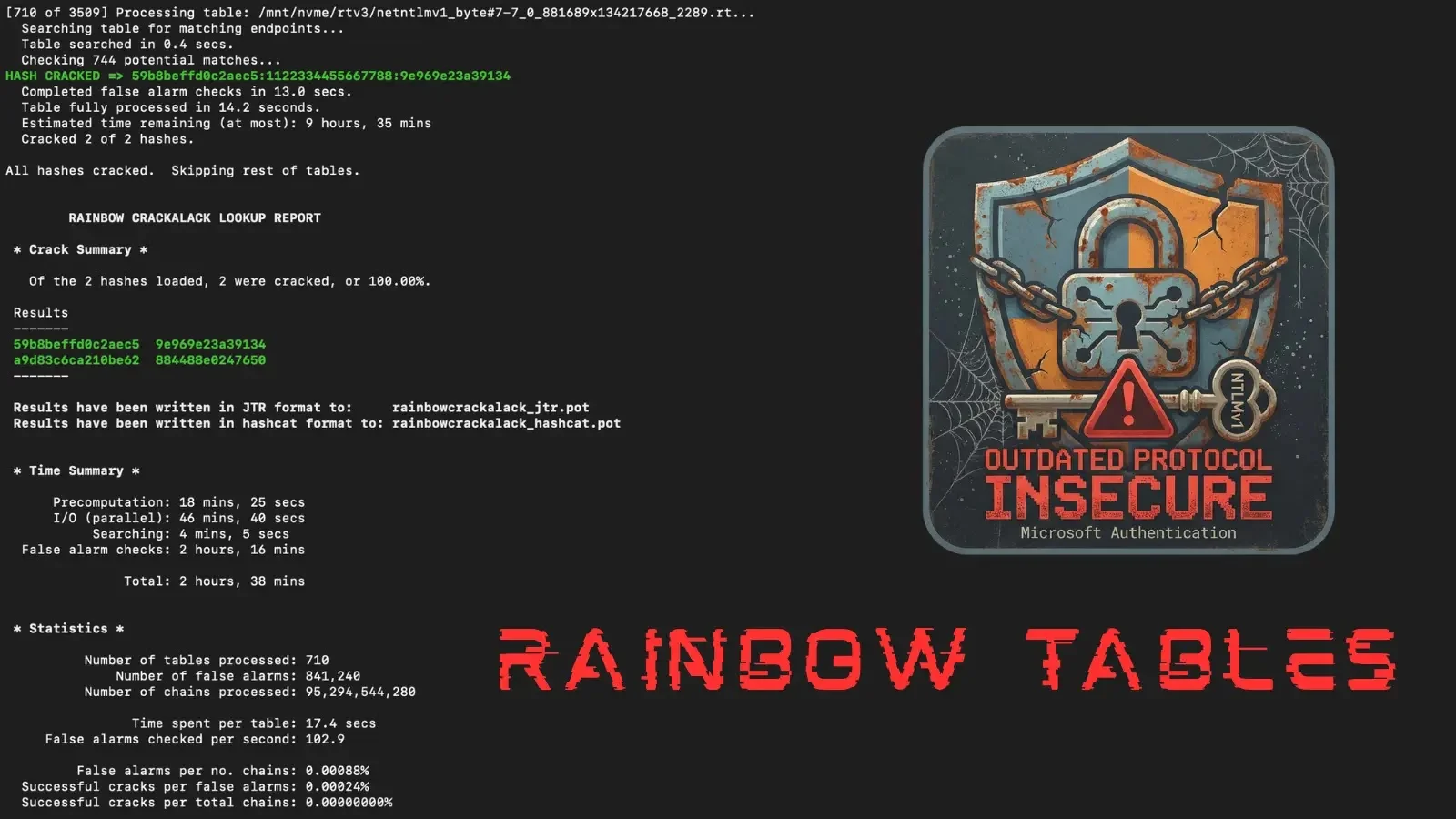
Public Rainbow Tables Sharpen NTLMv1 Attacks, Prompting Urgent Remediation

Mandiant publicly released Net-NTLMv1 rainbow tables, making NTLMv1 hash cracking practical with modest hardware and lowering barriers for admin-level credential compromise. The dataset, hosted via Google Cloud, underscores the urgent need to disable Net-NTLMv1 and migrate to NTLMv2; organizations should monitor for LM/NTLMv1 usage in Windows Event logs (e.g., Event ID 4624) and implement robust detection and remediation to prevent post-compromise downgrades and broader AD compromise (e.g., DCSync attacks).