Tag

Aging Clocks

All articles tagged with #aging clocks

Sleep Sweet Spot for Healthy Aging Found in Half‑Million‑Person Study
health11 days ago

Sleep Sweet Spot for Healthy Aging Found in Half‑Million‑Person Study

A UK Biobank analysis of about 500,000 adults links sleep duration to systemic aging. Using 23 biological aging clocks, researchers found a U‑shaped pattern where roughly 6.4–7.8 hours of sleep per night corresponded to the lowest aging signals across organs (brain, liver, lungs, immune system, skin, endocrine system, adipose tissue, pancreas). Sleeping less than six hours or more than eight hours was associated with faster aging in several clocks, though the exact optimal range varied by organ and sex. The team calls this framework the Sleep Chart, underscoring sleep as a broad, modifiable factor in aging rather than a universal prescription.

Sleep Sweet Spot: 6.4–7.8 Hours Linked to Slower Aging Across 17 Organs
health11 days ago

Sleep Sweet Spot: 6.4–7.8 Hours Linked to Slower Aging Across 17 Organs

A UK Biobank study using organ-specific aging clocks across 17 organs finds a U-shaped relationship between sleep duration and biological aging: both <6 hours and >8 hours accelerate aging, with the slowest aging in people who sleep 6.4–7.8 hours daily. Sleep affects a coordinated brain–body network, linking short sleep to depression and metabolic/cardiovascular diseases, while long sleep associates with different pathways involving adipose clocks. The research suggests sleep optimization could slow systemic aging and reduce disease risk, including late-life depression.

Finding the Sleep Sweet Spot: 6.4–7.8 Hours Linked to Slower Biological Aging
science11 days ago

Finding the Sleep Sweet Spot: 6.4–7.8 Hours Linked to Slower Biological Aging

A large international study using 23 aging clocks across organs and UK Biobank data finds that both too little (<6 hours) and too much (>8 hours) sleep are associated with faster biological aging and higher mortality, with an optimal window roughly 6.4–7.8 hours. Short sleep links to cardiovascular, metabolic, and psychiatric risks, while long sleep clusters with brain-related conditions; the depression pathways differ between the two sleep patterns. The findings come from MRI, blood proteins, and metabolite data, highlighting sleep’s broad impact beyond the brain.

Culture as cardio: arts engagement linked to slower biological aging
health12 days ago

Culture as cardio: arts engagement linked to slower biological aging

A University College London study of more than 3,500 people used seven aging clocks to measure biological age and found that frequency and variety of arts and cultural activities—such as gallery visits and other cultural engagement—are linked to slower aging, with effects comparable to physical activity; strongest in those 40 and older. While the study shows association, not causation, researchers say integrating the arts into public health could improve health outcomes alongside exercise.

Neuron-type aging clocks map vulnerability and unveil neuroprotective drug candidates
science3 months ago

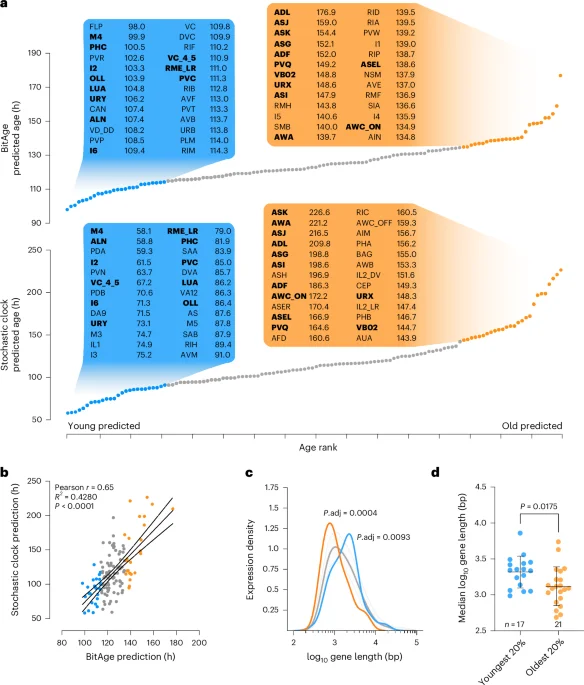
Neuron-type aging clocks map vulnerability and unveil neuroprotective drug candidates

Aging clocks applied to single neuron types in C. elegans reveal neuron-type–specific biological ages, with environmentally exposed ciliated amphid neurons aging fastest and degenerating earlier. Reducing translation slows degeneration in fast-aging neurons, and neuronal aging patterns correlate with human brain aging while anticorrelating with known geroprotective interventions. An in silico CMAP screen identifies potential neuroprotective compounds, notably syringic acid and vanoxerine, while some agents (e.g., WAY-100635, Bay K8644) can be neurotoxic. The study suggests neuron-type aging trajectories can guide protective interventions and risk-factor identification for neurodegeneration across species.