Tag

Andrena Regularis

All articles tagged with #andrena regularis

New York graveyard hides a vast underground city of solitary bees
science24 days ago

New York graveyard hides a vast underground city of solitary bees

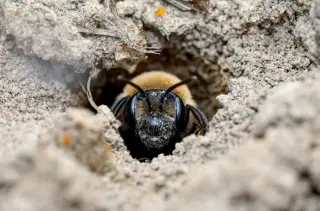
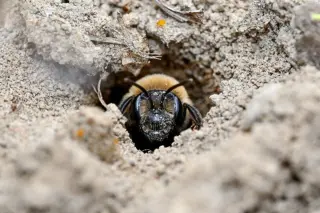
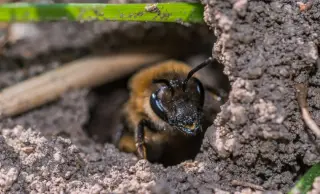
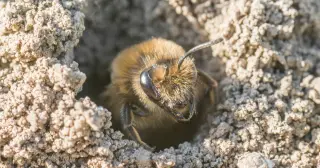
At East Lawn Cemetery in Ithaca, NY, researchers counted about 5.56 million solitary mining bees (Andrena regularis) nesting in the soil—roughly as many individuals as 200 honeybee hives—making it one of the largest known ground-nesting bee aggregations. Each female digs her own burrow, with no hive or queen, and the cemetery’s long-term undisturbed soil provides ideal habitat. The count highlights the ecological importance of unmanaged urban greenspace for pollinators, though the study notes it reflects bee numbers, not pollination output, and was published by Cornell researchers in Apidologie 2026.
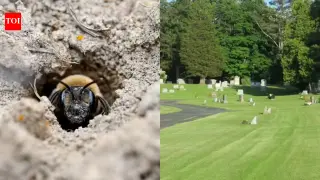
Underground Bee Cities: Millions of Mining Bees Discovered Beneath a New York Cemetery
science1 month ago

Underground Bee Cities: Millions of Mining Bees Discovered Beneath a New York Cemetery

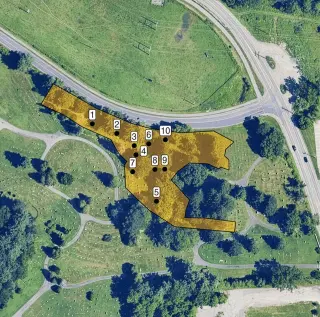
Researchers surveying East Lawn Cemetery in Ithaca, NY, estimated about 3–8 million ground-nesting mining bees (centered on Andrena regularis) occupy 1.5 acres, based on 10 emergence traps that captured 3,251 insects across 16 species; the midpoint estimate is 5.5 million. These solitary bees live in individual burrows with pollen provisions and no hive or queen. The site’s well-drained soil, flower diversity, low pesticide use, and quiet disturbance likely support such aggregations. The finding suggests large, hidden bee colonies may exist, prompting a citizen-science effort on iNaturalist to map more sites and protect them from paving or development.

Underground Haven: 5.5 Million Mining Bees Nest Beneath an Ithaca Cemetery
science4 months ago

Underground Haven: 5.5 Million Mining Bees Nest Beneath an Ithaca Cemetery

Cornell researchers estimate about 5.5 million Andrena regularis mining bees nest underground beneath East Lawn Cemetery in Ithaca, NY, likely for more than a century across roughly 1.5 acres. The undisturbed soil and limited disturbance create a stable nesting habitat, highlighting the importance of overlooked sites like cemeteries for ground-nesting pollinators and their potential role in supporting nearby crops, while noting threats from habitat loss and pesticides.

Ithaca Cemetery Reveals Hidden Colony of 5.5 Million Miner Bees
science4 months ago

Ithaca Cemetery Reveals Hidden Colony of 5.5 Million Miner Bees

Cornell researchers documented an underground colony of about 5.5 million Andrena regularis miner bees in East Lawn Cemetery, Ithaca, covering ~1.25 acres. Traps in 2023 estimated 3–8 million individuals, making it one of the largest bee aggregations on record and highlighting the cemetery as a refuge for urban biodiversity that supports local apple orchards. The study notes their underground nesting, early spring emergence, and ecological interactions, and it calls for citizen science to map and protect such underground bee populations before development disturbs them.

Huge Underground Bee Colony Found Hidden at New York Cemetery
animals4 months ago

Huge Underground Bee Colony Found Hidden at New York Cemetery

Researchers in Ithaca’s East Lawn Cemetery estimate a 100-year-old colony of about 5.5 million Andrena regularis bees nesting underground across 1.5 acres, potentially one of the world’s largest bee aggregations. Using emergence traps, they documented 3,251 insects across 16 species, with the population likely ranging 3–8 million. The colony’s longevity and size are tied to the cemetery’s undisturbed sandy soil and limited pesticide use, highlighting cemeteries as biodiversity refuges and the bees’ role in pollinating crops like apples.

Millions of Ground-Nesting Bees Discovered Under a New York Cemetery
science5 months ago

Millions of Ground-Nesting Bees Discovered Under a New York Cemetery

Cornell researchers estimated 3–8 million Andrena regularis bees living underground beneath East Lawn Cemetery near Cornell Orchards, using emergence traps to count and arriving at 5.5 million as a midpoint. The finding underscores how cemetery grounds can host massive, understudied ground-nesting bee populations and highlights how nearby orchards provide forage, reinforcing cemeteries as biodiversity hotspots.

Underground Empire: 5.5 Million Bees Nest in a New York Cemetery
science5 months ago

Underground Empire: 5.5 Million Bees Nest in a New York Cemetery

Researchers counting 3–8 million bees at East Lawn Cemetery in Ithaca, NY, estimate an average population of 5.5 million ground-nesting Andrena regularis. Using emergence traps over ~6,000 square meters, the study found males emerge first in April and highlighted nearby Cornell Orchards and sandy soil as key factors supporting this large, pesticide-free population. The work underscores cemeteries as biodiversity hotspots and pollinator habitats, and it launches a global citizen-science effort to document other ground-nesting bee populations.

Millions of ground-nesting bees found thriving beneath a cemetery
animals5 months ago

Millions of ground-nesting bees found thriving beneath a cemetery

Scientists discovered a massive underground colony of ground-nesting bees (Andrena regularis) beneath East Lawn Cemetery in Ithaca, New York, estimating 3.1 to 8 million bees emerged in a single season—enough activity to rival hundreds of honeybee hives—highlighting the crucial role of solitary bees in pollination and biodiversity and underscoring cemeteries as overlooked habitats that deserve protection; the study notes low parasitism and timing patterns in bee emergence that aid survival.

Ithaca cemetery hides a 5.5-million-bee underground city
science5 months ago

Ithaca cemetery hides a 5.5-million-bee underground city

Researchers find Ithaca’s East Lawn Cemetery hosts about 5.5 million Andrena regularis ground-nesting bees—one of the world’s largest known aggregations—estimated using emergence traps. The study, highlighting cemeteries as biodiversity refuges and the importance of wild pollinators for crops, also details emergence timing, brood parasitism by nomad bees, and a new global citizen-science project to document such aggregations.