Bees Edge Chihuahuas 4-3 in Gameday Showdown
In a minor league matchup on Aug 11, 2026, the Salt Lake Bees defeated the El Paso Chihuahuas 4-3 in a close game.
All articles tagged with #bees

In a minor league matchup on Aug 11, 2026, the Salt Lake Bees defeated the El Paso Chihuahuas 4-3 in a close game.

A maker attempts to photograph bees in flight using a stereo camera setup to keep up with their speed, tackling choices around frame rate, resolution, and focal length while emphasizing the benefits of a global-shutter sensor for synchronized dual cameras to avoid rolling shutter distortions; the project explores tradeoffs and hints at future bee footage.

Researchers examining a Dominican cave fossil tooth socket uncovered six bee nests dating to about 20,000 years ago, all inside hollow bone cavities. The nests, revealed by CT scans, show cup-shaped, waterproof-lined chambers and were found across multiple sediment layers, indicating repeated use over generations. This is the first documented case of bees nesting in animal bone, a finding that expands paleontologists’ search for nesting sites in old collections rather than suggesting new bee biology or evolution. The site also preserves a rich mix of fossils and environmental clues (fungal spores, pollen) pointing to a damp, wood-decay–rich setting, with the nests representing a small, incidental part of the broader deposit.

Producing a pound of honey is a massive cooperative feat: roughly two million flower visits by a colony, involving tens of thousands of foraging trips and a combined flight distance that researchers estimate between about 55,000 and 90,000 miles, far surpassing what any single bee does in a lifetime. The workers live only about 6–8 weeks, and the waggle dance helps them coordinate locations and distances to the best flowers, turning a jar into a record of collective labor rather than the work of one bee.

Lab experiments show worker honeybees fed probiotics plus the prebiotic inulin survived prolonged cold better than sugar-fed bees, but the same supplements offered little protection against extreme heat; researchers caution that cage results may not reflect real colonies and emphasize nutrition should complement, not replace, broader habitat restoration and forage improvements.

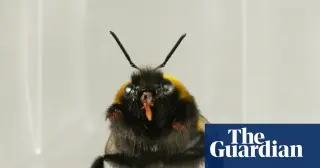
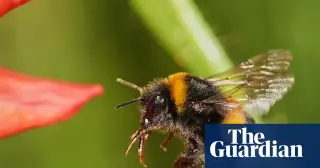
Researchers filmed bumblebees tasting droplets (60% sugar, 20% sugar, water, 5% salt, 1 mM quinine) and observed post‑consumption licking after sweet solutions, versus mouth‑wiping or head shaking for salty or bitter ones. The responses are read as potential “liking” and “disliking” cues—similar to mammals—suggesting an inner state in bees. Effects varied with context (e.g., heat stress, fullness, or drug exposure) across 18 colonies, and the study, published in PNAS, fuels ongoing debate about insect sentience.

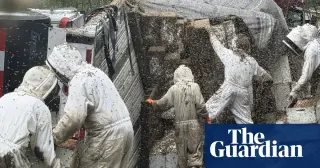
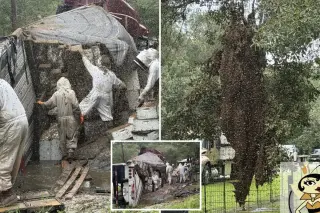
Two million bees escaped when an 18-wheeler carrying beehives overturned near Mauriceville, Texas, prompting residents to stay indoors. Emergency crews transferred the swarms to transport trucks while local beekeepers assisted, and the hives were headed to a nearby honey farm.

An 18-wheeler carrying beehives overturned in Mauriceville, Texas, releasing about 2 million bees. Beekeepers were called to help recapture the swarms as crews moved the hives to other transport; residents were told to stay indoors for safety, and a photographer was stung, but no injuries were reported overall.

Emma Brockes surveys a week of brief, telling moments—from G7 leaders’ offhand banter and Trump quips to Epstein’s NYT Magazine exposé, NHS guidance on A&E demand around England’s World Cup games, Brooklyn Beckham’s meta ad, and a quirky bee mystery—illustrating how public attention oscillates between spectacle and deeper truth.

Honeybees mix pollen into nurse-bee secretions to create a balanced bee bread and royal jelly, enabling larvae to receive a complete amino-acid profile; when pollen sources fail to match bees' needs, adults adjust intake and total consumption. The study finds most single-pollen sources mismatch bee amino-acid needs, with histidine levels steering feeding. Nurse bees' processing of pollen into bee bread and royal jelly helps colonies overcome nutritional gaps, underscoring the value of diverse pollen sources for pollinator health.

Bumblebees solved a tool-use task by rolling a ball to reposition it under a ceiling-held artificial flower, with 75% success in the basic version and 23 of 30 in a more complex setup, showing flexible problem solving in miniature brains and challenging the view that insects act purely on instinct (study published in Science).

A new study finds worker bees build specialized wax cells that may improve the health and development of queen bees, suggesting factors beyond royal jelly influence queen quality.

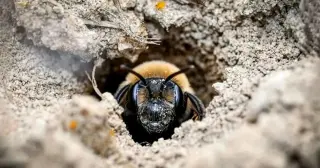
Cornell researchers documented an underground colony of about 5.5 million Andrena regularis miner bees in East Lawn Cemetery, Ithaca, covering ~1.25 acres. Traps in 2023 estimated 3–8 million individuals, making it one of the largest bee aggregations on record and highlighting the cemetery as a refuge for urban biodiversity that supports local apple orchards. The study notes their underground nesting, early spring emergence, and ecological interactions, and it calls for citizen science to map and protect such underground bee populations before development disturbs them.

Researchers in Ithaca’s East Lawn Cemetery estimate a 100-year-old colony of about 5.5 million Andrena regularis bees nesting underground across 1.5 acres, potentially one of the world’s largest bee aggregations. Using emergence traps, they documented 3,251 insects across 16 species, with the population likely ranging 3–8 million. The colony’s longevity and size are tied to the cemetery’s undisturbed sandy soil and limited pesticide use, highlighting cemeteries as biodiversity refuges and the bees’ role in pollinating crops like apples.

Researchers found that East Lawn Cemetery in Ithaca harbors roughly 5.5 million Andrena regularis ground-nesting bees, one of the largest such aggregations on record, counted using emergence traps. The site supports crop pollination and urban biodiversity, reinforcing cemeteries as valuable habitats and prompting efforts to protect nest sites and encourage citizen reports of similar aggregations.