Tag

Axion Like Particles

All articles tagged with #axion like particles

Photon’s TikTok Through Einstein’s Rules: Axions and Tiny Lorentz Violations May Explain a 300 TeV Travel</title>
physics-and-chemistry1 month ago

Photon’s TikTok Through Einstein’s Rules: Axions and Tiny Lorentz Violations May Explain a 300 TeV Travel</title>

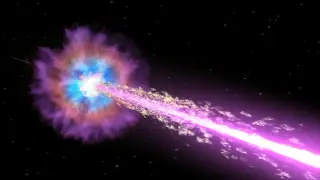
Physicists propose GRB 221009A’s extreme 300 TeV photons survived a two‑billion‑light‑year trip by briefly converting into axion‑like particles, with a tiny Lorentz‑invariance violation enabling a “fast lane.” A predicted one‑hour gap between lower‑energy photons and the 300 TeV burst matched an independent Chinese observation, offering empirical support and a potential probe of quantum gravity.

BOAT photon hints at new physics beyond Einstein via axions and possible Lorentz-violation
science1 month ago

BOAT photon hints at new physics beyond Einstein via axions and possible Lorentz-violation

A high-energy photon from GRB 221009A, nicknamed the BOAT, arrived on Earth despite expectations it would be absorbed by the cosmic microwave background. Researchers propose it may have traveled as an axion-like particle and later converted back, potentially aided by a high-energy Lorentz-invariance violation, effectively giving photons a “fast lane” through space. The arrival timing aligns with the theory, and if confirmed, could turn space into a natural laboratory for quantum gravity research.

"Unveiling Dark Matter Mysteries: Neutron Star Collisions and New Physics Signals"
physics2 years ago

"Unveiling Dark Matter Mysteries: Neutron Star Collisions and New Physics Signals"

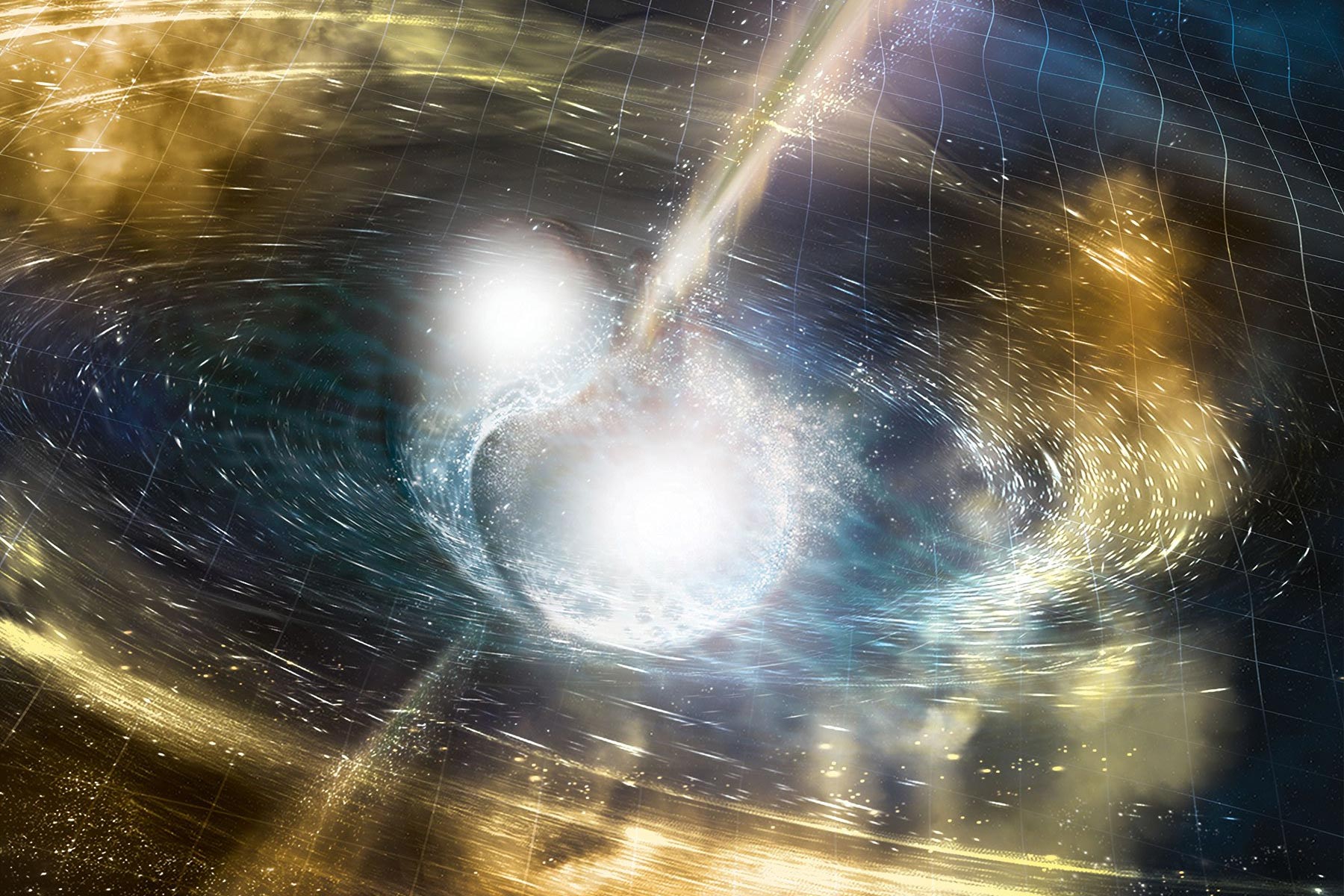
Neutron star mergers provide new insights into the nature of dark matter, with implications for understanding axion-like particles. Research from Washington University in St. Louis used observations from a neutron star merger event to derive new constraints on these hypothetical particles, which are leading candidates for composing the universe's "missing" matter. The study suggests that extreme astrophysical events, like neutron star collisions, offer a new window of opportunity in the search for dark sector particles and could help improve our understanding of the universe's composition.

Unveiling Dark Matter's Secrets: Exploding Axion Stars and Neutron Star Debris
physics2 years ago

Unveiling Dark Matter's Secrets: Exploding Axion Stars and Neutron Star Debris

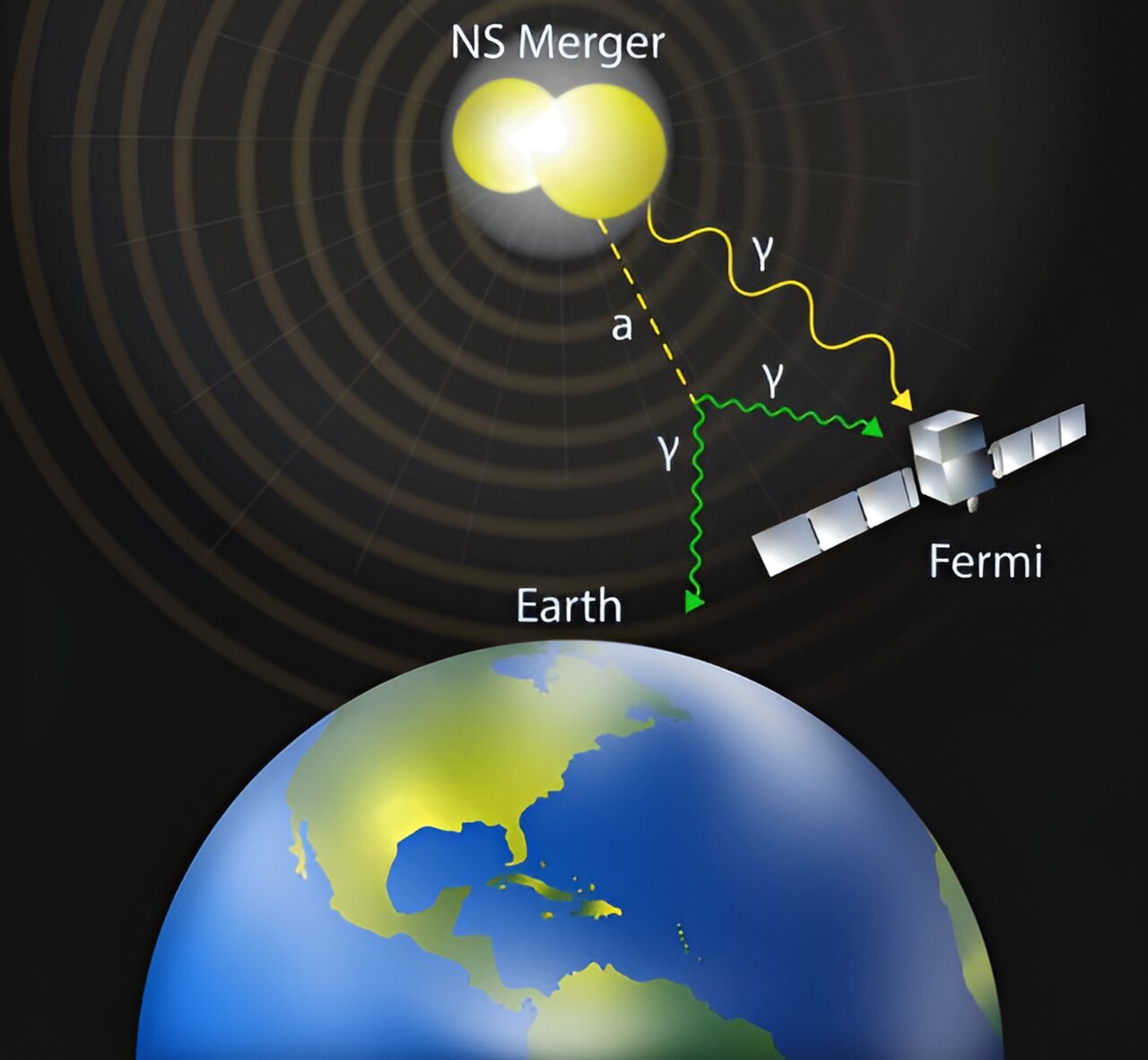
Researchers from Washington University in St. Louis have used observations from the collision of two neutron stars to derive new constraints on axion-like particles, which are leading candidates for dark matter. The study suggests that these exotic particles produced in the aftermath of neutron star mergers can escape and decay into photons, creating unique electromagnetic signals that can be detected by gamma-ray telescopes like NASA's Fermi-LAT. This research provides a new window of opportunity in the quest for understanding the missing matter in the universe and could lead to further insights into the nature of dark sector particles like axions.